

Written by Bruce Zhou
Founder & Managing Director | JOTA Machinery
Paper converting machinery specialist since 2002.
Connect with me on LinkedIn
Published: 03,November, 2026
Last Updated: 03,November, 2026 17:02:35 PM GMT+8
Have you ever looked at a small credit card receipt roll and wondered how manufacturers produce such a narrow, neatly wound paper roll?
Most 2 1/4-inch thermal paper rolls are not manufactured individually from small sheets of paper. Instead, they are converted from much larger thermal paper jumbo rolls using an industrial slitting and rewinding machine.

The important part is controlling the finished paper width.
The slitting blades determine the width of a 2 1/4-inch thermal paper roll, while the rewinding system forms the paper into the required roll diameter and length.
In this article, we’ll look at how manufacturers produce 2 1/4-inch thermal receipt rolls, how the blades are positioned, and what should be checked before the finished rolls are packaged.
What Is a 2 1/4-Inch Thermal Paper Roll?
A 2 1/4-inch thermal paper roll is a narrow receipt paper format commonly used in credit card terminals, mobile POS devices, cash registers, and other compact thermal printers.
The measurement refers to the paper width.
The exact conversion is:
2 1/4 inches = 2.25 inches = 57.15 mm
In the receipt paper industry, this format is commonly sold as a nominal 57 mm thermal paper roll.
However, an exact 57.15 mm width, a 57 mm nominal roll, and a printer specification calling for 57.5 ± 0.5 mm should not automatically be treated as identical manufacturing requirements.
The actual cutting width should follow the customer’s specification and acceptable tolerance.
Common 2 1/4-Inch Thermal Roll Sizes
| Roll Specification | Width | Outside Diameter |
|---|---|---|
| 57 × 30 mm | 57 mm nominal | 30 mm |
| 57 × 40 mm | 57 mm nominal | 40 mm |
| 57 × 50 mm | 57 mm nominal | 50 mm |
| 57 × 57 mm | 57 mm nominal | 57 mm |
These are examples of finished roll dimensions. The paper length depends on the material thickness, core diameter, winding conditions, and finished outside diameter.
A 57 × 40 mm thermal paper roll, for example, is approximately 57 mm wide with a finished outside diameter of 40 mm. It does not mean the roll contains 40 meters of paper.
How Are 2 1/4-Inch Thermal Paper Rolls Made?
The manufacturing process begins with a thermal paper jumbo roll that has already been coated with a heat-sensitive layer.
The jumbo roll is loaded onto a slitter rewinder, where the paper passes through a series of guiding rollers, slitting blades, and rewinding shafts.
A typical converting process follows these stages:
Thermal Paper Jumbo Roll → Unwinding → Slitting Blade Setup → Slitting → Rewinding → Roll Finishing → Inspection → Packaging
Each operation has a specific purpose, but the slitting blade arrangement is what establishes the width of the narrow thermal paper strips.
Step 1 — Preparing the Thermal Paper Jumbo Roll
Before slitting begins, the operator prepares the thermal paper jumbo roll.
The material should already meet the required paper grade, thickness, coating, and printing specifications.
The operator checks the jumbo roll for visible damage, uneven edges, loose winding, and other conditions that could affect converting.
The jumbo roll is then loaded onto the unwinding stand.
Depending on the machine configuration, a hydraulic shaftless unwinding system may be used to lift and secure the roll without inserting a full-length shaft through its core.
After loading, the paper web is threaded through the machine.
The operator also confirms that the thermal-coated side is oriented correctly for the required finished roll winding direction.
Step 2 — Setting the Slitting Blades for 2 1/4-Inch Paper Width
This is the most important operation when manufacturing 2 1/4-inch thermal receipt rolls.
A slitter rewinder uses cutting blades positioned across the width of the paper web.
As the wide thermal paper passes through the slitting section, each pair of adjacent cutting lines defines the width of one narrow strip.
For a finished roll with a specified width of approximately 57 mm, the knives must be arranged to create the required cutting-edge spacing.
How Do the Slitting Blades Control Paper Width?
On JOTA Machinery’s manually configured thermal paper slitters, the lower knife shaft uses a combination of circular slitting blades and interchangeable precision spacers.
The spacers establish the positions of the cutting knives along the shaft.
Different spacer arrangements allow operators to set up the machine for different receipt roll widths.
For example, when manufacturing nominal 57 mm thermal paper rolls, the operator selects an appropriate blade and spacer combination based on the required finished cutting width.
The upper knives are then positioned to work with their corresponding lower knives.
The exact arrangement depends on the machine’s blade geometry and spacer system. It should be checked against the actual cutting-edge positions rather than assuming that any nominal spacer combination automatically produces the correct finished width.
Why Does Spacer Selection Matter?
Suppose a customer orders 2 1/4-inch thermal paper rolls.
Before setting the knives, the operator must know whether the order calls for 57 mm nominal paper, exactly 57.15 mm paper, or another width within an agreed tolerance.
If the spacers establish an incorrect cutting position, the finished rolls may not meet the required width.
This is why accurate blade positioning and a trial width measurement are important parts of the setup.
The paper core does not determine the paper width. The slitting blade positions do.
Step 3 — Slitting the Thermal Paper Jumbo Roll
After the blade positions have been checked, the machine begins the slitting operation.
The thermal paper web travels through the cutting section, where the circular knives separate it into multiple narrow strips.
Each strip is produced according to the cutting positions established during setup.

For 2 1/4-inch thermal paper roll manufacturing, the quality of the cut is important because the finished product is intended for relatively narrow paper paths in POS terminals and receipt printers.
Poor cutting conditions can lead to:
- Rough or fuzzy paper edges
- Loose paper fibers or excessive dust
- Inconsistent finished widths
- Edge tears
- Damage to the thermal coating
During production, the operator should inspect the slit edges and look for signs of blade wear or misalignment.
A clean edge is important not only for the finished roll’s appearance but also for reliable paper feeding in the intended printer.
Step 4 — Rewinding the Narrow Thermal Paper Strips
After the paper has been slit to the required width, the individual strips are directed to the rewinding section.
The rewinding system winds the paper onto prepared cores, forming the finished 2 1/4-inch receipt rolls.
The required core diameter depends on the intended terminal or printer.
For example, compact payment terminals may use relatively small paper cores, while other receipt printers require different core dimensions.
The operator must therefore verify both the paper width and core specification before production.
How Is the Finished Roll Diameter Controlled?
The rewinding process determines how much paper is wound onto each core.
Depending on the machine and customer specification, the winding operation can be controlled according to a target paper length or finished roll diameter.
For example, a manufacturer may need to produce a 57 × 40 mm thermal paper roll.
The slitting blades establish the nominal 57 mm paper width, while the rewinding system forms the roll to the specified outside diameter.
The winding conditions must also be appropriate for the paper material.
If the roll is wound too loosely, the layers may shift during handling. If the winding tension is excessive, it may create unnecessary stress within the finished roll.
The correct settings depend on the thermal paper thickness, core structure, and finished roll requirements.
Step 5 — Cutting and Securing the Paper Tail
After rewinding, the finished roll must be separated from the moving paper web.
On machines equipped with an automatic tail cutter and gluer, the system cuts the paper and applies adhesive to secure the outer tail of the finished roll.
This prevents the paper from unwinding during subsequent handling and packaging.
The adhesive should be applied to the intended tail area without contaminating the usable printing surface.
Depending on the selected machine configuration, this operation may be performed automatically or require operator involvement.
The finished rolls can then be removed or discharged from the rewinding section.
Step 6 — Inspecting the Finished 2 1/4-Inch Thermal Rolls
Before packaging, the finished rolls should be inspected against the customer’s product specifications.
Finished Roll Quality Control Checklist
| Inspection Item | What to Check |
|---|---|
| Paper width | Required width and agreed tolerance |
| Outside diameter | Finished roll diameter |
| Paper length | Required length, if specified |
| Core diameter | Correct inner diameter and fit |
| Slitting quality | Clean edges without excessive burrs |
| Winding quality | Even winding without telescoping or loose layers |
| Thermal coating | No visible scratches or contamination |
| Paper orientation | Correct coated-side winding direction |
| Roll tail | Properly secured, if tail gluing is required |
How to Measure the Finished Roll Width
A suitable measuring instrument can be used to check the width of the completed roll or an unwound paper sample.
If the finished width differs from the target specification, the operator should inspect the knife and spacer arrangement.
Potential problems include incorrect spacer selection, damaged blades, mechanical misalignment, or an unsuitable knife setup.
The operator should not simply assume the cutting width is correct because the machine is configured for a nominal 57 mm product.
The finished material must be measured.
Step 7 — Packaging the Finished Thermal Paper Rolls
After inspection, the 2 1/4-inch thermal paper rolls are prepared for packaging.
Depending on the production requirements, the finished rolls may be collected, conveyed, and shrink-wrapped using compatible downstream packaging equipment.
Shrink wrapping helps protect the rolls from dust and handling damage. The packaging material and heating conditions should be suitable for heat-sensitive paper.
The rolls can then be arranged into shipping cartons according to the required quantity and packaging format.
For branded receipt rolls, the packaging may also include labels, barcodes, logos, or batch identification.
These additional operations do not change the paper width, which was established earlier by the slitting blades.
What Is the Difference Between Manufacturing 2 1/4-Inch and 3 1/8-Inch Thermal Paper Rolls?
Both sizes are produced using the same general slitting and rewinding principle.
The primary differences involve the finished cutting width and the specified finished-roll dimensions.
| Feature | 2 1/4-Inch Thermal Rolls | 3 1/8-Inch Thermal Rolls |
|---|---|---|
| Exact imperial width | 57.15 mm | 79.375 mm |
| Common nominal metric category | 57 mm | 80 mm |
| Typical applications | Credit card terminals, mobile POS | Retail POS, cash registers |
| Slitting setup | Narrow-width knife arrangement | Wider knife arrangement |
| Rewinding | According to required length, diameter, and core | According to required length, diameter, and core |
| Width verification | Based on customer tolerance | Based on customer tolerance |
When changing from one width to another, the operator must verify the blade and spacer arrangement and make any necessary changes to the corresponding rewinding setup.
The basic manufacturing principle remains unchanged.
Common Manufacturing Problems with 2 1/4-Inch Thermal Rolls
Why Are Some Finished Rolls Narrower Than Specified?
The first thing to check is the slitting blade arrangement.
An incorrect spacer combination or knife position can cause the cutting lines to differ from the intended specification.
Measure the actual finished width and compare it with the approved cutting setup.
Why Do Some Rolls Have Uneven Edges?
Uneven roll edges can result from web tracking problems, winding conditions, core positioning, or material variations.
Check the slitting and rewinding sections separately to identify where the defect begins.
Why Does the Paper Core Move During Rewinding?
Core slippage may occur when the core does not fit the rewinding shaft or the gripping arrangement is unsuitable.
The operator should confirm the core inner diameter, shaft compatibility, and gripping condition.
Why Do Finished Rolls Have Different Outside Diameters?
Differences in winding tension, paper thickness, core dimensions, or winding control can affect finished roll formation.
Inspect the material and winding conditions before adjusting the machine.
Frequently Asked Questions
Is a 2 1/4-Inch Thermal Paper Roll the Same as a 57 mm Roll?
In commercial terminology, 2 1/4-inch receipt rolls are commonly identified as nominal 57 mm rolls. The exact imperial conversion is 57.15 mm, so the agreed product width and tolerance should always be confirmed.
What Determines the Width of a 2 1/4-Inch Thermal Paper Roll?
The cutting-edge positions of the slitting blades determine the finished paper width. On a manually configured slitter rewinder, blades and spacers establish the required cutting positions.
Does the Rewinding Shaft Control the Paper Width?
No. The rewinding shaft forms the narrow paper strips into rolls. The width has already been established by the slitting knives.
Can One Slitting Machine Produce Both 57 mm and 80 mm Thermal Paper Rolls?
Yes, if the machine supports the required blade arrangements, core sizes, and finished roll specifications. The operator reconfigures the knives and other necessary components for the new product.
Can 2 1/4-Inch Thermal Paper Rolls Be Manufactured with Different Diameters?
Yes. Different finished outside diameters can be produced within the machine’s supported range, subject to the paper thickness, core dimensions, and customer specifications.
Can a Thermal Paper Slitter Rewinder Connect to a Shrink-Wrapping Machine?
Compatible slitting and packaging equipment can be combined in a production workflow. The specific transfer and packaging arrangement depends on the selected equipment.
Conclusion
Manufacturing 2 1/4-inch thermal paper rolls begins with a wide thermal paper jumbo roll and ends with narrow, finished receipt rolls suitable for compatible POS and payment terminals.
Although the process includes unwinding, slitting, rewinding, inspection, and packaging, one technical principle is particularly important:
The slitting blades and their positioning determine the finished thermal paper roll width.
Correct knife and spacer selection, followed by finished-width measurement, helps ensure that the produced rolls meet the customer’s specified dimensions.
JOTA Machinery manufactures thermal paper slitting and rewinding equipment for converting jumbo rolls into different receipt paper formats, including nominal 57 mm POS and credit card terminal rolls.
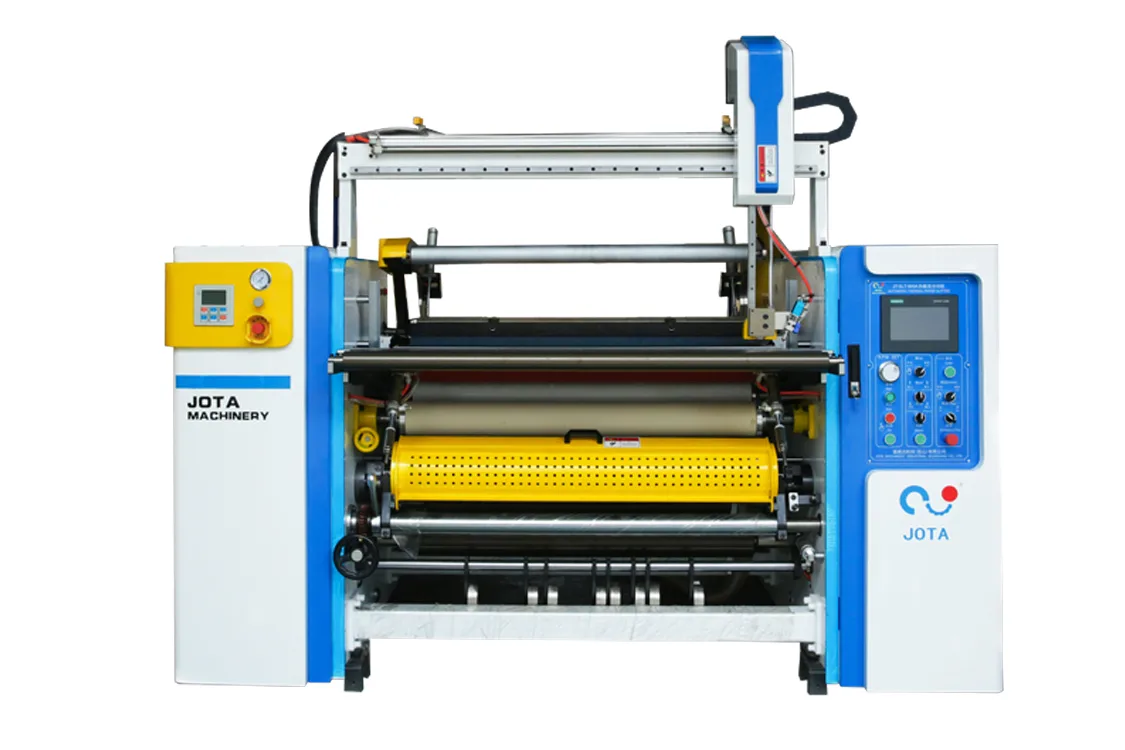
For standard POS and receipt-roll production, thermal paper jumbo rolls are slit and rewound into the required finished widths, diameters and core specifications.
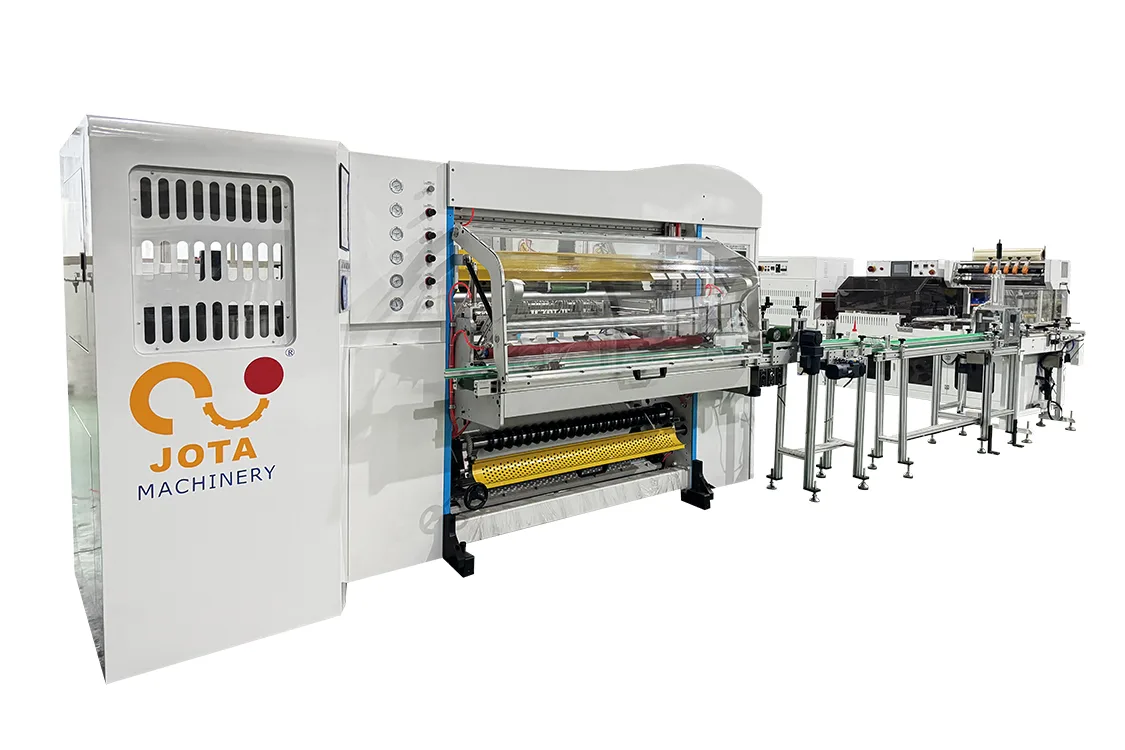
For higher production output, a fully automatic configuration can reduce manual handling and integrate additional roll finishing, packaging or palletizing processes.
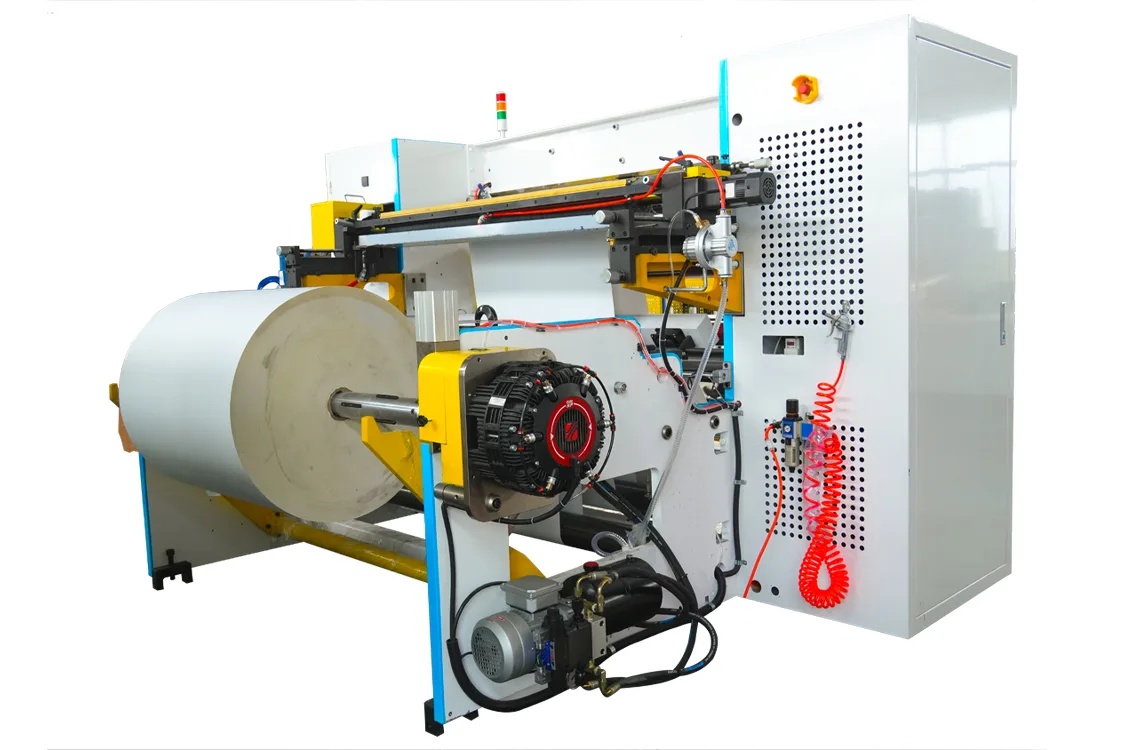
If your rolls require logos or promotional information, inline flexographic printing can be combined with slitting and rewinding in one production process.
For a specific application, the required paper width, tolerance, finished diameter, core size, and raw material specifications should be confirmed before machine setup.
Looking for a thermal paper slitting machine for 2 1/4-inch receipt rolls?
Share your finished roll specifications with JOTA Machinery to discuss an appropriate slitting and rewinding configuration.
Last Updated on 03/11/2026 by Jota Machinery