

Written by Bruce Zhou
Founder & Managing Director | JOTA Machinery
Paper converting machinery specialist since 2002.
Connect with me on LinkedIn
Published: 22,October, 2026
Last Updated: 22,October, 2026 19:10:33 PM GMT+8
Are you planning to purchase a thermal paper roll slitting machine from China?
If you search online, you will find numerous machinery suppliers offering similar-looking equipment. Some advertise high operating speeds, others promote automatic production, and many display photographs of finished thermal receipt rolls.
The machines may appear similar, but their manufacturing capabilities, electrical control systems, technical support, and factory testing procedures can differ considerably.
That raises an important question.
How can you identify a reliable China thermal paper roll slitting machine factory before placing an order?
For a buyer planning to manufacture POS receipt rolls, cash register rolls, ATM rolls, or other thermal paper products, equipment selection involves more than comparing machine prices.
You need to know who is manufacturing the equipment, whether the engineering team understands your production requirements, how the machine is assembled, and whether its performance can be demonstrated before shipment.
At JOTA Machinery, we have operated our own machinery manufacturing facility since 2011. Our factory is located in Kunshan, Jiangsu Province, China.
Our work includes machine design, mechanical assembly, electrical control programming, equipment commissioning, and factory testing.
In this article, we explain what buyers should check when evaluating a thermal paper slitting machine manufacturer in China, including several engineering details that are often overlooked during purchasing.
1. Is Your Machinery Supplier an Actual Manufacturer?
One of the first things to establish is whether the company you are contacting operates its own machinery manufacturing facility.
China has manufacturers, trading companies, distributors, and businesses that combine different supply arrangements.

These business models are not inherently good or bad.
A trading company may provide useful sourcing and export services. However, if your project requires technical modifications, machine testing, or direct communication with the engineers responsible for the equipment, understanding who actually manufactures the machine becomes important.
What Should You Ask the Supplier?
Start with a few practical questions.
Where is the machine manufactured?
Can you visit the production workshop?
Who is responsible for the mechanical design?
Who writes and maintains the PLC control program?
Who performs machine commissioning and Factory Acceptance Testing?
If a technical problem occurs after installation, will you be able to communicate with personnel familiar with the machine’s design?
These questions help you understand the supplier’s actual role.
Ask to See the Production Workshop
A genuine manufacturing workshop should be able to demonstrate relevant operations and equipment.
Depending on the factory’s capabilities, these may include:
- Mechanical component machining
- Machine frame preparation and assembly
- Slitting and rewinding unit assembly
- Electrical cabinet installation
- PLC and HMI programming
- Mechanical and electrical commissioning
- Material testing and finished roll inspection
Not every component needs to be manufactured in-house.
Machinery manufacturers commonly source motors, drives, sensors, bearings, PLCs, and other industrial components from specialised suppliers.
The important distinction is whether the company has the engineering and manufacturing responsibility necessary to build, integrate, test, and support the equipment it sells.
2. JOTA Machinery: From Machinery Trading to Manufacturing
JOTA Machinery began its converting machinery business in 2008.
In the early years, the company was involved in machinery trading and international converting equipment projects.
As the business developed, we recognised the importance of having greater control over machine engineering, assembly, testing, and customer-specific production requirements.
In 2011, JOTA established its own machinery manufacturing facility.
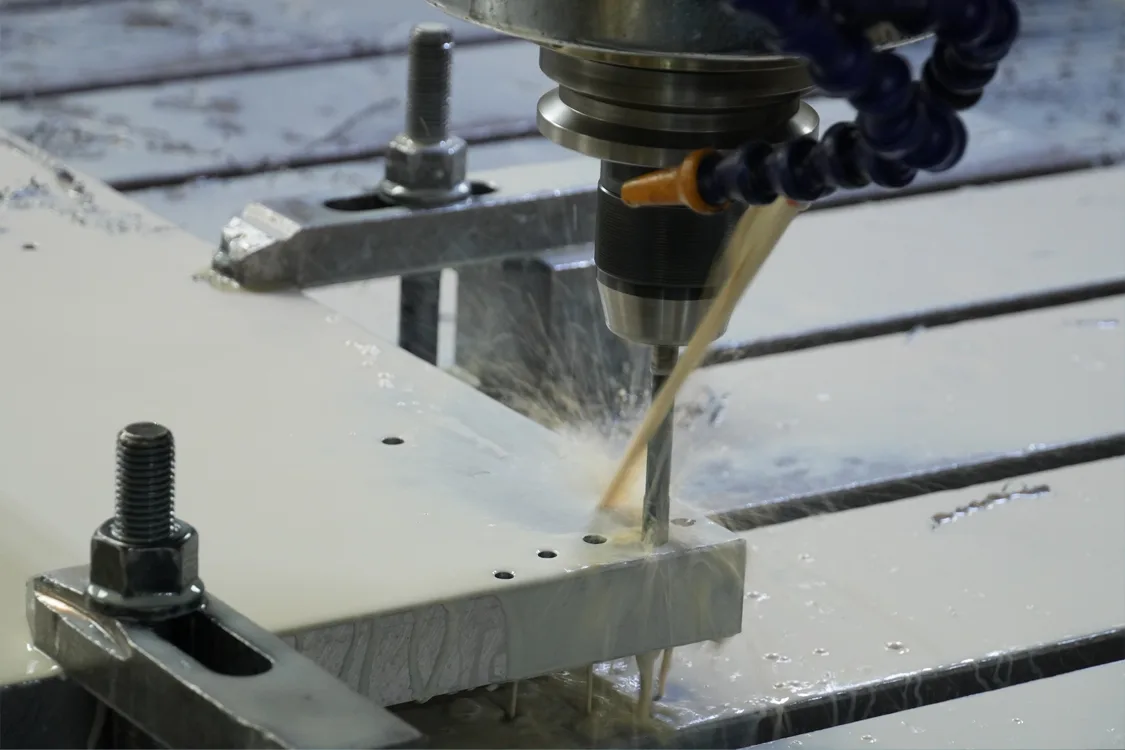
In-House Manufacturing
With internal engineering, CNC machining, machine assembly and testing capabilities, JOTA maintains control over key manufacturing processes. Every machine is assembled and tested before shipment to ensure stable performance at the customer’s site.
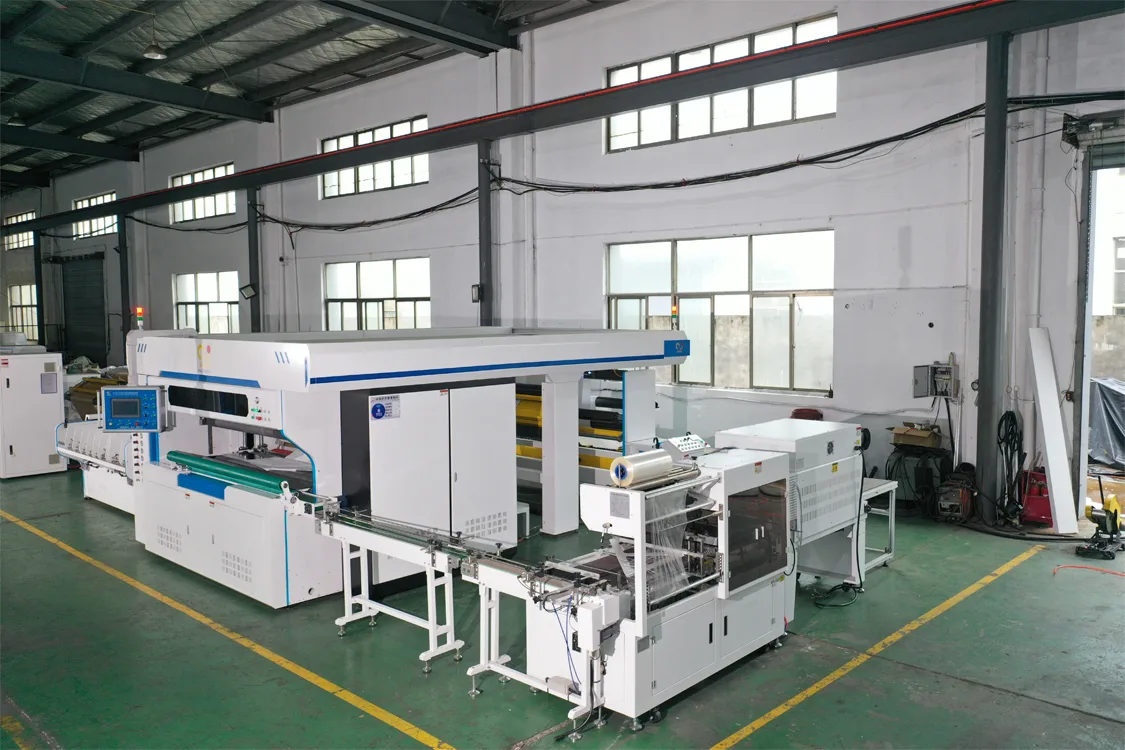
Project Experience
JOTA machines have been supplied for applications including thermal paper rolls, plotter paper, paper cores, labels, packaging materials and composite materials. Selected projects demonstrate our ability to handle different production requirements and industrial environments.

Global Support
Our support continues after machine delivery. JOTA provides installation guidance, commissioning support, operator training and technical assistance to help customers achieve stable production and long-term equipment performance.
In 2015, our manufacturing operations relocated to Kunshan, Jiangsu Province.
Today, our manufacturing activities cover slitting and rewinding equipment and other converting machinery for different flexible materials.
Thermal paper converting remains an important part of our equipment business.
Why Does an Engineering Team Matter?
A thermal paper slitter rewinder is not simply a set of cutting knives installed between two rotating shafts.
The machine must coordinate multiple functions.
The jumbo roll must unwind under suitable conditions.
The moving paper must maintain the required web tension and alignment.

The cutting system must produce the intended widths.
The rewinding section must form finished rolls with suitable diameter, length, and winding quality.
The control system must also coordinate the operating sequence.
For automatic machines, further operations may need to be integrated according to the purchased configuration.
Problems can arise when these functions are treated as separate components rather than parts of one production system.
This is why machinery engineering and commissioning are important when assessing a potential supplier.
3. Don’t Purchase a Machine Based Only on Its Advertised Speed
Speed is one of the most frequently quoted specifications for thermal paper slitting machines.
A supplier may advertise a maximum speed in metres per minute.
That number is useful, but it does not tell you how many acceptable thermal paper rolls the machine will produce in one shift.
Mechanical Speed Is Not Finished Roll Output
Suppose you are manufacturing compact thermal receipt rolls.
The machine must repeatedly complete a winding cycle, finish the rolls, and prepare for the next production cycle.
Depending on the model, these operations may involve manual handling or automatic mechanisms.
The time required for winding cycles, roll changes, raw material replacement, and inspection affects daily production.
A machine with a high maximum web speed may not achieve its theoretical output if the production process involves frequent interruptions.
What Should You Ask the Factory to Demonstrate?
Instead of asking only for the maximum running speed, request a production test based on your finished roll specifications.
For example, provide:
| Production Parameter | Information to Confirm |
|---|---|
| Jumbo thermal paper width | Actual width supplied to your factory |
| Jumbo roll diameter | Maximum parent roll size |
| Paper grade | GSM and caliper |
| Finished roll width | Required receipt roll width |
| Finished roll diameter | Required outside diameter |
| Core dimensions | Required inner and outer dimensions |
| Roll length | Specified metres per roll, if applicable |
| Expected output | Rolls per hour or shift |
| Production mode | Manual, semi-automatic, or automatic operations |
The manufacturer should explain how the proposed machine configuration will handle these requirements.
A production demonstration with representative material is much more informative than a short video showing the machine running without finished rolls being completed.
4. Check the Actual Quality of the Finished Thermal Paper Rolls
When evaluating a slitting machine for thermal paper rolls, don’t focus exclusively on the equipment itself.
The finished products provide important evidence of the machine’s converting performance.
Ask the manufacturer to produce sample rolls under agreed test conditions.
Then inspect them.
Slitting Width
The finished paper width should match the agreed specification and tolerance.
Incorrect knife positioning, cutting problems, or unstable web alignment can produce unacceptable widths.
Buyers should examine samples from different cutting positions across the jumbo paper.
Rewinding Quality
A finished roll should have suitable winding firmness and stable paper layers.
Excessively loose winding can result in deformation or unstable rolls during handling.
Overly tight winding can create a different set of problems.
The appropriate winding condition depends on the material and finished product requirements.
Roll Diameter
Verify that the machine produces the required outside diameter.
However, do not use finished diameter alone to establish paper length.
Two rolls with similar diameters may contain different lengths if their caliper or internal construction differs.
Paper Surface Condition
Inspect the paper for scratches, wrinkles, edge damage, and unwanted marks introduced during converting.
Thermal paper has a heat-sensitive coating, so unsuitable contact and handling conditions should be avoided.
Finished Roll Length
If your customer purchases rolls according to a specified length, ask the factory to demonstrate how that length is measured and verified.
This leads to an engineering detail that deserves particular attention.
5. Why Meter Counter Accuracy Depends on PLC Programming
A thermal paper roll slitting rewinding machine may use a measuring wheel, rotary encoder, and PLC control system to calculate paper length.
The principle is straightforward.
As the paper moves, a measuring wheel rotates in contact with the web.
The connected encoder produces electrical pulses corresponding to that rotation.
The PLC interprets the signals and calculates the length of paper passing the measuring point.
But the existence of a meter counter does not automatically guarantee accurate finished roll length.
The Measuring Wheel Must Be Correctly Calibrated
The PLC needs the correct conversion between encoder counts and linear paper travel.
The conversion depends on the effective measuring-wheel circumference and the encoder counting arrangement.
If the circumference parameter is incorrect, the machine may display a length that differs from the actual paper movement.
Mechanical contact also matters.
If a passive measuring wheel slips against the paper, the encoder may not register all the material movement correctly.
Encoder Settings Must Match the PLC
Rotary encoders have technical specifications that describe their signals and resolution.
Depending on the equipment, the PLC may use a particular pulse-counting or quadrature-decoding method.
The programmer must configure the counting logic accordingly.
If the encoder resolution or counting mode is interpreted incorrectly, the length calculation may be wrong even though the machine operates normally.
How JOTA Approaches Electrical Programming
At JOTA Machinery, our in-house programmers carefully review the technical manuals supplied with the electrical components used in our machinery.
This includes the relevant encoder specifications, PLC counting requirements, and operating parameters of the selected components.
The control program must reflect how the actual machine operates, including its measurement and winding-completion sequence.
Our objective is to minimise the difference between the programmed roll length and the actual finished length.
However, accuracy must be verified through physical measurement rather than claimed solely from the control program.
What Should Buyers Test?
Ask the manufacturer to set a specified roll length and produce representative samples.
Measure the actual finished paper length using an independent method.
Compare the results with the target.
The manufacturer and buyer should agree on the required length tolerance before the test.
This provides stronger evidence of machine performance than simply observing that the touchscreen displays the requested number of metres.
6. Automatic Thermal Paper Roll Slitting Rewinding Machines: What Does Automatic Actually Mean?
The word automatic appears frequently in machinery advertisements.
But not every automatic thermal paper roll slitting rewinding machine performs the same operations.
Some machines automate selected parts of the converting process while requiring operators to handle other tasks.
More extensively automated production lines may integrate additional functions.
The actual configuration depends on the machine model and purchased options.
Functions to Clarify
For example, buyers should establish how the machine handles:
- Jumbo roll loading
- Paper unwinding and tension control
- Slitting and rewinding
- Finished roll length or diameter control
- Completion of the winding cycle
- Finished roll unloading
- Core handling or coreless winding, where required
- Downstream handling and packaging
Do not assume these functions are included merely because the supplier describes the machine as fully automatic.
Ask for a Complete Production Cycle
A useful factory demonstration should begin with the machine prepared for normal production.
The test should show the operations included in the quoted configuration.
If the machine has an automatic roll-changing function, observe it during actual production.
If the process requires an operator to unload rolls or install new cores, that should also be clear.
Understanding the complete cycle helps you estimate labour requirements and practical production output.
7. What If You Want to Manufacture Printed Thermal Paper Rolls?
Some manufacturers produce only plain thermal receipt rolls.
Others receive orders for customised products with logos, store information, or promotional messages printed on the reverse side.
These orders require a suitable printing process in addition to slitting and rewinding.
One option is to use a separate flexographic printing press before the slitting operation.
Another is an inline flexo printing slitting machine, which integrates printing and converting within one production line.
What Does an Inline Printing Configuration Do?
Unprinted jumbo thermal paper passes through the flexographic printing unit.
The approved artwork is applied to the designated paper surface.
After the required drying and web handling, the paper enters the slitting section and is rewound into finished rolls.
This arrangement can eliminate the intermediate jumbo roll transfer required between separate printing and slitting machines.
What Must Be Confirmed Before Ordering?
If you plan to manufacture custom printed thermal paper rolls, provide the required number of printing colours, artwork, printing repeat length, maximum printing width, and finished roll specifications.
Printing capability should be checked against the actual machine configuration.
A one-colour printing unit should not be assumed to meet every multi-colour artwork requirement.
Likewise, the machine’s maximum slitting speed does not necessarily represent its operating speed during integrated printing and converting.
At JOTA Machinery, we can review the intended printed product alongside the slitting and rewinding requirements when discussing a suitable production line.
8. Factory Acceptance Testing: What Should Be Verified Before Shipment?
Factory Acceptance Testing, commonly called FAT, allows the buyer to verify agreed machine functions and production results before shipment.
For international machinery purchases, it is an important opportunity to identify problems while the equipment remains at the manufacturer’s factory.
A useful FAT should be based on measurable acceptance criteria.
Machine Configuration
Confirm the machine model, purchased options, electrical system, and relevant accessories against the agreed technical specification.
Material Trial
Where agreed, test with the customer’s actual material or a representative grade.
The jumbo paper width, thickness, and other properties should be recorded.
Slitting Accuracy
Measure finished widths from different positions.
Check the results against the agreed tolerance.
Rewinding Performance
Inspect finished roll diameter, winding condition, edges, and other required quality characteristics.
Length Accuracy
If length control is part of the specification, compare programmed and independently measured finished roll lengths.
Production Output
Observe the complete production cycle and record the actual operating conditions.
The test should distinguish between web running speed and completed saleable rolls.
Safety and Operator Functions
Verify the safety devices and operator controls specified in the contract, using the applicable test procedures.
Documentation
Confirm the agreed operating instructions, electrical documentation, maintenance information, and training arrangements.
A successful FAT should establish that the machine satisfies the agreed requirements—not simply that its motors run and the touchscreen operates.
9. What Should You Ask About Spare Parts and Technical Support?
A thermal paper roll slitting machine is a long-term production investment.
After installation, the factory will need routine maintenance, consumable replacement, and occasional technical assistance.
Before purchasing, ask how the manufacturer supports the equipment after shipment.
Spare Parts
Clarify which consumable and replacement parts are included in the quotation.
For a slitter rewinder, cutting knives and other wear-related components deserve attention.
Ask how replacement parts can be identified and ordered.
Electrical Components
Request information about the major electrical components used in the proposed configuration.
It is useful to know whether replacement drives, sensors, and other items can be sourced when needed.
Software Support
If the machine develops a control-related problem, determine what information the technical team needs to diagnose it.
The availability and scope of software support should be established before purchase.
Installation and Operator Training
Confirm whether the quotation includes installation guidance, commissioning assistance, or operator training.
These services should be defined in the purchase agreement rather than assumed.
A machine that performs satisfactorily at the manufacturer’s factory still needs to be installed, operated, and maintained correctly at the customer’s production site.
10. How to Compare Thermal Paper Slitting Machine Quotations From China
When comparing quotations from China thermal paper roll slitting machine manufacturers, the lowest listed price may not represent the lowest total investment.
Two offers can differ in scope even when they describe machines intended for the same finished product.
One quotation may include a particular unwinding arrangement, while another includes a different configuration.
The machines may also differ in automation, electrical systems, finished roll handling, accessories, or services.
A practical quotation comparison should therefore cover:
| Comparison Item | What to Verify |
|---|---|
| Manufacturer identity | Who builds and tests the equipment |
| Machine configuration | Included functions and options |
| Jumbo roll capacity | Maximum width, diameter, and weight |
| Finished roll specifications | Supported widths, diameters, and winding arrangements |
| Length control | Measurement method and agreed tolerance |
| Production performance | Complete-cycle output under specified conditions |
| Printing options | Number of colours and supported requirements |
| Electrical system | Components and power requirements |
| Factory testing | FAT scope and acceptance criteria |
| Documentation | Manuals and electrical drawings |
| Spare parts | Included consumables and replacement arrangements |
| After-sales service | Installation, training, and technical support |
| Delivery terms | Shipping responsibilities and agreed Incoterms |
The purpose is to compare the machines on an equivalent technical basis.
If one offer includes additional automation or equipment, its price should not be compared directly with a simpler machine without accounting for those differences.
Don’t Ignore the Cost of Unacceptable Rolls
A machine that produces inconsistent finished widths, incorrect lengths, or unstable winding may generate rejected products.
These defects can increase material consumption and operating costs.
When assessing a supplier, the quality and consistency of the finished thermal paper rolls are therefore as important as the initial equipment quotation.
11. Visit the Factory or Request a Live Production Demonstration
If you’re considering a substantial machinery investment, visiting the manufacturing facility can provide valuable information.
You can inspect the workshop, discuss the equipment with technical personnel, and observe how the factory conducts testing.
If an in-person visit is impractical, request a live video demonstration or an agreed test recording.
A useful demonstration should show identifiable equipment and actual production results.
What Should You Look For?
Observe whether the factory can explain the machine configuration and answer specific technical questions.
Ask to see relevant mechanical and electrical assembly work.
Request a demonstration of the proposed thermal paper slitting rewinding machine using representative materials.
Inspect the finished rolls produced during testing.
Most importantly, establish who is responsible for resolving any problems identified before shipment.
Factory photographs are useful background information, but actual engineering discussions and measurable test results provide a stronger basis for purchasing decisions.
12. Why JOTA Machinery Manufactures and Tests Its Own Equipment
JOTA Machinery’s transition from trading to manufacturing in 2011 was an important stage in the development of our business.
Operating our own factory allows our team to participate directly in the engineering, assembly, programming, and testing of the equipment we manufacture.
For thermal paper slitting and rewinding projects, this means discussing actual converting requirements with the engineers responsible for the machine configuration.
Our mechanical and electrical personnel work on the relevant machine systems, while in-house programmers develop and check control logic against the selected electrical components.
The goal is practical: build machinery that meets the customer’s agreed production requirements and verify its operation before delivery.
Our Approach to Customer Projects
We begin by understanding the raw material and finished product.
For example, a customer may require compact thermal receipt rolls, larger POS paper rolls, or products manufactured to a specified length.
Another customer may need inline flexographic printing or a more automated production arrangement.
These requirements affect how the machine should be configured.
The proposed solution must be supported by appropriate technical specifications and factory testing.
We do not regard an impressive speed figure on a quotation as a substitute for acceptable finished rolls.
Discuss Your Production Requirements With Our Factory
If you are comparing China thermal paper roll slitting machine suppliers, you are welcome to discuss your project directly with JOTA Machinery.
Provide your jumbo thermal paper dimensions, paper grade, finished roll specifications, expected production capacity, and any printing or automation requirements.
Our engineering team can review these details before recommending an appropriate machine configuration.
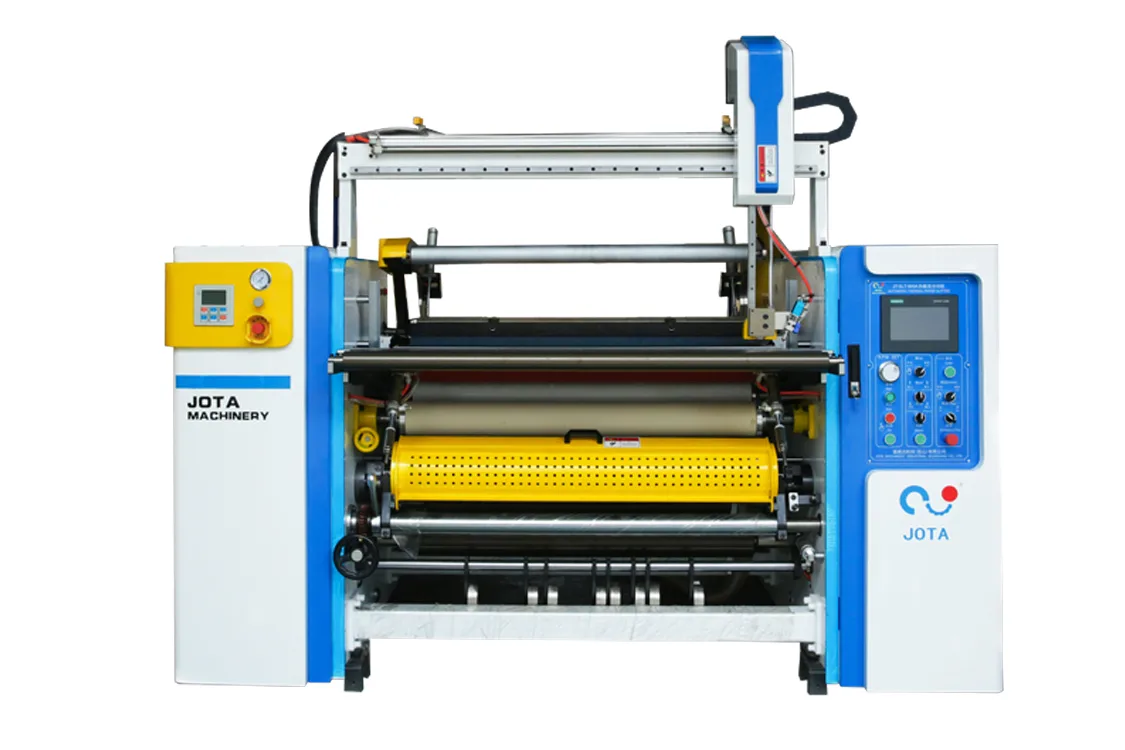
For standard POS and receipt-roll production, thermal paper jumbo rolls are slit and rewound into the required finished widths, diameters and core specifications.
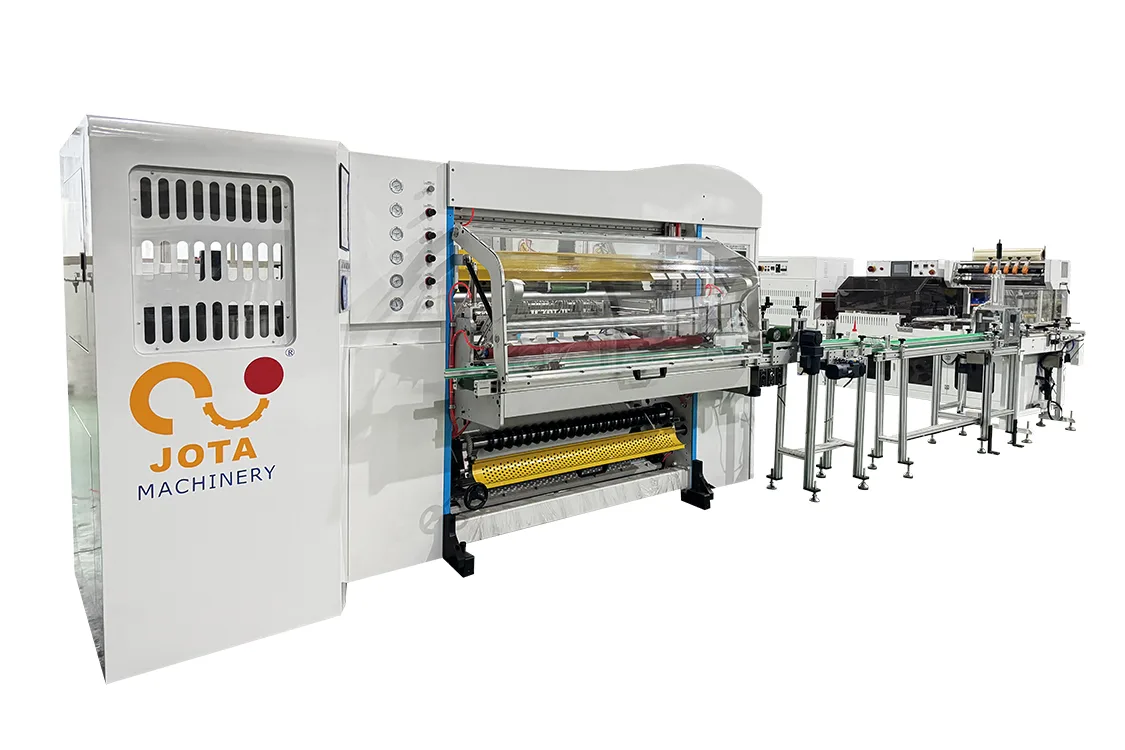
For higher production output, a fully automatic configuration can reduce manual handling and integrate additional roll finishing, packaging or palletizing processes.
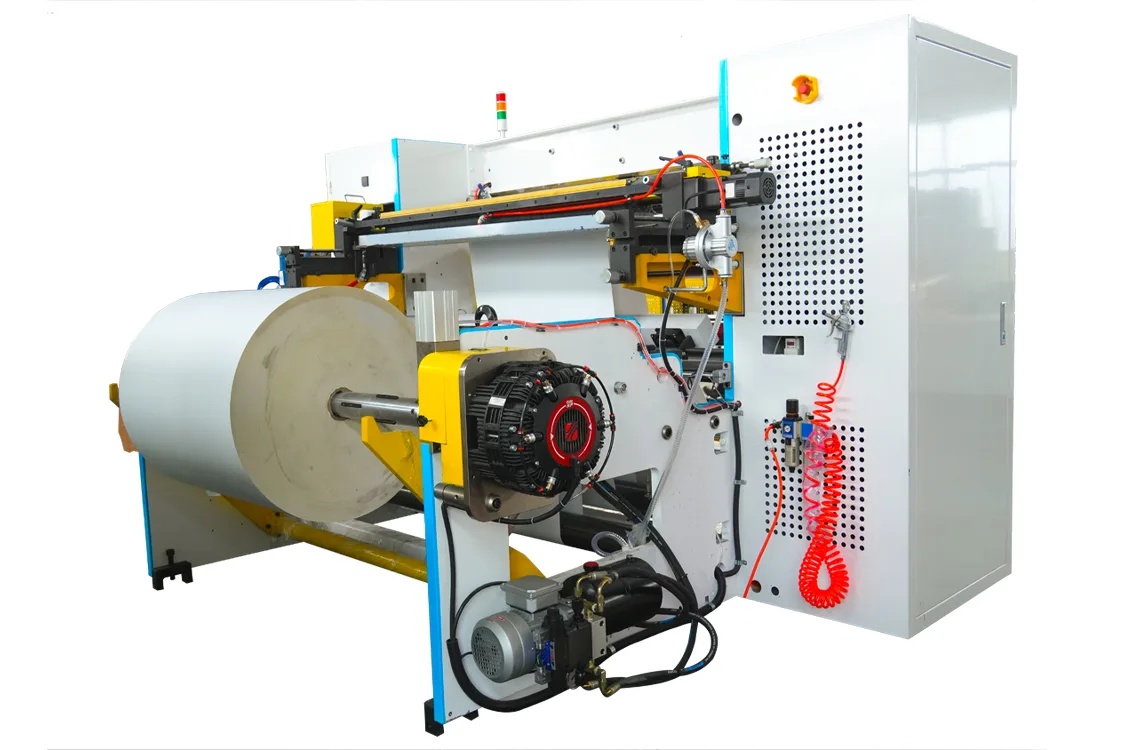
If your rolls require logos or promotional information, inline flexographic printing can be combined with slitting and rewinding in one production process.
Explore JOTA Thermal Paper Slitting and Rewinding Machines
Conclusion: Choose a Factory That Can Demonstrate Its Engineering
Finding a thermal paper slitting machine supplier in China is relatively easy.
Determining whether that supplier can manufacture, configure, test, and support equipment for your production requirements requires more investigation.
Before placing an order, verify the manufacturing facility, engineering responsibilities, technical specifications, and actual production results.
Ask to see the machine operating with representative thermal paper.
Inspect finished roll width, winding quality, diameter, and length accuracy where applicable.
Clarify which automatic functions are included, what Factory Acceptance Testing will cover, and how technical support will be provided after installation.
A reliable manufacturer should be able to explain not only what the machine is designed to do, but also how its performance will be verified.
At JOTA Machinery, our manufacturing operations began in 2011, and our current factory is based in Kunshan, China.
Our team works on machine design, assembly, electrical programming, and testing for thermal paper slitting and rewinding applications.
For buyers planning a new converting factory or upgrading an existing production line, we welcome detailed technical discussions before the equipment is selected.
Looking for a China Thermal Paper Roll Slitting Machine Factory?
Tell JOTA Machinery what you plan to manufacture.
Send us your jumbo roll width, paper GSM and caliper, finished roll width and diameter, required metres per roll, core specifications, and expected production volume.
If you also require inline flexo printing or automatic production functions, include those requirements.
We can review your project, discuss a suitable machine configuration, and prepare a quotation with the relevant technical information.
Contact JOTA Machinery — Request a Factory Quotation
Last Updated on 22/10/2026 by Jota Machinery