


Keyphrase:Expanding into Flexographic Printing in South Africa
Written by Jota Machinery | Bruce Zhou

Introduction: Why Flexographic Printing is the Next Step
If you already operate a thermal paper roll business in South Africa, you’re standing at the threshold of an exciting opportunity. Beyond simply converting jumbo thermal rolls into receipt paper for tills, ATMs, and POS systems, you can unlock an entirely new revenue stream by adding flexographic (flexo) printing.
Flexographic printing, often called the workhorse of roll-to-roll industries, is ideal for producing custom receipts, branded packaging, shipping labels, and tickets. Unlike digital printing, flexo thrives in long runs, offering speed, consistency, and cost efficiency. Importantly, it also works beautifully on substrates like thermal paper, labels, and eco-friendly flexible packaging films.
South Africa’s demand for sustainable packaging and printed rolls is growing rapidly, powered by e-commerce growth, FMCG expansion, and retail innovation. Market reports forecast a 6.39% CAGR through 2030 for flexo printing in the region, making it one of the most promising investment directions for printing and converting businesses.
For a thermal paper entrepreneur, flexo isn’t just diversification—it’s vertical integration. You already own the raw materials and supply chains; now, with inline flexo capability, you can print while slitting, reducing costs and offering value-added products that customers will gladly pay a premium for.
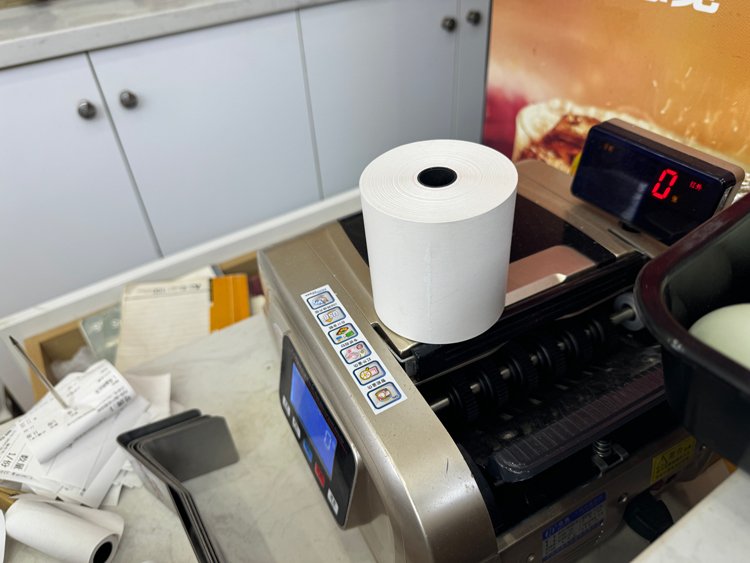
This guide provides a step-by-step roadmap to expand into flexographic printing in South Africa—covering market opportunities, setup requirements, equipment, compliance, investment costs, and profitability.
Step 1: Assess the Market and Build a Plan
Before investing in new technology, it’s critical to confirm demand and position yourself strategically.
Understand the Market Dynamics
- Retail and POS: Supermarkets, petrol stations, and banks increasingly want branded receipts (with logos, promotions, or QR codes).
- Food & Beverage: Restaurants and beverage companies rely on labels for compliance and marketing—flexo provides tamper-evident and eco-friendly options.
- Pharmaceuticals: Strict labeling requirements mean high demand for consistent, high-quality flexo prints.
- E-commerce & Logistics: Shipping labels, barcode rolls, and courier branding are booming with online retail growth.
Conduct Focused Research
Survey your existing thermal paper roll clients. Ask:
- “Would you be interested in branded receipts?”
- “Do you currently source printed labels elsewhere?”
- “What turnaround times are most valuable for you?”
The answers will guide your launch strategy.
Craft a Business Plan
Include:
- Production synergy: Print on jumbo rolls before slitting.
- Revenue targets: R200,000/month in the first phase from 20–50 clients.
- Margins: Expect 20–30% on high-volume runs.
- Positioning: Offer BPA-free thermal rolls with eco inks as a differentiator.
Step 2: Legal Structure and Compliance
Operating in South Africa requires a clear legal framework and environmental responsibility.
- Business Registration: If not already registered, form a Private Company (Pty Ltd) via CIPC (R175). This structure offers liability protection and scalability.
- Tax and Compliance: Register with SARS for income tax, VAT (mandatory above R1 million turnover), PAYE, and UIF.
- Insurance: COIDA (Compensation for Occupational Injuries and Diseases) is required. General liability insurance protects against accidents or defects.
- Environmental Approval: Flexo printing involves inks. If water-based, risks are low, but DEA (Department of Environmental Affairs) requires clearance for waste disposal. Ink waste management plans are essential.
- Safety Regulations: Comply with Occupational Health standards: machinery guards, protective gear, and ventilation.
Tip: Join Printing SA—membership gives you training, legal resources, and networking opportunities.
Step 3: Invest in Equipment and Materials
Your biggest capital decision will be the press itself. Flexo presses range from entry-level stack machines to high-end inline modular systems.
| Equipment/Material | Description | Suppliers (South Africa/Imports) | Cost Estimate (ZAR) |
|---|---|---|---|
| Flexo Printing Press (4-Color) | Stack or inline, 50–100m/min | Afrimart, IPCI, Changhong imports | R250,000–800,000 |
| CTP Plate-Making System | For creating photopolymer plates | Thunderbolt Solutions (Kodak, Miraclon) | R300,000–600,000 |
| Flexo Plates & Anilox Rolls | Plates reusable; anilox control ink flow | Kalideck, Flexo Printing Supplies | R5,000–20,000/set |
| Inks (Water-Based) | Low-VOC, eco inks for thermal rolls | Flint, local ink suppliers | R10,000–50,000 batch |
| Drying & Finishing | UV/IR dryers; add die-cutting/slitting inline | Nilpeter, add-on to existing line | R100,000–300,000 |
Startup Budget: R800,000–1.5M for a small press + ancillaries.
Financing Options:
- Nedbank equipment loans (10–12% interest).
- IDC (Industrial Development Corporation)—green tech funding.
- Buy used presses via Gumtree or auctions for 30–50% less.
Step 4: Build Skills and Train Staff
Flexo presses require skilled operation, but training is available.
- Staffing: Hire 2–3 operators (R15,000–25,000/month).
- Training: Cape Peninsula University offers flexo basics (R5,000–10,000 for a one-week course).
- Workflow:
- Prepress—design artwork.
- Platemaking—expose flexo plates.
- Setup—mount plates and anilox.
- Print—ink transfer, drying inline.
- Finishing—slitting/rewinding rolls.
Tip: Start test runs using scrap thermal paper to fine-tune ink adhesion and color calibration.
Step 5: Launch Operations and Maintain Quality
Pilot Phase
Run small batches for your existing thermal paper clients—offer printed rolls as an upgrade. For example, receipts with the store logo, special offers, or QR codes. Charge a premium of R0.50–2 per roll.
Scale Production
Move to 8-hour shifts, 5 days a week. Gradually expand into labels, tickets, and F&B packaging films.
Quality Control
- Use FSC-certified inks to comply with EU export rules.
- Adopt AI-driven inspection systems for defect detection (increasingly popular in 2025).
- Maintain ISO 9001 quality management systems.
Step 6: Marketing and Building a Client Base
Your advantage lies in synergy—you’re already a trusted supplier of thermal rolls.
Strategies
- Direct Upsell: Bundle printed and plain rolls. “Get your receipts branded for 10% more.”
- Trade Shows: Exhibit at Propak Africa and regional packaging expos.
- Digital Presence: Build a professional website showcasing flexo + slitting capability. Highlight eco features.
- LinkedIn & B2B Outreach: Approach supermarkets, courier companies, and wholesalers.
Pricing Strategy
Flexo print jobs are sold per meter:
- Plain roll: R0.10/meter.
- Printed roll: R0.20–0.50/meter.
That’s a 2–3x value uplift for the same paper substrate.
Step 7: Profitability and ROI
Here’s a practical model:
| Scenario | Monthly Output (km) | Revenue (R/m) | Cost (Ink/Labor) | Net Profit |
|---|---|---|---|---|
| Startup (Low Volume) | 5,000 km | R0.30 | R0.15 | R75,000 |
| Scaled (Year 1) | 20,000 km | R0.40 | R0.20 | R400,000 |
- Break-Even: 6–9 months.
- ROI: 25–40% by Year 2 with automation.
Margins improve as setup waste decreases and operator experience grows.
Challenges and Solutions
- High Setup Waste (5–10%) → Solution: Train staff; use modern plate-mounting systems.
- Import Duties (15–20% on Chinese presses) → Solution: Buy locally or apply for green tech grants.
- Competition from Digital Printing → Solution: Position flexo as cost-effective for long runs.
- Cash Flow Risks → Solution: Lock contracts with retail chains; diversify into labels.
Conclusion: Why Flexo Printing is the Smart Next Move
Expanding into flexographic printing is not just diversification—it’s future-proofing your thermal paper roll business. With consumer demand for sustainable, branded, and compliant packaging growing, flexo puts you at the heart of South Africa’s packaging revolution.
By leveraging your existing converting infrastructure, adding inline flexo is a natural, profitable progression. It strengthens your customer relationships, opens new markets, and creates recurring high-margin revenue streams.
Ask Us for the Solution
At Jota Machinery, we specialize in slitter rewinder machines with inline flexographic printing—the very technology you need to transform your thermal paper roll business into a full-service packaging supplier.
👉 Ask us for the solution today.
🌐 Visit: www.jotamachinery.com
📩 Email: jotamachinery@gmail.com

Contact Our Team!
Thank you for visiting our website and taking an interest in the our products. We’re looking forward to connecting with you and discussing more about how we can help.

Company address
No 68, Shaojing Road, Economic Development Zone, Kunshan City, Suzhou, Jiangsu Province, China

Email Address

Contact Number
+86-13868814910
