


Written by Jota Machinery | Bruce Zhou

How to Start Industrial Thermal Paper Roll Production
Starting industrial thermal paper roll production requires more than choosing a fast slitter rewinder. The production setup should be based on the thermal paper rolls you plan to sell, the jumbo rolls you will use, and the output you need to achieve.

Before selecting equipment, define your finished-roll width, outer diameter or length, core size, paper specification, printing requirements, packaging method and expected production volume.
As production increases, jumbo-roll handling, changeover time, rewinding cycles, finished-roll handling and packaging become just as important as machine speed.

For entrepreneurs and factories looking to tap into this demand, the move into industrial production promises higher returns but also comes with challenges: heavy upfront investment, complex compliance, and the need for specialized machinery. This article will walk you through the process, equipment, plant setup, costs, profitability, and expert tips to help you succeed.
At Jota Machinery, we design and build world-class slitter rewinders, coating lines, and packaging machines for thermal paper production. Contact us today for a customized solution.
1: Define Your Finished Thermal Paper Rolls
| Production Input | Confirm Before Planning |
|---|---|
| Paper | GSM / thickness |
| Finished width | POS or receipt-roll specification |
| Roll size | OD or required length |
| Core | Core ID / coreless |
| Printing | Blank / warning line / branding |
| Packaging | Required finished packaging |
| Output | Rolls per shift / day |
These specifications should be defined before calculating machine capacity.
2: The 5-Step Manufacturing Process
| Step | Description | Key Equipment | Challenges |
|---|---|---|---|
| 1. Raw Material Selection | Base paper + thermal chemicals (BPA-free). | N/A | Must ensure eco compliance. |
| 2. Coating | Apply thermal layer via blade or gravure. | Coating machine + dryers. | Maintain 4–6 micron evenness. |
| 3. Drying | Heat or UV curing to stabilize. | Hot air/infrared dryers. | High energy cost; needs precision. |
| 4. Protective Layer | Acrylic topcoat for UV & abrasion resistance. | Coating machine. | Essential for premium papers. |
| 5. Slitting & Rewinding | Cut jumbo rolls into 57mm, 80mm, etc. | Slitter rewinder, core inserter. | Tension control critical. |
📌 Pro Tip: A single 1.5–2 ton jumbo roll can be converted into 7,000–13,000 POS rolls in one 8-hour shift.
3: Match the Jumbo Roll to Your Production Plan
Thermal paper jumbo-roll specifications affect both material utilization and machine configuration.
The jumbo-roll width should be considered together with the finished-roll width to determine the slit layout. Jumbo-roll diameter and roll weight also affect the unwinding and material-handling requirements.

Before selecting equipment, confirm:
- Jumbo-roll width
- Jumbo-roll diameter
- Paper GSM or thickness
- Finished-roll width
- Finished-roll diameter or length
- Core specification
- Required edge trim
The objective is not simply to use the widest possible jumbo roll. The jumbo roll, slit layout and finished product should be evaluated as one production system.
4: Choose the Production Configuration
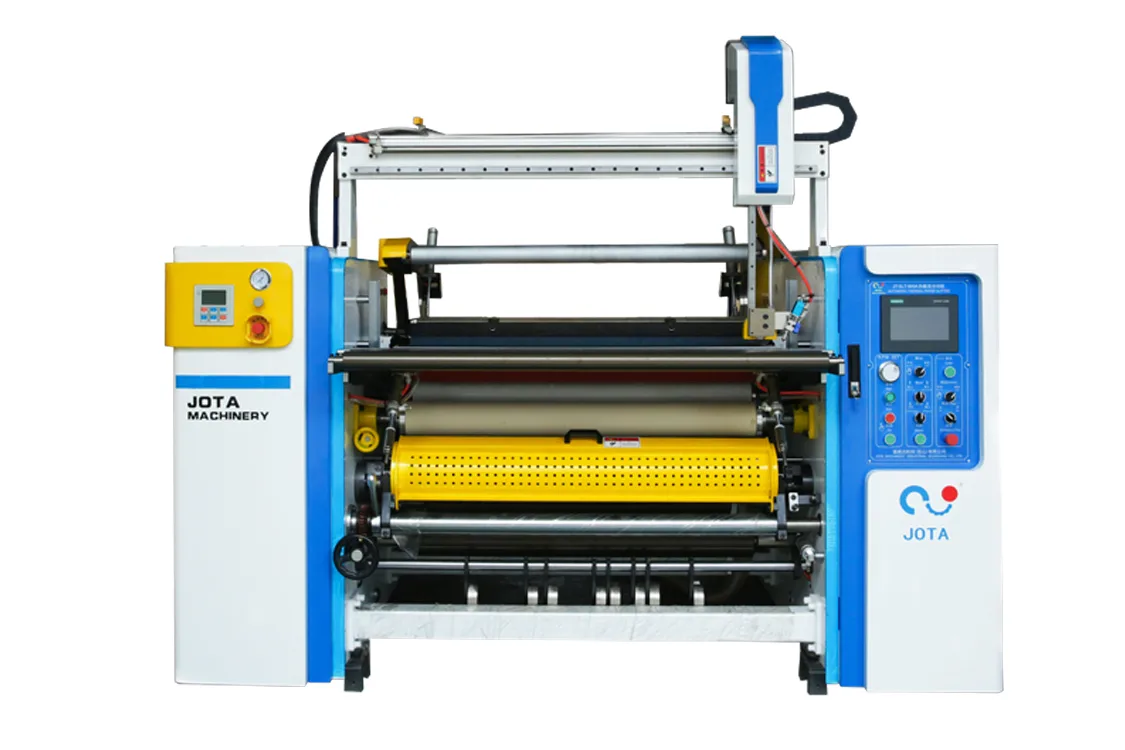
For standard POS and receipt-roll production, thermal paper jumbo rolls are slit and rewound into the required finished widths, diameters and core specifications.
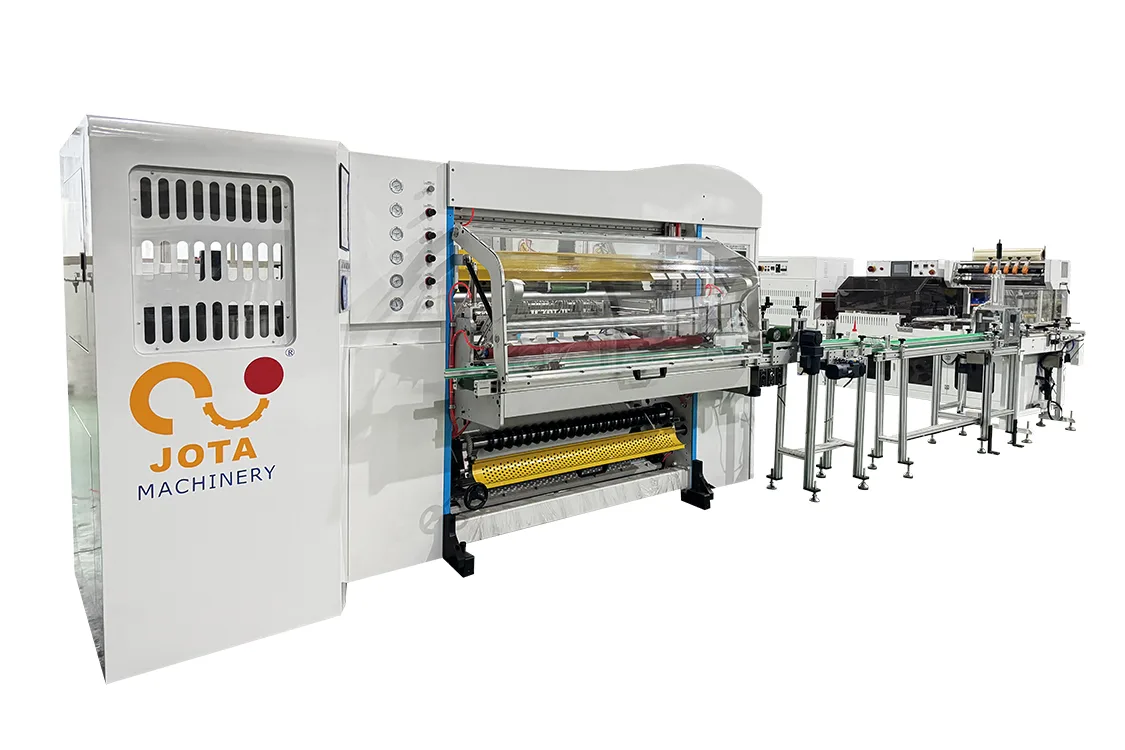
For higher production output, a fully automatic configuration can reduce manual handling and integrate additional roll finishing, packaging or palletizing processes.
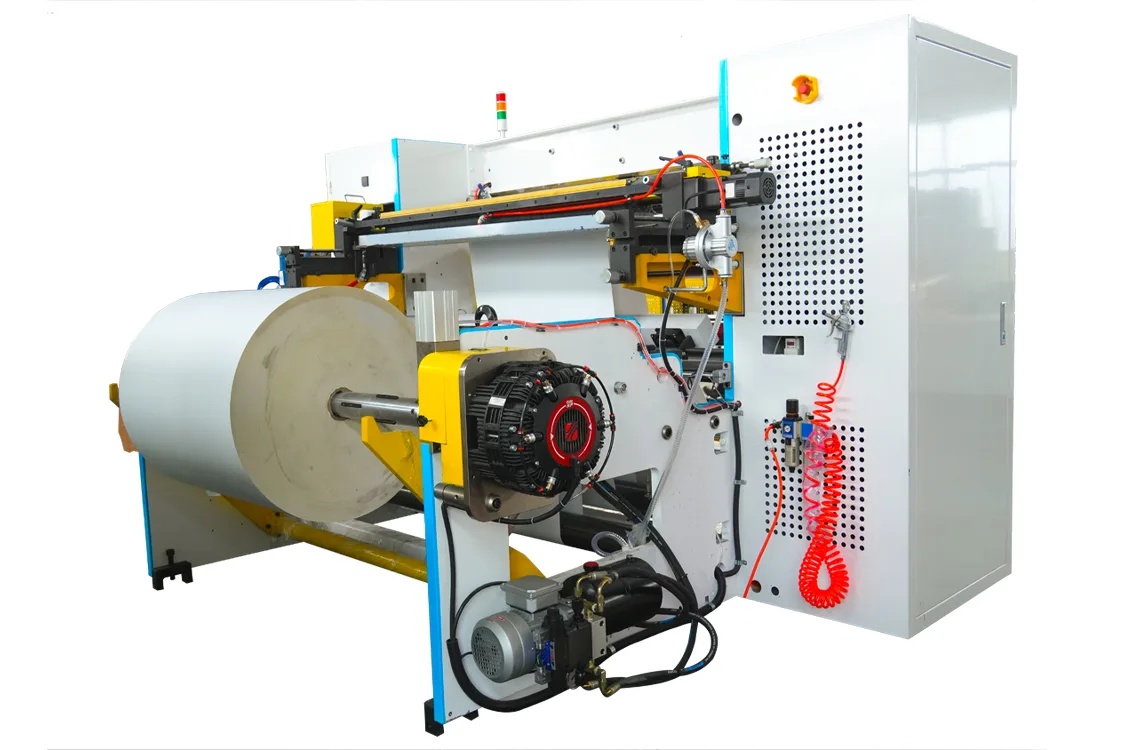
If your rolls require logos or promotional information, inline flexographic printing can be combined with slitting and rewinding in one production process.
5: Plan the Complete Production Flow
Industrial production should be planned as a complete material flow rather than around a single machine.
A standard converting operation may use separate slitting, rewinding and packaging processes, while higher-output production may require additional automation for roll handling, packaging or palletizing.
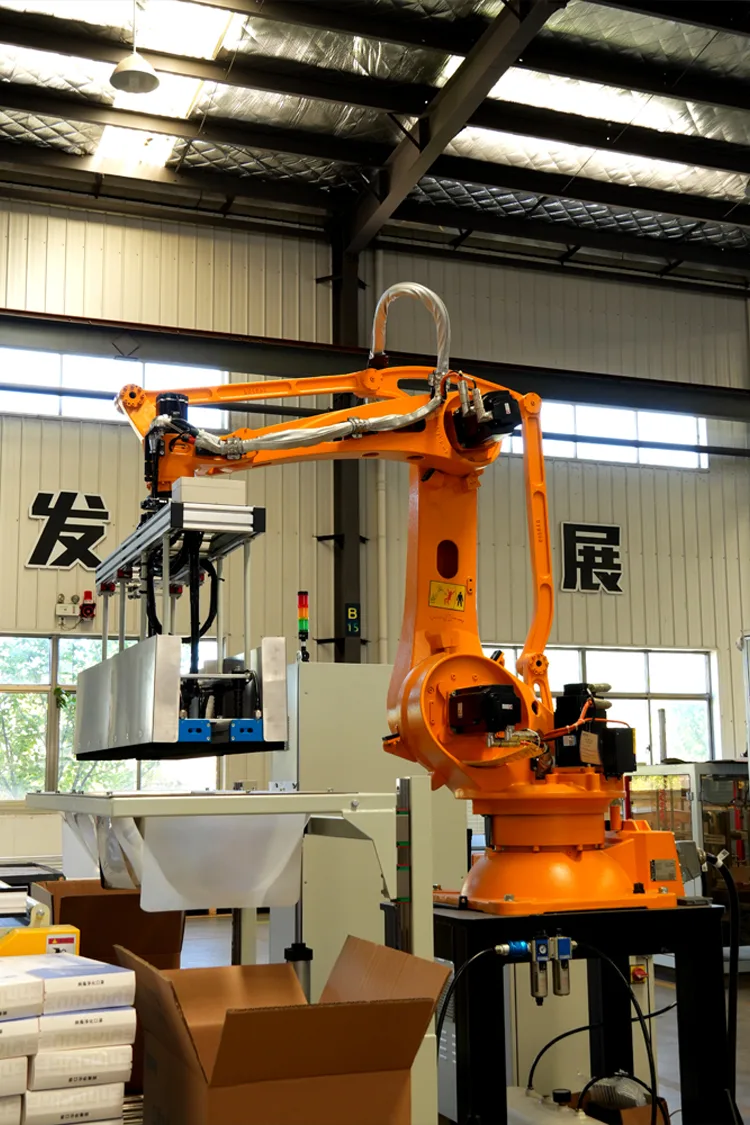
The final configuration should follow the finished product, production volume and packaging requirements.
6: Decide Where Automation Is Needed
More automation does not automatically mean a better production line. Automation should solve a specific production bottleneck.
For example, additional automation may be considered when manual finished-roll handling cannot keep pace with the rewinding cycle, when packaging limits production output, or when repetitive material handling requires too much labor.
For higher-output projects, downstream equipment can also be considered for finished-roll handling, packaging and palletizing.
The appropriate automation level depends on required output, finished-roll range, labor arrangement and packaging requirements.
7: Plan the Factory Around Material Flow
A thermal paper roll factory should allow jumbo rolls and finished products to move through production without unnecessary handling.
The layout should consider space for:
- Thermal paper jumbo-roll storage
- Jumbo-roll loading and machine access
- Slitting and rewinding
- Printing, when required
- Finished-roll handling
- Packaging
- Finished-goods storage
- Air compressor and supporting equipment
- Machine maintenance and operator access
Do not determine workshop size from the machine footprint alone. Material movement, operation, maintenance and downstream processes also require working space.
8: What to Prepare Before Requesting a Machine Quote
| Category | Information to Provide |
|---|---|
| Jumbo Roll | Width, diameter, GSM or thickness |
| Finished Roll | Width, OD or length, core size |
| Product Range | Main roll sizes you plan to produce |
| Printing | None, warning line, branding or other printing |
| Output | Expected production per shift or day |
| Packaging | Required finished packaging method |
| Automation | Standard or higher automation requirement |
With these specifications, the production configuration can be evaluated around your actual requirements instead of simply comparing machine width or maximum speed.
Planning an Industrial Thermal Paper Roll Production Line?
If you already know the thermal paper rolls you plan to produce, send us your jumbo-roll specifications, finished-roll sizes, required output, printing requirements and packaging method.
JOTA can review the production requirements and discuss the appropriate slitting, rewinding and automation configuration for the project.

Contact Our Team!
Thank you for visiting our website and taking an interest in the our products. We’re looking forward to connecting with you and discussing more about how we can help.

Company address
No 68, Shaojing Road, Economic Development Zone, Kunshan City, Suzhou, Jiangsu Province, China

Email Address

Contact Number
+86-13868814910
