

Written by Bruce Zhou
Founder & Managing Director | JOTA Machinery
Paper converting machinery specialist since 2002.
Connect with me on LinkedIn
Published: 28,October, 2026
Last Updated: 28,October, 2026 15:40:59 PM GMT+8
A thermal paper roll manufacturer finishes a batch of POS receipt rolls. The slitting width is correct, the outside diameter meets the order specification, and the rolls appear ready for packaging.
However, when the operator removes a finished roll from the rewinding section, the paper layers feel unusually loose.
The roll can be compressed more easily than expected. Some outer layers move when handled, while other rolls begin losing their cylindrical shape.
These are common symptoms of loose winding in thermal printer rolls.
For manufacturers producing POS paper rolls, cash register receipt rolls, card machine rolls, and other thermal paper products, winding quality matters just as much as cutting accuracy.
A roll may look acceptable immediately after production but become deformed during packaging, storage, or transportation.
In some cases, loosely wound rolls may also contain less paper than expected for their outside diameter.
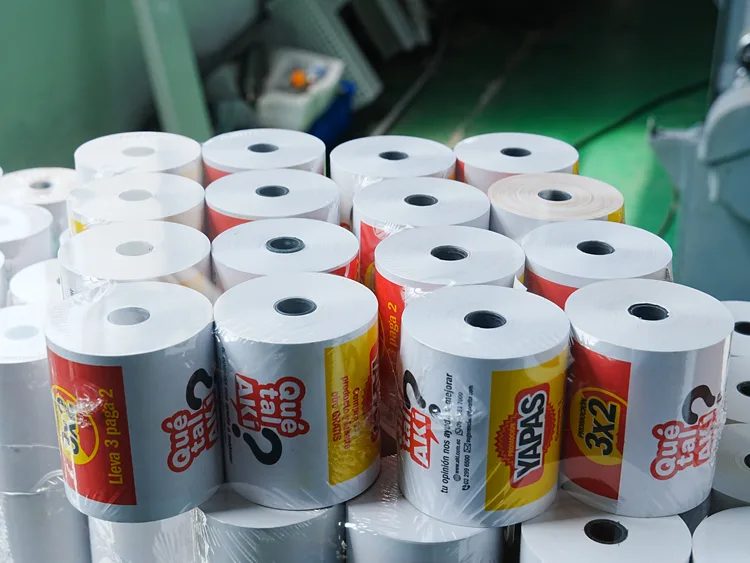
So what causes this problem?
The most common areas to investigate are rewinding tension, winding torque, initial winding conditions, lay-on roller pressure where fitted, and the stability of the web as it passes through the slitter rewinder.
However, increasing tension is not always the correct solution. Excessively tight winding can create its own defects.
This article explains why thermal printer rolls become loosely wound, how to identify the underlying cause, and what manufacturers can do to maintain consistent finished roll quality.
1. What Is Loose Winding in Thermal Paper Rolls?
Loose winding occurs when the paper layers are not held together with sufficient stability during the rewinding process.
Instead of forming a consistent cylindrical roll, the layers may have excessive freedom to move relative to one another.
The resulting roll may feel soft, deform under moderate handling pressure, or show poor layer stability.
Operators sometimes describe these products as soft rolls or loosely wound receipt rolls.
How Can You Recognise a Loosely Wound Roll?
Several observations may indicate inadequate winding firmness.
The outer layers may shift when the roll is handled.
The roll may be noticeably softer than an approved reference sample.
Its shape may become oval or distorted under handling or packaging loads.
The roll ends may become uneven if the layers move sideways.
However, none of these observations alone identifies the precise cause.
For example, an uneven roll end may result from web misalignment rather than insufficient winding firmness.
A roll that feels soft may also have a different paper grade or internal construction from the reference sample.
A reliable diagnosis should compare rolls made from the same material under controlled conditions.
2. Insufficient Rewinding Tension
One of the first parameters to investigate is the tension applied during rewinding.
Web tension helps control the paper as it travels through the machine and enters the winding section.
If the tension is too low for the winding arrangement, the paper may not form a sufficiently stable roll.
What Happens When Rewinding Tension Is Too Low?
The web may enter the rewinding section without adequate control.
Depending on the winding mechanism, layers may form with insufficient firmness.
The finished roll can become soft, unstable, or more susceptible to deformation.
The operator may also notice wrinkles or inconsistent winding behaviour.
Why Not Simply Increase the Tension?
Increasing the tension may improve the roll’s firmness in some situations, but excessive tension can create additional problems.
The paper may become overly stressed.
The inner layers may be compressed excessively.
The core or roll structure may deform.
Other winding defects, including certain forms of telescoping, may become more likely.
The correct objective is not maximum tension.
It is stable, appropriate winding tension that produces an acceptable roll structure.
How to Check the Tension Setting
Start by comparing the current settings with the machine’s approved parameters for the paper grade and finished roll specification.
If the machine provides tension feedback, examine whether the actual measured value follows the intended control profile.
Pay particular attention to acceleration, steady running, and deceleration.
Do not adjust tension aggressively while investigating the problem.
Use controlled changes within the machine manufacturer’s permitted operating range.
3. Unstable Tension Can Be Worse Than Consistently Low Tension
A thermal paper slitter rewinder may have a reasonable average tension setting but still produce inconsistent rolls.
This can happen when tension fluctuates during production.
For example, the paper may experience relatively high tension during acceleration, lower tension during steady running, and another sudden change when the machine decelerates.
These variations can affect the internal structure of the finished roll.
Where Can Tension Fluctuation Originate?
Possible sources include the unwind system, material movement through the machine, drive-control behaviour, and the rewinding mechanism.
If the incoming paper tension varies, the rewinding section may need to compensate for those changes.
If the control response is unsuitable, the winding conditions may become inconsistent.
Why Roll Diameter Matters
As the finished roll grows, the relationship between winding torque, rotational speed, and roll diameter changes.
The control system must account for these changes according to the machine’s winding method.
A setting that works at a small roll diameter may not remain appropriate throughout the complete winding cycle.
What Should Operators Inspect?
Observe whether the problem begins at a particular roll diameter.
Compare the first layers, middle layers, and outer layers.
If the roll begins firmly but becomes loose near completion, investigate the winding settings as the diameter increases.
If the entire roll is soft, including the inner layers, examine the initial winding conditions and overall control parameters.
This approach is more useful than increasing the entire tension profile without identifying the affected stage.
4. Starting the Roll Too Soft
The first layers of a thermal paper roll establish the foundation for the remaining winding process.
If those layers are formed too loosely, the roll may develop an unstable internal structure.
Additional layers can hide the problem temporarily, but they do not necessarily correct it.
What Does a Poor Winding Start Look Like?
The inner paper layers may appear loose or irregular.
The first layers may not remain properly positioned.
The finished roll may deform around the core.
In certain cases, the paper near the core may shift relative to the remaining layers.
Why the Beginning of Winding Deserves Special Attention
Small thermal receipt rolls undergo repeated winding cycles.
Every time the machine begins a new roll, the web must enter the winding section under suitable conditions.
If the initial winding sequence is unstable, the same defect can repeat across many finished rolls.
How to Correct a Soft Start
Check the approved startup winding parameters.
Verify that the initial layers are properly formed and that the relevant winding mechanism operates consistently.
For cored products, confirm that the core is suitable and correctly positioned.
Do not compensate for a poor start by applying excessive tension throughout the entire winding cycle.
A stable initial winding condition is preferable to trying to correct an already unstable roll near completion.
5. Incorrect Winding Torque and Tension Profiles
Winding torque and web tension are related, but they are not interchangeable.
The torque applied by the rewinding drive influences how the finished roll is built.
The relationship depends on the winding mechanism.
For a centre-driven winding system, the controller must account for changes in roll diameter as the paper accumulates.
Why Constant Settings May Not Be Suitable
The force and torque relationships change during the winding cycle.
An unsuitable control strategy may produce a roll that is firm near the core but loose toward the outside.
The opposite can also happen: outer layers may become excessively tight relative to the inner layers.
Both conditions can produce undesirable roll structures.
What Is Taper Tension?
Taper tension refers to a control strategy in which the winding tension target is reduced as the roll diameter increases.
It can be useful for managing the internal stress distribution in certain winding applications.
However, taper tension is not a universal cure for loose rolls.
The appropriate profile depends on the machine’s winding principle, paper grade, finished diameter, and product requirements.
Can Too Much Taper Cause Loose Outer Layers?
Yes.
If the tension or winding-force profile decreases too aggressively for the application, the outer layers may not develop adequate stability.
However, insufficient taper or excessive winding force can also create defects.
The correct profile must be established through the machine’s recommended settings and actual material trials.
There is no single taper percentage that should be prescribed for every thermal paper slitter rewinder.
6. Lay-On Roller Pressure and Layer Consolidation
Some thermal paper slitter rewinders use a lay-on roller to influence the contact between the incoming web and the developing finished roll.
This roller can help control entrained air and the consolidation of successive paper layers.
When the machine is equipped with this arrangement, the lay-on pressure becomes another parameter worth investigating.
What Happens When Pressure Is Too Low?
Insufficient pressure may allow more air to remain between layers.
The developing roll may have lower firmness than intended.
In some configurations, the effect becomes more noticeable as the roll diameter grows.
What Happens When Pressure Is Too High?
Excessive pressure can over-compress the developing roll or disturb the winding structure.
Uneven pressure may create different winding conditions across the working width.
This can result in some rolls being firmer than others.
Inspect Roller Condition
Check for surface contamination, wear, and mechanical damage.
A roller with unsuitable surface conditions may not provide consistent contact.
Also inspect alignment and the approved pressure settings.
Cleaning and maintenance should follow the manufacturer’s instructions.
Do not apply solvents or abrasive cleaning methods without confirming their compatibility with the roller covering.
If the machine does not have a lay-on roller, investigate the actual winding mechanism rather than applying adjustments intended for a different machine design.
7. Core Quality and Initial Roll Formation
For cored thermal receipt rolls, the paper core provides the base around which the finished paper is wound.
A damaged, deformed, or incorrectly positioned core can affect the shape and stability of the finished product.
Poor Core Quality
If the paper core is not dimensionally consistent, the developing roll may have an irregular foundation.
This can contribute to poor roll geometry or winding defects.
Incorrect Core Positioning
If the core is not aligned with the incoming slit paper, the first layers may form incorrectly.
The resulting product may show uneven edges or other winding problems.
Core Dimensions
The core must meet the machine and finished product specifications.
Its internal diameter, outside diameter, wall quality, and relevant tolerances should be suitable for the application.
Do not assume that every paper core with the same nominal diameter behaves identically.
What About Coreless Thermal Paper Rolls?
Coreless products use a different winding arrangement.
Their initial roll formation depends on the specific coreless winding mechanism.
The correct troubleshooting procedure should follow that machine design.
In either case, the objective is to form a stable foundation for the remaining paper layers.
8. Is the Machine Running Too Fast?
Operating speed can affect winding quality when the machine’s mechanical and control systems cannot maintain stable conditions.
A machine may produce acceptable rolls at a moderate speed but begin producing softer or inconsistent rolls when the operating speed increases.
Why Can Higher Speed Change the Result?
Higher web speed can increase the importance of acceleration response, tension stability, winding control, and air entrainment.
If the winding system is not operating under suitable conditions, the finished roll structure may change.
Should You Reduce Speed?
A controlled speed reduction can be useful as a diagnostic test.
If winding quality improves consistently at a lower approved speed, investigate the machine’s dynamic behaviour.
However, reducing speed does not establish the cause by itself.
The problem could involve tension response, winding torque, mechanical vibration, or another speed-dependent factor.
Don’t Use Speed as the Only Adjustment
If the machine produces loose rolls at high speed, repeatedly changing the speed without checking the winding controls may only conceal the underlying problem.
The correct goal is to establish an operating range that produces consistent, saleable finished rolls.
9. Raw Thermal Paper Quality Can Influence Winding Firmness
The characteristics of jumbo thermal paper affect how the material behaves during slitting and rewinding.
Even with unchanged machine settings, different paper grades may produce different roll structures.
Paper Caliper
Caliper is the thickness of the paper.
Variation in caliper can influence the relationship between paper length, finished roll diameter, and winding structure.
If the material has significant thickness variation across the web, different finished lanes may behave differently.
Paper Stiffness and Surface Properties
The stiffness and surface characteristics of the paper can influence how the layers settle during winding.
Different coatings and base-paper properties may also affect interlayer friction.
Moisture and Storage Conditions
Paper can respond to changes in environmental moisture.
Inappropriate storage conditions may alter its dimensions, stiffness, or handling characteristics.
The degree of change depends on the material.
What Should the Factory Check?
If loose winding begins after changing jumbo paper suppliers or material batches, compare the new material with previously acceptable batches.
Review the paper grade, caliper, storage history, and relevant technical specifications.
Do not assume that a winding setting suitable for one jumbo paper grade will automatically work for another.
10. Does Loose Winding Mean the Roll Contains Less Paper?
This question is particularly relevant for manufacturers selling thermal receipt rolls by outside diameter.
Two rolls with the same nominal width and outside diameter do not necessarily contain the same length of paper.
Paper caliper, core dimensions, and the way the layers are wound can all affect the relationship.
Why a Soft Roll May Contain Less Paper
When the layers are wound less compactly, the roll can contain more space between them.
A loosely wound roll may therefore reach a specified outside diameter with less paper than a more compact roll made from the same material.
This is possible, but it is not automatic.
What If the Machine Measures Length?
If the machine accurately controls the amount of paper wound using a measuring wheel, encoder, and PLC, loose winding does not necessarily reduce the paper length.
Instead, a loosely wound roll may reach a larger outside diameter for the same measured paper length.
Therefore, a factory should distinguish between two different quality characteristics:
Winding firmness: How stable and compact the finished roll is.
Actual paper length: How much paper is contained in the finished roll.
These properties are related but should be verified separately.
How to Check the Actual Length
Use an appropriate independent measurement method.
Compare the finished paper length with the order specification.
Do not infer the exact number of metres solely from the outside diameter.
This is especially important when investigating customer complaints about rolls that appear unusually soft or contain less paper than expected.
11. What Happens to Loosely Wound Rolls During Shipping?
A finished thermal paper roll may look acceptable at the rewinding station but develop problems during handling and transportation.
Loose winding makes the internal layers more susceptible to relative movement under certain conditions.
Roll Deformation
Soft rolls may lose their original cylindrical shape when subjected to inappropriate pressure.
This can become more noticeable during stacking or carton handling.
Telescoping
If the layers move sideways, the roll ends may become stepped or cone-shaped.
This defect is called telescoping.
However, telescoping can also result from other winding and alignment problems.
Surface Damage
Inadequate packaging may allow finished rolls to rub against one another during transportation.
Thermal paper surfaces can be sensitive to frictional heat and mechanical contact.
Dark marks may develop under some conditions.
Printer Feeding Problems
A deformed roll may not rotate or feed as intended in a compatible printer.
The actual effect depends on the printer mechanism and the severity of the defect.
Packaging Is Not a Substitute for Correct Winding
Individual wrapping and suitable carton protection can reduce damage during distribution.
However, packaging cannot reliably correct a roll that was formed with an unstable winding structure.
The factory should ensure acceptable winding quality before the product enters the packaging process.
12. How to Troubleshoot Loose Winding on a Thermal Paper Slitter Rewinder
Before adjusting the machine, examine when and where the winding problem develops.
| Observed Problem | Possible Cause | Recommended Investigation |
|---|---|---|
| Entire roll feels soft | Inadequate winding force or unsuitable control settings | Review winding tension and torque |
| Inner layers are loose | Poor initial winding conditions | Inspect startup sequence and initial roll formation |
| Outer layers become loose | Unsuitable diameter-dependent winding profile | Check settings as roll diameter increases |
| Some lanes are soft while others are firm | Lane-specific winding conditions or material differences | Compare affected positions and paper characteristics |
| Roll firmness changes with machine speed | Unstable dynamic control or mechanical behaviour | Compare approved operating speeds |
| Roll deforms after unloading | Insufficient roll stability or handling pressure | Inspect before and after unloading |
| Loose winding begins with a new paper batch | Material properties differ | Compare jumbo paper specifications |
| Roll diameter is correct but length is short | Length measurement or diameter-based completion issue | Measure actual length independently |
These patterns are diagnostic starting points, not guaranteed diagnoses.
Multiple factors may contribute to the same defect.
A Practical Investigation Sequence
Begin by producing representative rolls under the current approved settings.
Inspect the inner and outer layers to determine where the roll becomes soft.
Next, compare the current winding parameters with those used for previously acceptable production.
Check actual tension feedback where the machine provides it.
If the machine includes a lay-on roller, inspect the applicable pressure and alignment settings.
Review the initial winding conditions, material grade, and relevant mechanical components.
Then make controlled adjustments within the equipment manufacturer’s permitted range.
Produce another test batch and compare the results.
Avoid changing several parameters simultaneously, because that makes it difficult to determine which adjustment corrected the problem.
13. How to Prevent Loose Winding During Daily Production
A reliable manufacturing process should produce consistent winding quality across repeated production cycles.
The factory should not depend entirely on an experienced operator making different adjustments for every roll.
Instead, establish verified operating procedures for the products manufactured most frequently.
Prepare Settings for Different Roll Specifications
A 56 mm thermal paper roll may have different winding requirements from a wider or larger-diameter product.
The appropriate settings also depend on the paper grade and winding configuration.
Record successful setups for each important product category.
Inspect the First Finished Rolls
After changing the paper grade, core specification, or winding parameters, inspect representative rolls before continuing full production.
Check firmness, shape, edges, and other specified characteristics.
Monitor Changes During the Shift
If winding quality begins deteriorating, investigate the operating conditions before large quantities of defective rolls are produced.
Pay particular attention to changes in paper batches, machine speed, or winding-cycle behaviour.
Maintain the Relevant Mechanical Components
Inspect rollers, relevant winding components, and alignment according to the manufacturer’s maintenance schedule.
A mechanical problem should not be concealed by adjusting tension excessively.
Train Operators
Operators should understand how to recognise loose winding, distinguish it from telescoping, and identify when engineering assistance is needed.
Consistent procedures help reduce unnecessary machine adjustments and quality variation.
14. How JOTA Machinery Approaches Thermal Paper Winding Quality
At JOTA Machinery, we manufacture thermal paper slitting and rewinding equipment for different converting requirements.
Our machines include 900 mm and 1400 mm working-width configurations for processing suitable jumbo thermal paper rolls.
The winding system must be considered alongside the paper grade, finished roll specifications, and production requirements.
Mechanical and Electrical Systems Must Work Together
Thermal paper slitting and rewinding involves coordinated movement between the unwind section, slitting system, and rewinding mechanism.
Stable operation depends on the relevant mechanical components and control functions working correctly.
Our in-house engineering and programming teams work on the machine configurations and control systems used in JOTA equipment.
The appropriate winding settings depend on the supplied machine model and the customer’s application.
Factory Testing Should Evaluate Finished Roll Quality
When purchasing a thermal paper slitter rewinder, buyers should not evaluate the machine solely by its advertised maximum speed.
The actual finished rolls should also be inspected.
Relevant checks may include:
- Slitting width accuracy
- Finished roll diameter
- Winding firmness and shape
- Roll-end alignment
- Actual paper length, where specified
- Consistency across representative production cycles
The factory and buyer should establish suitable acceptance criteria before testing.
What Information Helps Diagnose a Winding Problem?
If an existing JOTA machine is producing soft thermal receipt rolls, useful information includes the jumbo paper grade, finished roll size, operating speed, active winding settings, and photographs of the affected products.
It is also helpful to describe whether the entire roll is loose or only particular layers.
These observations can help the engineering team identify which part of the winding process requires investigation.
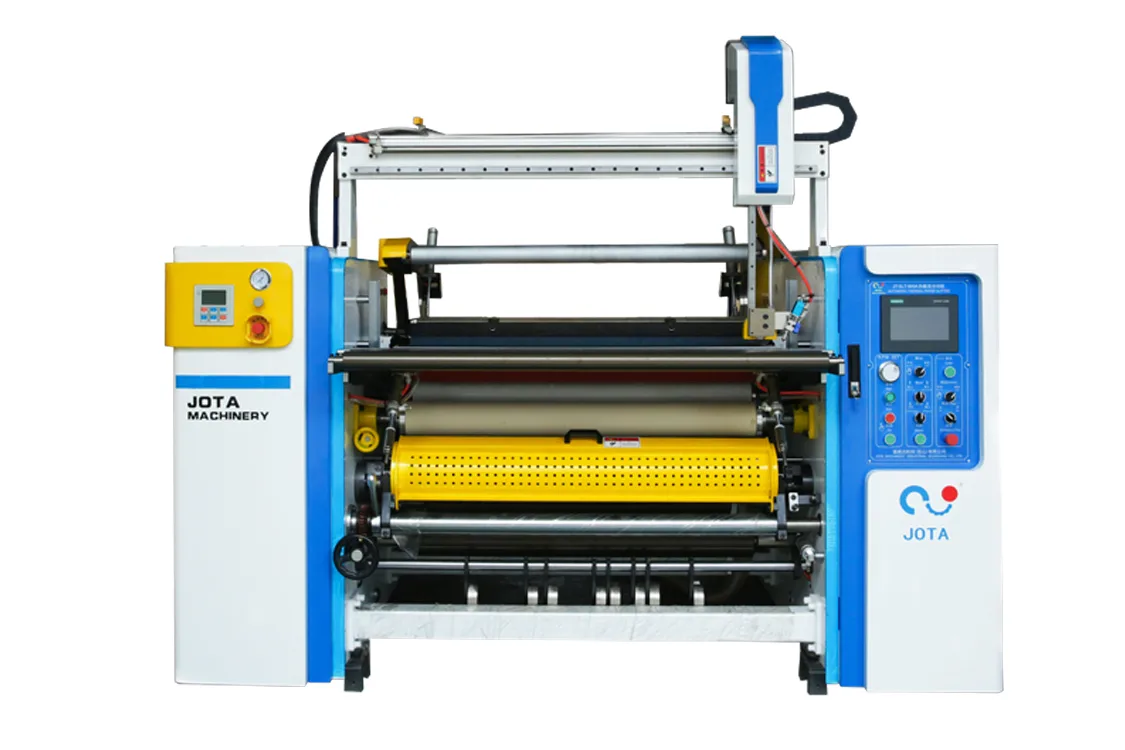
For standard POS and receipt-roll production, thermal paper jumbo rolls are slit and rewound into the required finished widths, diameters and core specifications.
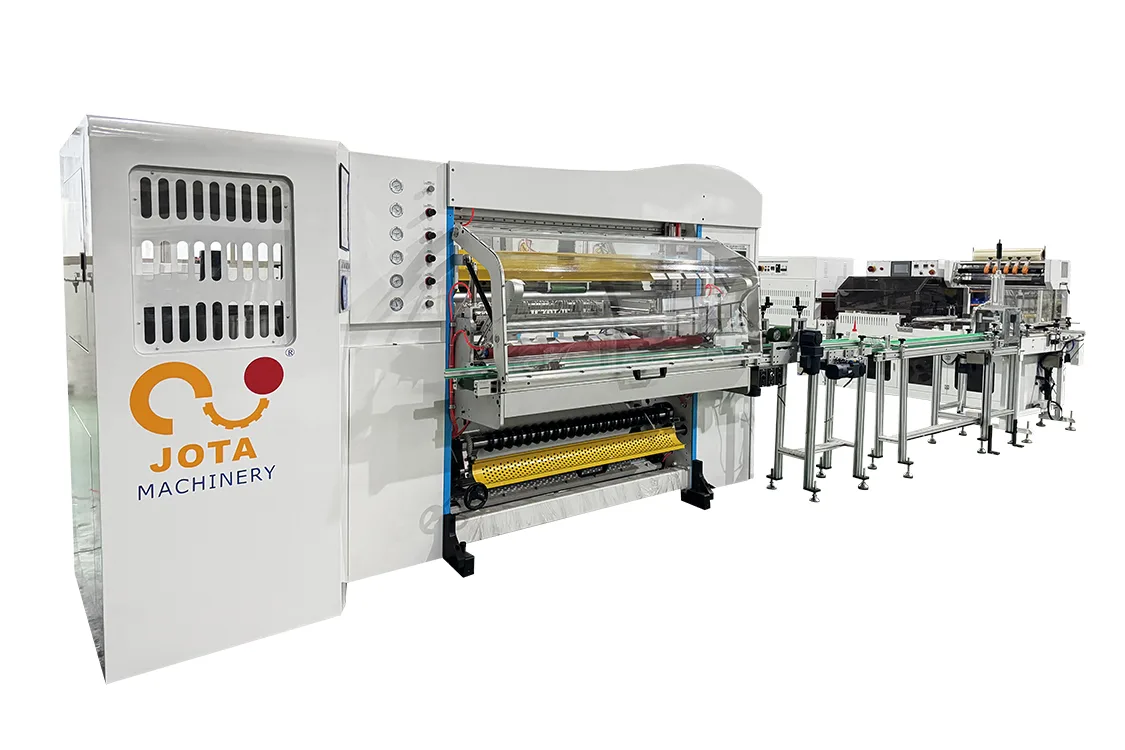
For higher production output, a fully automatic configuration can reduce manual handling and integrate additional roll finishing, packaging or palletizing processes.
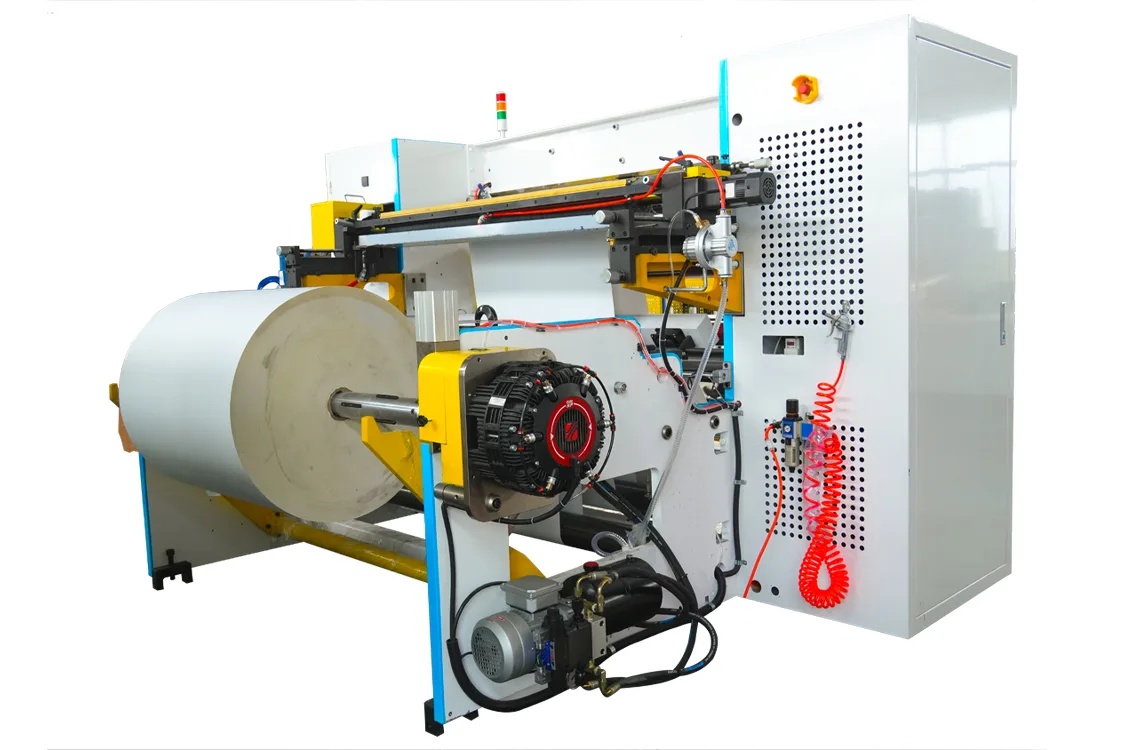
If your rolls require logos or promotional information, inline flexographic printing can be combined with slitting and rewinding in one production process.
Explore JOTA Thermal Paper Slitting and Rewinding Machines
Conclusion: Consistent Winding Matters More Than Maximum Tightness
Loose winding in thermal printer rolls is usually associated with unsuitable or unstable winding conditions.
Insufficient winding tension, poor initial layer formation, inappropriate winding torque, and uneven lay-on pressure can all contribute.
Material properties, machine operating speed, and handling conditions may also affect the finished roll.
The correct solution is not simply to increase tension.
Excessive winding force can cause different problems, including overly hard rolls, deformation, and unwanted internal stresses.
The first step is to identify where the loose winding begins.
If the inner layers are unstable, investigate the start of the winding cycle.
If the outer layers become loose, review the winding conditions as the roll diameter increases.
If the problem affects only certain lanes, examine local material and mechanical conditions.
Most importantly, verify the finished product rather than relying solely on the machine’s displayed settings.
A properly manufactured thermal receipt roll should have stable winding, suitable geometry, and the correct amount of paper for its specified product requirements.
Need Help With Thermal Paper Roll Winding Quality?
JOTA Machinery manufactures thermal paper slitting and rewinding equipment for POS receipt rolls, cash register rolls, and other thermal paper converting applications.
If you’re planning a new production line or troubleshooting an existing JOTA machine, share your jumbo paper specifications, finished roll dimensions, operating conditions, and the defects you are experiencing.
Our engineering team can discuss suitable equipment configurations and relevant winding-quality checks.
Contact JOTA Machinery About Thermal Paper Slitting and Rewinding
Last Updated on 28/10/2026 by Jota Machinery