In the world of receipts, labels, and retail transactions, one product quietly powers billions of operations daily — thermal paper. And behind every perfectly wound POS or credit card roll lies its unsung hero: the thermal paper jumbo roll.
Thermal Paper Jumbo Roll
Whether you’re a paper converter, a reseller looking to maximize margins, or a newcomer entering the thermal paper industry, this guide will walk you through every essential aspect of thermal paper jumbo rolls — what they are, how to select them, and how to calculate costs, weights, and output like a pro.
Let’s dive in — not just with numbers, but with real-world know-how.
✅ Why Thermal Paper Jumbo Rolls Matter
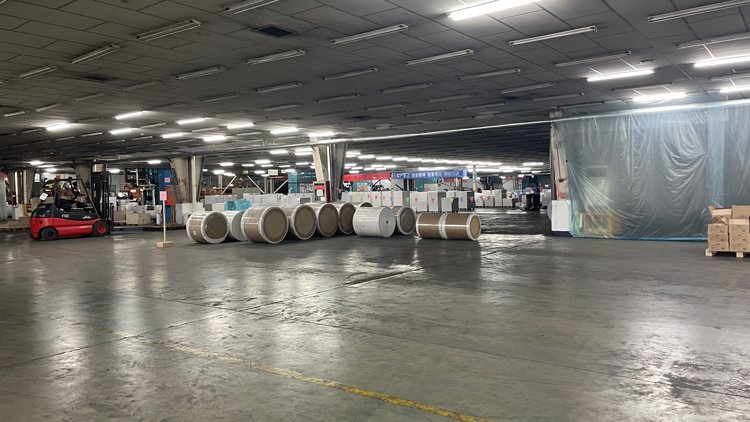
Thermal paper jumbo rolls are the raw material used by converters to produce smaller POS, receipt, ATM and payment-terminal rolls.
Converting jumbo rolls locally gives manufacturers control over finished-roll width, diameter or length, core specification, packaging and optional printing. Whether local converting is more economical than importing finished rolls depends on material cost, freight, labor, production volume and local market requirements.
🧾 1. What Is a Thermal Paper Jumbo Roll?
A thermal paper jumbo roll (also called a mother roll or master roll) is a large roll of thermal paper designed to be cut into smaller rolls for credit card machines, POS terminals, label printers, and kiosks.
Common industry names include:
Big thermal roll
Slitter roll
Master thermal roll
Giant roll
Mother roll
These jumbo rolls are the starting point for your production line.
📐 2. Understanding Thermal Jumbo Roll Sizes
Jumbo roll size is typically described as:
Width (mm) × Length (m) × Core (mm)
📌 Example:
795mm x 8000m x 76mm core — the core is always 3 inches (76mm)
🧮 Why Width Matters:
Finished Roll Width
Recommended Jumbo Width
80mm POS roll
401mm, 636mm, 795mm
57mm Credit roll
565mm, 790mm, 844mm
Some converters produce nominal 80 mm and 57 mm receipt rolls slightly below the nominal width, depending on the printer specification and customer tolerance. Always confirm the required finished width with the buyer before setting the slit layout.
⚖️ 3. What Is GSM and Why It Matters
GSM = Grams per Square Meter
It’s the most important number when purchasing thermal jumbo rolls. GSM tells you:
How heavy the paper is
How thick and durable it is
How much yield you get per ton
How well it prints and feeds
📊 Common GSM Levels:
GSM
Thickness (μm)
Use Case
48gsm
54–58μm
Lightweight ATM/kiosk receipts
55gsm
60–64μm
57mm x 40mm credit card rolls
65gsm
83–86μm
80mm x 80mm POS receipt rolls
70–80gsm
90–100μm
Labels, shipping tickets, etc.
Higher GSM generally means more paper mass per square meter, but it does not by itself indicate better thermal paper quality. Print sensitivity, coating uniformity, smoothness, caliper and application requirements should also be considered.
💸 4. How to Calculate Price per Ton or Square Meter
Thermal paper is usually sold either by the ton or by square meter (m²).
🔢 Price per m²:
🔢 Price per m² Calculator
Price per m2 =
GSM × Price per Ton
1000
Example (55gsm at $1500/ton): 55 × 1500 ÷ 1000 = $82.5 per 1000m²
🔁 Price per Ton:
📘Price Per Ton Calculator
Convert price per m² and GSM into price per ton using this calculator:
Price per Ton =
Price per m² × 1000
GSM
Example ($90/m² at 65gsm): 90 ÷ 65 × 1000 = $1384.6/ton
This math helps you compare global quotes easily.
📈 5. How to Calculate Output From a Jumbo Roll
Let’s take Jota’s recommended jumbo size: 795mm x 8000m x 55gsm.
We want to produce 79mm x 40m POS rolls.
Step-by-Step:
Usable width = 795mm – 10mm (trims) = 785mm
Rolls per width = 785 ÷ 79 ≈ 9 rolls
Rolls per length = 8000 ÷ 40 = 200 rolls
Total output = 9 × 200 = 1800 rolls
📌 This output estimate helps you plan production and pricing.
This helps you estimate material cost, freight weight, and optimize your per-roll pricing.
From Jumbo Roll to Finished Thermal Rolls
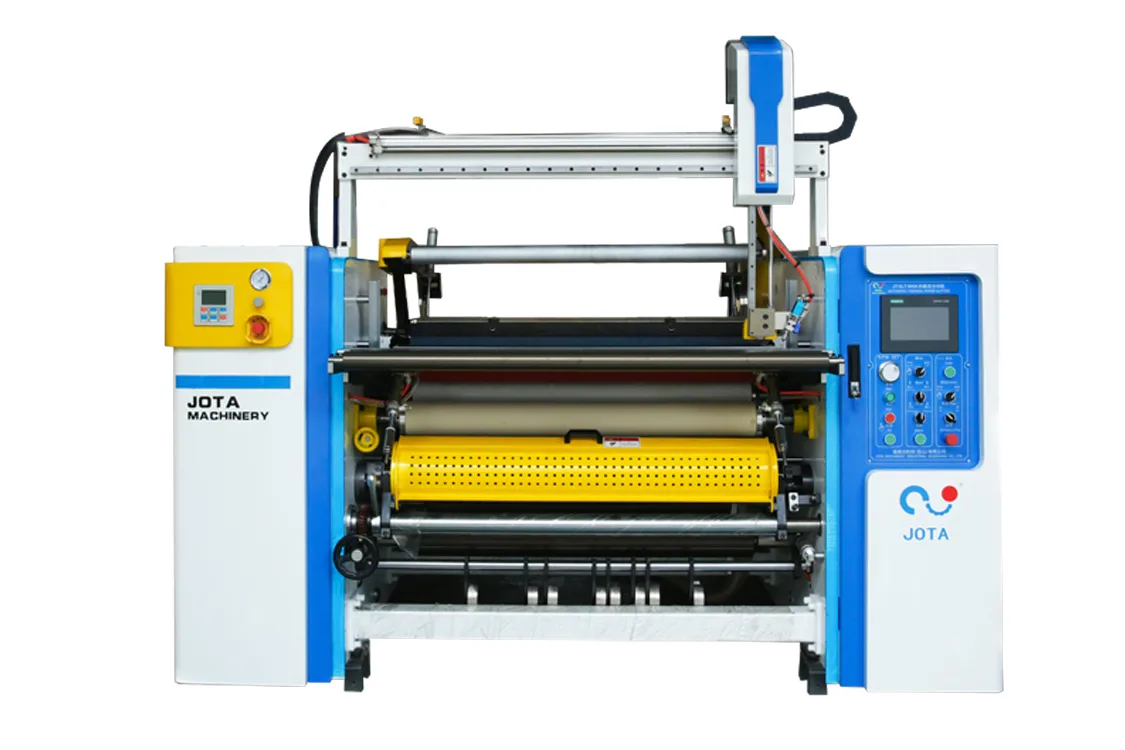
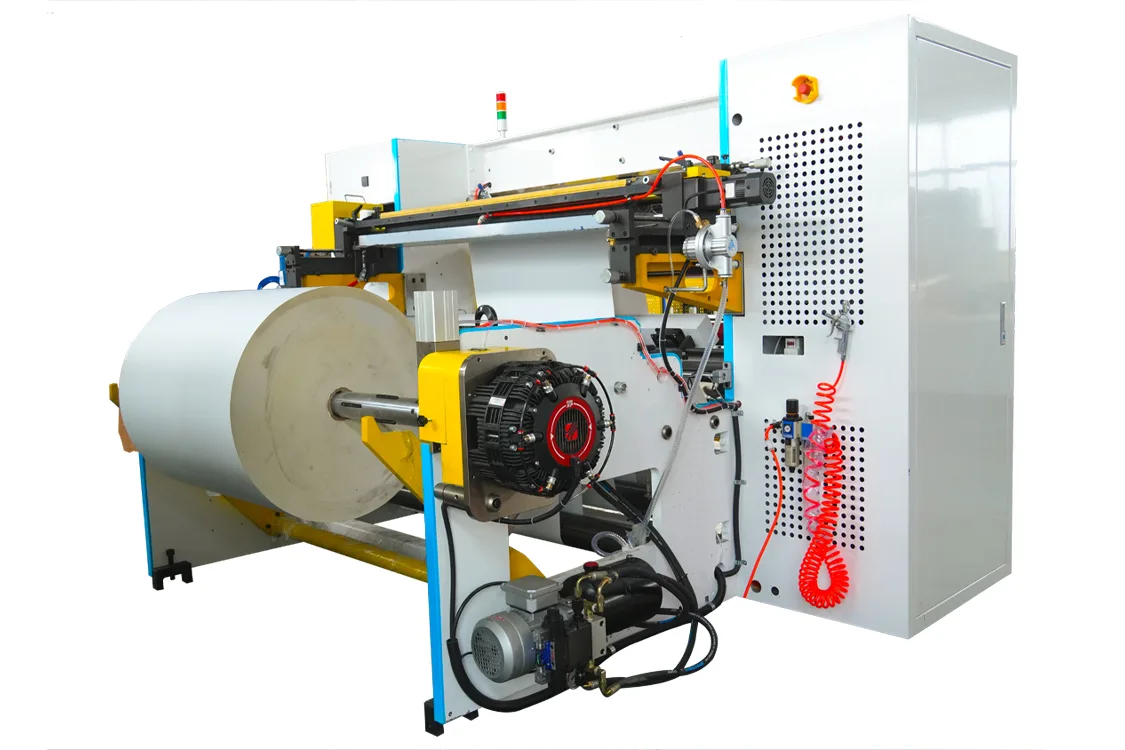
Thermal paper jumbo rolls become finished POS and receipt rolls through slitting and rewinding. The required machine configuration depends on the jumbo-roll width and diameter, paper specification, finished-roll width and diameter or length, core size, printing requirements and target production output.
These specifications should be confirmed before selecting the slitting and rewinding configuration.
Planning Thermal Paper Roll Production?
If you manufacture POS, receipt or cash-register rolls, start with your jumbo-roll and finished-roll specifications. These details determine the slitting, rewinding and automation configuration required for production.
For standard POS and receipt-roll production, thermal paper jumbo rolls are slit and rewound into the required finished widths, diameters and core specifications.
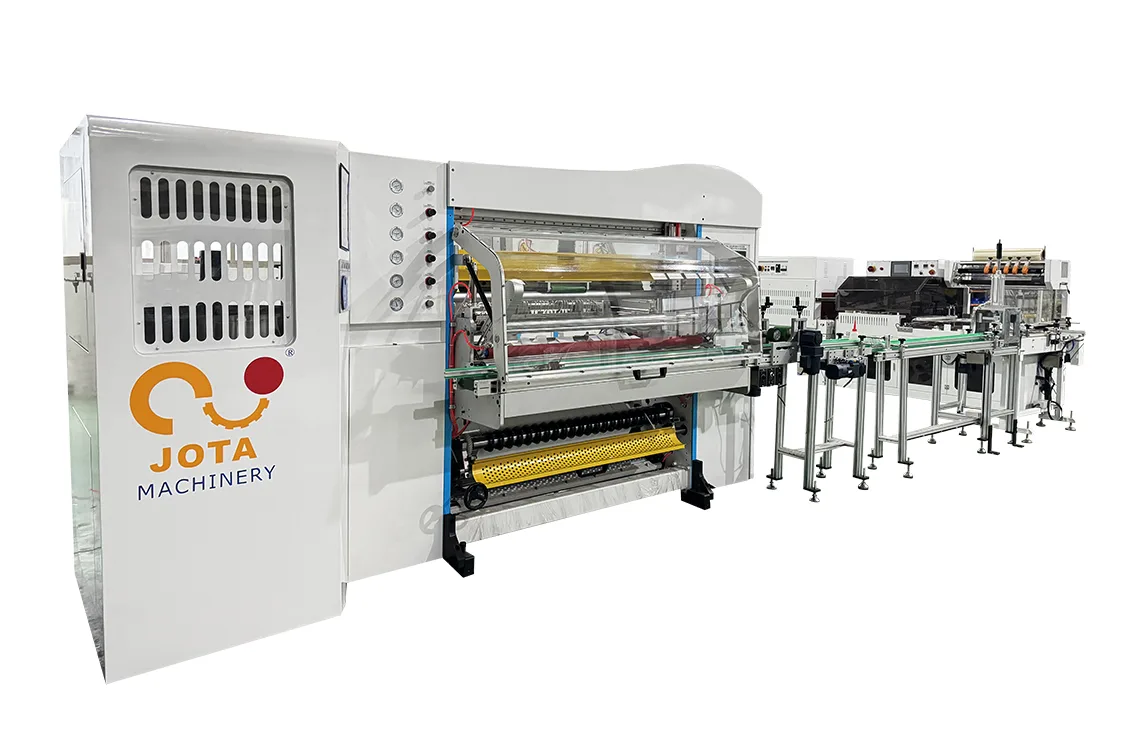
For higher production output, a fully automatic configuration can reduce manual handling and integrate additional roll finishing, packaging or palletizing processes.
If your rolls require logos or promotional information, inline flexographic printing can be combined with slitting and rewinding in one production process.
Not all thermal jumbo rolls are equal. When evaluating:
Factor
Why It Matters
Sensitivity
Crisp image at lower heat = longer printhead life
Smoothness
Ensures clean feeding through slitting machines
Whiteness
Better contrast and brand image
Coating Uniformity
Avoids smudges or blank zones
Archivability
Long-lasting prints = satisfied end users
📄 Always request the technical datasheet from your supplier.
🏷 7. How to Choose a Reliable Thermal Paper Brand
Trusted brands give you:
Consistent GSM and width tolerances
Stronger coatings (resist fading)
Better image sharpness
🔝 Examples of Thermal Paper Suppliers:
Thermal paper availability varies by region. Buyers may encounter suppliers such as Koehler, Hansol, Mitsubishi and Oji, as well as regional mills. Compare the technical datasheet, paper specification, coating performance, consistency, MOQ, lead time and price rather than selecting by brand name alone.
Thermal paper is heat-sensitive. Store it right to avoid early fading:
Keep in cool, dry warehouse
Ideal temp: ~25°C
Humidity: 45–60% RH
Avoid sunlight
Store vertically to prevent roll distortion
🧮 Jumbo Roll Calculator: 795mm × 8000m × 55gsm
Based on our calculator:
Metric
Value
Total Area
6360 m²
Weight
0.35 ton
Total Rolls (79x40mm)
1800 rolls
Estimated Cost (@$1500/ton)
~$525
Let us know if you need a downloadable version for your own custom specs.
🤔 Frequently Asked Questions
✅ What is the difference between a thermal roll and a paper roll?
Feature
Thermal Roll
Regular Paper Roll
Printing Method
Uses heat – no ink needed
Requires ink (dot matrix, inkjet, laser)
Paper Type
Coated with heat-sensitive layer
Uncoated standard paper
Common Usage
Receipts, POS, credit card slips
Invoices, reports, multi-copy printing
Lifespan
Can fade if exposed to light/heat
Longer archival quality
Printer Compatibility
Thermal printers
Dot-matrix, inkjet, or laser printers
Thermal rolls are fast, clean, and ink-free. Paper rolls need ink/toner and are used in older or different printing systems.
✅ How long does thermal paper last?
Usually up to 3 years, if stored in a dry, dark place. Exposure to heat or sunlight will speed up fading.
✅ Can I use any jumbo width to make 80mm rolls?
Not exactly. You should choose a jumbo width divisible by 79mm with minimal leftover. For example, 795mm gives you 9 cuts of 79mm.
✅ Is 55gsm strong enough?
Yes — for receipts and credit card rolls, 55gsm is industry standard. For shipping labels or heavy use, consider 65–80gsm.
🧠 Final Thoughts
If you’re in the thermal paper converting business — or entering it — mastering jumbo roll specifications, pricing, and cutting logic is non-negotiable. The difference between profit and loss could come down to how well you understand:
GSM vs cost
Roll output vs roll waste
Brand vs price balance
And if you’re looking for a reliable supplier or need help choosing the right slitting machine, Jota Machinery is ready to assist.
find us more
Are you Ready?
Discover why over 1,000 clients choose our slitting machines.
Thank you for visiting our website and taking an interest in the our products. We’re looking forward to connecting with you and discussing more about how we can help.
Company address
No 68, Shaojing Road, Economic Development Zone, Kunshan City, Suzhou, Jiangsu Province, China