

Written by Bruce Zhou
Founder & Managing Director | JOTA Machinery
Paper converting machinery specialist since 2002.
Connect with me on LinkedIn
Published: 28,October, 2026
Last Updated: 28,October, 2026 13:56:14 PM GMT+8
A thermal paper slitting rewinding machine is running normally. The jumbo paper passes through the slitting section, the finished rolls are being wound, and the operator has not noticed any obvious web breaks.
However, when the completed thermal receipt rolls are removed from the rewinding section, their ends are no longer flat.
Some paper layers have shifted sideways. Others extend beyond the edges of the finished roll, creating a stepped or cone-shaped appearance.
This winding defect is known as telescoping.

For manufacturers producing POS receipt rolls, cash register paper rolls, ATM rolls, and other thermal paper products, telescoping can lead to rejected rolls, interrupted production, and customer complaints.
The problem may appear during rewinding, immediately after unloading, or later during handling and transportation.
It is tempting to increase the winding tension to make the rolls tighter. However, that adjustment does not always solve the problem. Excessive winding tension can introduce additional internal stresses and may even make certain forms of roll deformation worse.
Preventing telescoping requires stable winding conditions, accurate web alignment, suitable core positioning, and proper control of tension, nip pressure, and winding torque.
The first step is to understand where the paper layers begin moving sideways and what causes that movement.
1. What Is Telescoping in Thermal Paper Roll Rewinding?
Telescoping occurs when the layers within a wound roll move laterally relative to one another.
Instead of forming a uniform cylindrical roll with flat ends, the paper layers become displaced along the winding axis.
The resulting roll may resemble a telescope with extended sections or have a visibly stepped end face.
Telescoping vs Uneven Roll Edges
Not every uneven roll end is caused by telescoping.
A roll can have irregular edges because of inconsistent slitting widths, improper core positioning, or unstable web tracking.
True telescoping involves the relative displacement of wound layers.
This distinction matters because the corrective action depends on the actual defect.
If the slitting blades produce inconsistent widths, changing the winding tension will not correct the original cutting error.
Likewise, if an otherwise correctly wound roll shifts during unloading or transportation, the investigation should include roll stability and handling conditions.
Why Telescoping Is a Quality Problem
A telescoped thermal paper roll may no longer meet the customer’s dimensional or appearance requirements.
In more severe cases, displaced layers can affect unwinding and feeding in the intended printer.
Damaged edges may also be more vulnerable during packaging and transportation.
For factories manufacturing large quantities of receipt rolls, even a small reject rate can reduce the number of saleable rolls produced during each shift.
The objective is to identify the cause early, before the same defect affects a large production batch.
2. Identify Where the Telescoping Starts
Before changing the machine settings, examine the end face of the defective roll.
The location of the displaced layers can provide important information.
Telescoping Begins Near the Core
If the inner paper layers are already displaced, investigate the beginning of the winding cycle.
Possible causes include incorrect core positioning, an unstable initial winding condition, core movement, or a mismatch between the web entry position and the core.
The roll may have been formed incorrectly from the first layers.
Telescoping Appears Mainly in the Outer Layers
If the inner layers are relatively straight but the outer layers have shifted sideways, examine the winding conditions as the roll diameter increases.
Possible factors include changes in tension, insufficient layer stability, excessive winding stress, or inappropriate lay-on pressure.
The Entire Roll Gradually Shifts to One Side
When the edge position drifts progressively across the roll, check the web path.
An unstable edge guide, misaligned roller, incorrect core position, or other lateral guiding problem may cause the incoming paper to change position during rewinding.
Telescoping Appears Only After Unloading
If the roll looks acceptable on the rewinding shaft but becomes displaced after removal, examine its internal stability and handling conditions.
The wound layers may not have sufficient resistance to sideways movement.
Also investigate whether unloading, stacking, or packaging introduces lateral forces.
A useful troubleshooting record should identify the roll diameter or production stage at which the first visible displacement occurs.
3. Incorrect Winding Tension: One of the Main Causes
Web tension affects how thermal paper travels through the machine and how the finished roll develops.
If tension is too low or unstable, the paper layers may not form a sufficiently stable roll structure.
If tension is excessive, the roll can develop undesirable internal stresses.
Neither extreme is desirable.
What Happens When Tension Is Too Low?
Insufficient winding tension can produce loosely consolidated layers.
These layers may have less resistance to movement, especially during rapid speed changes or subsequent handling.
The finished roll may feel soft, show uneven edges, or deform when handled.
However, a loose roll is not automatically a telescoped roll. The defect should be verified before changing the winding settings.
What Happens When Tension Is Too High?
Excessive tension may produce an overly hard roll.
The resulting wound-in stresses can contribute to core deformation, internal layer movement, or other roll-quality defects.
Increasing tension to correct a sideways displacement may therefore introduce another problem.
Why Tension Fluctuation Matters
Even if the average tension is acceptable, repeated fluctuations can disturb winding stability.
Sudden changes during acceleration, steady running, or deceleration may affect how the layers settle.
If the problem appears after a speed change, review the actual tension behaviour during that stage.
Where available, compare measured tension feedback with the programmed setpoint.
A stable displayed setpoint does not necessarily prove that the actual web tension remains stable.
4. Should You Use Taper Tension During Thermal Paper Rewinding?
Taper tension is a winding-control method in which the target winding tension decreases as the roll diameter increases.
The purpose is to control the roll’s internal structure as additional layers are wound.
In suitable winding configurations, the initial layers can be formed with enough stability while reducing excessive stress as the finished roll becomes larger.
Why Taper Tension Can Help
As a roll grows, its internal stress distribution changes.
Maintaining an unsuitable constant tension throughout the process can produce excessive hardness or other defects.
A properly selected taper profile can help establish a more suitable winding structure.
Is a 15–30% Tension Taper Always Correct?
No.
Although percentage-based taper profiles are used in web winding, there is no universal taper percentage for every thermal paper slitter rewinder.
The appropriate setting depends on the paper grade, finished roll diameter, winding mechanism, core specification, and machine design.
A configuration that works well for one material may cause loose winding or excessive stress with another.
Some small-diameter thermal paper products may require a different approach from larger industrial rolls.
How Should Operators Adjust Taper Tension?
Start with the machine manufacturer’s recommended winding settings.
If the equipment provides adjustable taper tension, evaluate changes under controlled operating conditions.
Inspect the finished roll at different stages of diameter build-up.
Check whether the roll remains stable without becoming excessively loose or hard.
Avoid making large changes to the taper profile based only on a single defective sample.
The purpose is to obtain stable finished rolls, not to achieve a particular percentage setting on the touchscreen.
5. Check the Web Guiding and Edge Position Control
A thermal paper web must reach the slitting and rewinding sections in the intended position.
If the web moves sideways during production, the finished roll edges may become uneven.
What Can Cause Web Wander?
Possible causes include unstable unwinding, incorrect web guiding, misaligned rollers, tension imbalance, and unsuitable material tracking.
If the paper does not enter the rewinding position consistently, successive layers may not build directly above one another.
What Does an EPC System Do?
An Edge Position Control (EPC) system monitors the paper edge and adjusts the web position through the machine’s guiding arrangement.
This helps maintain the intended lateral position of the moving paper.
However, EPC performance depends on correct sensor positioning, calibration, actuator behaviour, and the web path.
An improperly configured guide may respond too slowly, overcorrect, or fail to maintain the intended position.
How to Diagnose Guiding Problems
Determine whether the paper edge is stable before entering the slitting section.
Then check whether the slit lanes remain in the expected positions as they approach the rewinding section.
If movement begins upstream, investigate the unwind and guiding arrangement.
If the upstream web is stable but the finished rolls develop uneven edges, investigate the downstream path and rewinding mechanics.
A web guide cannot correct every mechanical alignment problem.
For example, an improperly aligned downstream roller may still steer the paper sideways after it leaves the guided section.
6. Incorrect Core Positioning Can Produce Telescoped Rolls
The core provides the foundation for the finished thermal paper roll.
If the core is improperly positioned, tilted, damaged, or inadequately secured, the first layers may not build correctly.
Start With Core Alignment
Before winding begins, verify that each core is positioned according to the required slitting layout.
The slit paper should enter its intended core position without an unnecessary lateral offset.
If the core and slit lane are misaligned, the first layers can begin building to one side.
As additional paper is wound, the defect may become more noticeable.
Check Core Quality
Inspect the cores for deformation, inconsistent dimensions, and damaged edges.
A damaged or eccentric core can affect the geometry of the finished roll.
The acceptable dimensional and runout tolerances should be established according to the machine and product requirements.
A single numerical core-runout tolerance should not be applied to every machine configuration.
Verify the Core-Holding Arrangement
Depending on the slitter rewinder design, cores may be mounted using different shaft or holding arrangements.
Confirm that the installed system holds the cores in their intended positions throughout the winding cycle.
The appropriate inspection procedure depends on the actual machine design.
For coreless thermal receipt rolls, the relevant forming and rewinding arrangement should be evaluated instead.
7. Lay-On Roller Pressure and Roll Stability
Some slitter rewinders use a lay-on roller to influence how the web contacts the developing finished roll.
The lay-on roller can help control air entrainment and layer consolidation.
However, its effect depends on the winding method and machine geometry.
Insufficient Pressure
If the lay-on force is too low for the material and winding arrangement, the layers may not consolidate as intended.
The finished roll can become unstable or contain excessive entrained air.
Excessive Pressure
Too much pressure may introduce excessive compression or disturb the winding structure.
If the pressure is uneven across the working width, the result may differ between slitting lanes.
Roller Surface Condition Matters
A contaminated, worn, or damaged roller can affect material contact.
Inspect the roller surface and alignment according to the equipment manufacturer’s procedure.
Use only approved cleaning agents and maintenance methods.
Do not assume that solvents such as isopropyl alcohol or abrasive cleaning are safe for every roller covering.
Some rubber or polymer surfaces may be damaged by unsuitable chemicals or abrasion.
Check Roller Parallelism
If the lay-on roller or other supporting rollers are not aligned correctly, pressure and web handling can become uneven.
Mechanical alignment should be checked when defects repeatedly appear on one side or in specific winding positions.
8. Could the Slitting Knives Be Responsible?
Telescoping is generally associated with winding and lateral layer stability, but slitting quality should not be ignored.
The condition of the cutting edges can influence the quality of the paper entering the rewinding section.
Dull or Damaged Blades
Worn blades may produce rough edges, dust, or incomplete cutting.
These defects can interfere with subsequent handling and reduce finished roll quality.
Incorrect Knife Setup
If the slitting knives are incorrectly positioned, the finished lanes may not match the required widths.
Poor cutting geometry can also contribute to edge defects.
Check the blade configuration according to the installed slitting method.
Paper Dust
Thermal paper cutting can generate dust, particularly when blades are worn or the cutting arrangement is unsuitable.
Excessive dust can contaminate machine surfaces and finished products.
Where the machine is equipped with appropriate dust extraction, verify that it is operating effectively.
However, do not assume that paper dust is the direct cause of every telescoped roll.
A genuine lateral layer displacement requires investigation of winding stability and web positioning as well.
9. Machine Speed and Acceleration Can Affect Telescoping
A thermal paper slitter rewinder may run satisfactorily at a moderate speed but develop defects when the operator increases the operating speed.
This suggests that the winding process may become unstable under the higher dynamic load.
Rapid Acceleration
Sudden changes in speed can create transient changes in web tension and winding torque.
If the machine’s control system does not maintain suitable conditions during acceleration, the roll structure may be affected.
Rapid Deceleration
The same issue can occur when the machine slows down or completes a winding cycle.
Unstable torque or tension during deceleration can disturb the layers.
Is a 10–20% Speed Difference Required Between Slitting and Rewinding?
No. A fixed 10–20% speed differential should not be used as a general rule for thermal paper slitter rewinders.
In a centre-driven rewinding system, the rotational speed of the rewind shaft changes as the roll diameter grows.
The controller must coordinate shaft speed, winding torque, and web movement according to the machine design.
A large, arbitrary surface-speed mismatch can create excessive tension, slip, or material damage.
Some surface-winding systems use differential drive relationships for particular control purposes, but their settings cannot be transferred directly to all centre-winding machines.
What Should Operators Check?
Compare the actual winding behaviour at the different approved production speeds.
If telescoping appears only during acceleration or deceleration, investigate the relevant drive and tension-control responses.
If the problem appears at steady speed, examine web alignment, roll structure, and mechanical stability.
Do not compensate for a suspected control problem by changing drive parameters outside the manufacturer’s prescribed procedure.
10. Mechanical Problems That Can Cause Uneven Winding
Sometimes the web tension and programmed settings appear correct, but the finished rolls still develop uneven edges.
In these cases, inspect the mechanical condition of the rewinding system.
Potential problems include:
- Roller misalignment
- Rewinding shaft runout
- Worn bearings
- Abnormal vibration
- Uneven mechanical loading
- Damaged or improperly mounted components
Why Shaft Runout Matters
If a shaft rotates eccentrically, the winding geometry may vary during rotation.
This can disturb the developing roll, particularly at higher operating speeds.
The relevant shaft condition and permissible runout should be evaluated against the equipment specifications.
Why Vibration Matters
Excessive vibration can disturb material tracking and winding stability.
If defects begin at a particular operating speed, inspect the mechanical system for abnormal vibration or resonance.
Check Before Adjusting the Control Program
A mechanical defect should not be concealed through increasingly aggressive tension-control adjustments.
If roller alignment or shaft condition is outside specification, correct the mechanical problem first.
Mechanical inspection and repair should be carried out by qualified personnel with the machine safely stopped and isolated as required.
11. Thermal Paper Properties and Workshop Conditions
Thermal paper is a coated paper product.
Its behaviour during converting depends on the base paper and coating properties.
Different material batches may respond differently to identical winding settings.
Paper Caliper Variation
Changes in paper thickness can influence the wound roll structure.
If the paper has an inconsistent thickness profile across the width, different winding positions may develop different hardness characteristics.
Moisture and Humidity
Paper responds to environmental moisture.
Changes in storage conditions may influence its dimensions, stiffness, and handling behaviour.
Large changes in material condition can make previously successful winding settings less suitable.
Surface Characteristics
The friction characteristics of the paper surfaces influence how the wound layers interact.
Low interlayer friction can make a roll more susceptible to sideways displacement under certain loading conditions.
What Should Manufacturers Do?
Store jumbo thermal paper according to the paper supplier’s recommendations.
Avoid exposing the material to unsuitable temperature and humidity conditions.
Where necessary, allow the material to reach appropriate workshop conditions before converting.
Do not assume that a particular relative humidity range is universally correct for every thermal paper grade.
If telescoping begins after changing the jumbo paper supplier or material batch, compare the relevant material specifications and winding behaviour.
12. Troubleshooting Telescoping by Its Appearance
The location and timing of the defect can help narrow the investigation.
| Observed Defect | Likely Areas to Investigate | First Check |
|---|---|---|
| Inner layers shift near the core | Core alignment, starting tension, initial winding conditions | Inspect the first winding layers |
| Outer layers shift sideways | Taper profile, nip conditions, roll stability | Review tension and winding conditions as diameter increases |
| Entire end face drifts gradually | Web guiding, roller alignment, core positioning | Check web tracking through the machine |
| Telescoping appears after unloading | Wound-roll stability, handling forces | Compare rolls before and after unloading |
| Only one slitting lane is affected | Local core position, knife setup, lane-specific winding behaviour | Compare adjacent lanes |
| Defect becomes worse at high speed | Tension response, vibration, acceleration | Run controlled tests at approved speeds |
| Defect appears after changing paper batches | Material properties, caliper, storage conditions | Compare raw material records |
| Telescoping appears after maintenance | Alignment, settings, mechanical assembly | Review the serviced components |
These are diagnostic clues rather than definitive conclusions.
Several causes can produce similar symptoms, and more than one condition may contribute to the same defective roll.
13. A Step-by-Step Procedure to Correct Telescoping
When telescoping appears during production, avoid changing multiple parameters simultaneously.
A structured troubleshooting procedure makes it easier to identify the actual cause.
Step 1: Inspect the Defective Roll
Determine whether the problem is true lateral layer displacement or simply an uneven slitting edge.
Photograph the roll ends and identify where the displacement begins.
Step 2: Check the Raw Material
Inspect the jumbo thermal paper for visible defects, edge damage, and unusual winding conditions.
Compare the paper grade and batch with previously successful production.
Step 3: Verify Core Positioning
Check that the cores are correctly positioned and suitable for the machine configuration.
Inspect the relevant holding components and the initial web-to-core alignment.
Step 4: Check Web Alignment
Confirm that the web travels through the intended path.
Inspect the EPC system where fitted and verify roller alignment.
Look for lateral movement before the paper reaches the rewinding section.
Step 5: Review Tension and Winding Settings
Compare the active settings with the approved parameters for the paper grade and finished roll specification.
Where available, inspect actual tension feedback.
Review any taper-tension function in relation to the developing roll diameter.
Step 6: Inspect the Lay-On Roller
If the machine uses a lay-on roller, examine its condition, alignment, and approved pressure settings.
Check whether uneven contact is associated with the affected winding positions.
Step 7: Inspect Slitting and Mechanical Components
Check knife condition, cutting quality, relevant rollers, shafts, bearings, and any abnormal vibration.
Step 8: Conduct a Controlled Production Trial
Produce representative rolls using the corrected settings.
Inspect the roll ends during the process where practical and after completion.
Do not approve the adjustment based on a single acceptable sample.
Step 9: Check After Handling
Inspect the rolls again after normal unloading and subsequent handling.
This helps determine whether the roll remains stable once it is no longer supported by the rewinding mechanism.
Step 10: Record the Successful Setup
Document the paper grade, finished roll size, core specifications, operating speed, relevant tension settings, and inspection results.
A standard setup record helps operators reproduce acceptable winding conditions during future production.
14. How Operator Training Helps Prevent Telescoping
An experienced slitter rewinder operator can often identify early signs of telescoping before the defect becomes severe.
For example, a small lateral offset near the beginning of a winding cycle may indicate incorrect core positioning or unstable web entry.
A shift in the outer layers may point towards a different winding problem.
Recognising these patterns helps the operator investigate the correct area sooner.
However, an operator should not be expected to compensate for mechanical defects, unstable control systems, or unsuitable equipment through experience alone.
Good results require appropriate machine condition, reliable settings, and consistent procedures.
Establish Practical Inspection Points
Inspect the first acceptable rolls after a setup change.
Check representative rolls during production.
Pay particular attention after changing the jumbo paper, finished roll size, core specification, or operating speed.
Provide Clear Operating Instructions
Operators should know which parameters they are authorised to adjust and which require engineering support.
Machine maintenance and alignment work should follow the manufacturer’s safety procedures.
A written troubleshooting record can help the next shift avoid repeating an unsuccessful adjustment.
15. How JOTA Machinery Approaches Rewinding Quality
For thermal paper slitting and rewinding equipment, winding quality depends on the interaction between the mechanical system and its controls.
The machine must guide the paper accurately, maintain suitable winding conditions, and produce consistent finished roll geometry.
At JOTA Machinery, we manufacture thermal paper slitter rewinders for different production requirements, including 900 mm and 1400 mm working-width configurations.
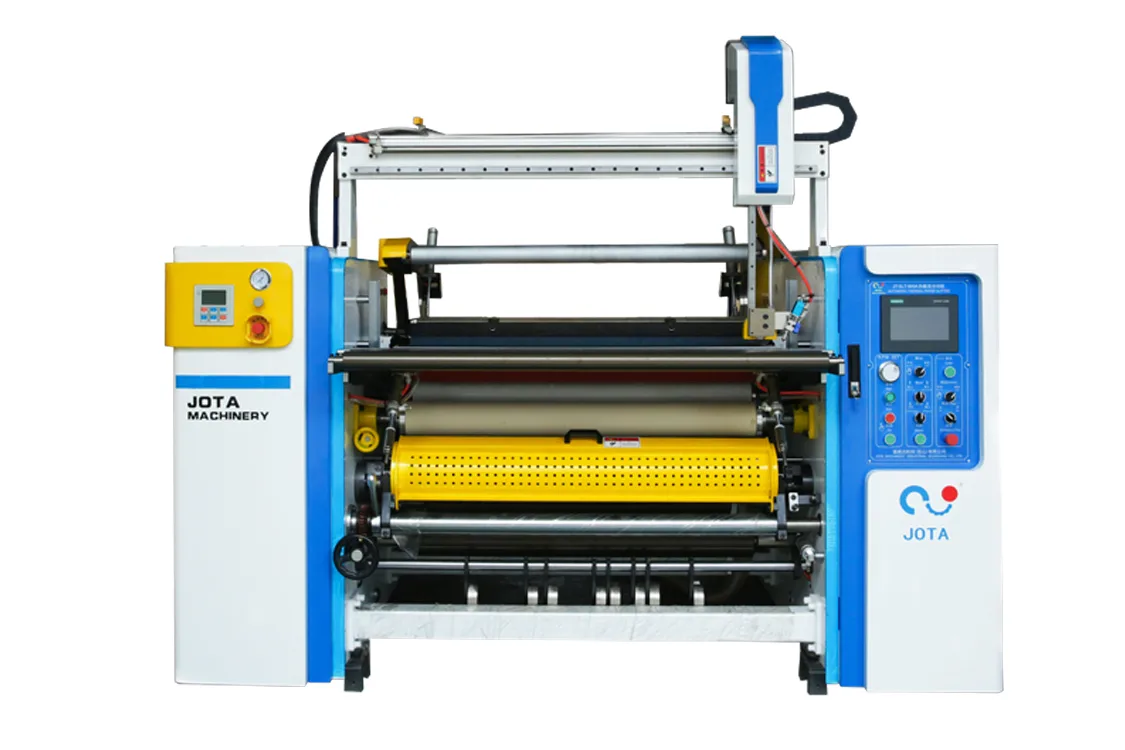
For standard POS and receipt-roll production, thermal paper jumbo rolls are slit and rewound into the required finished widths, diameters and core specifications.
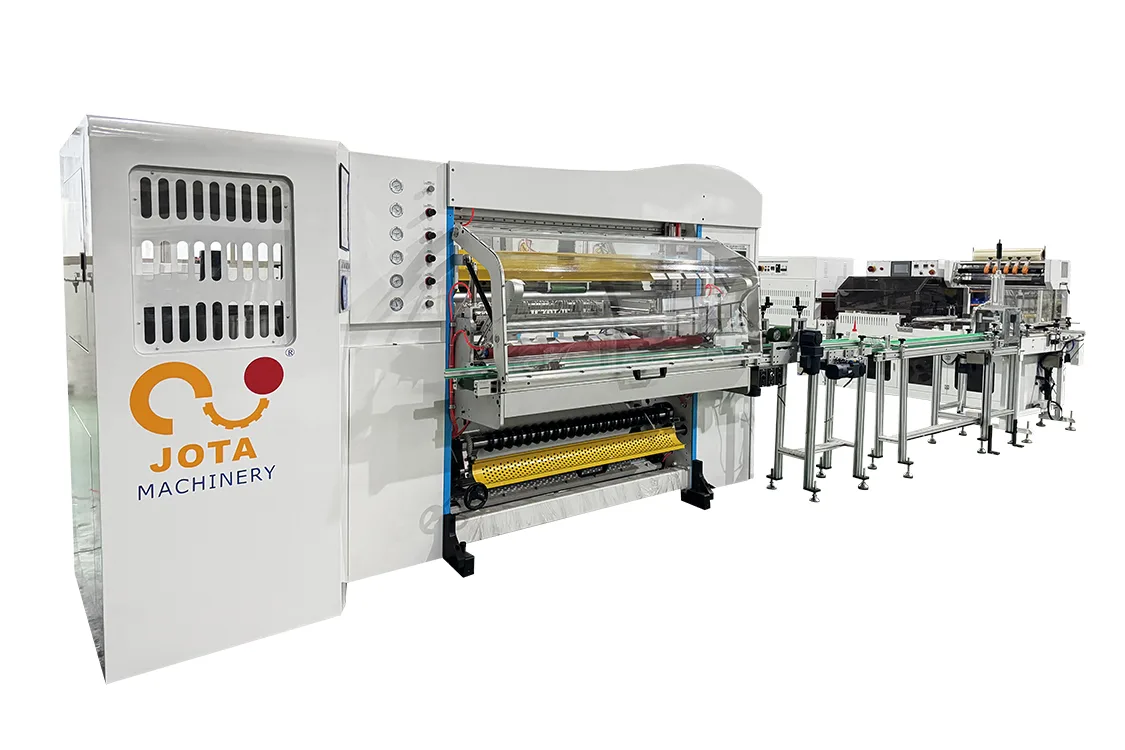
For higher production output, a fully automatic configuration can reduce manual handling and integrate additional roll finishing, packaging or palletizing processes.
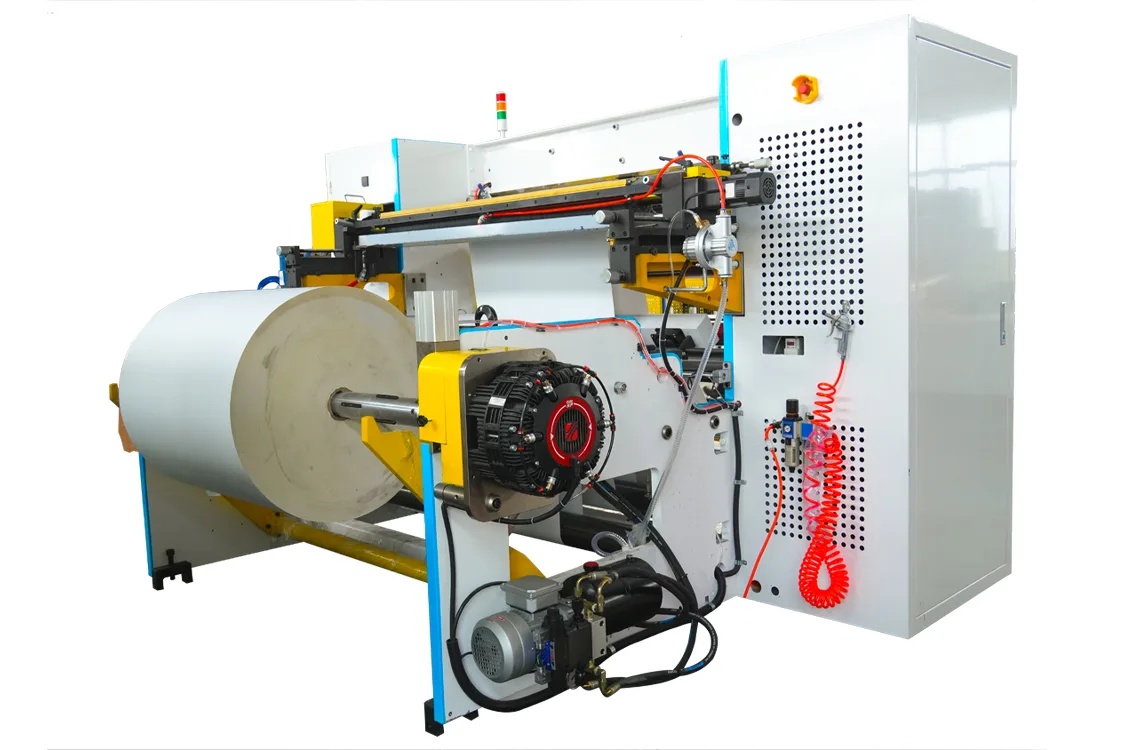
If your rolls require logos or promotional information, inline flexographic printing can be combined with slitting and rewinding in one production process.
Our engineering team works on the mechanical and electrical systems used in the machines we manufacture.
When developing a machine configuration, the relevant paper specifications and finished roll requirements need to be considered together.
Different Products May Need Different Winding Conditions
A compact POS receipt roll and a larger-diameter thermal paper roll may not respond identically to the same winding settings.
The paper grade, core arrangement, roll width, finished diameter, and machine design can influence the required control conditions.
Therefore, the winding configuration should be evaluated against the actual product.
Why Factory Testing Matters
A machine should be evaluated by the finished products it manufactures.
During an agreed production trial, representative thermal paper rolls can be inspected for width accuracy, winding stability, roll-end alignment, and other specified quality requirements.
For buyers concerned about telescoping, a useful acceptance test should include checking roll ends after rewinding and after normal unloading.
If the problem occurs only with a particular paper grade or roll specification, that information should be provided before the test.
When to Contact the Machine Manufacturer
If telescoping persists after checking the normal operating settings, contact the machinery manufacturer with specific information.
Useful details include the jumbo paper specifications, finished roll dimensions, photos of the defective rolls, operating speed, active tension settings, and the stage at which telescoping appears.
This allows the engineering discussion to focus on the likely source of the defect rather than relying on a general description such as “the rolls are uneven.”
Explore JOTA Thermal Paper Slitting and Rewinding Machines
Conclusion: Prevent Telescoping by Controlling How the Roll Is Built
Telescoping is not simply a cosmetic problem.
When thermal paper layers shift sideways during rewinding, the finished rolls can become unsuitable for delivery or downstream use.
The cause may involve unstable tension, incorrect core positioning, web misalignment, unsuitable lay-on pressure, or mechanical problems.
Material properties and handling conditions can also contribute.
The most effective troubleshooting method begins with the location and timing of the defect.
If the inner layers are displaced, investigate the start of winding.
If the outer layers shift, examine the winding conditions as roll diameter increases.
If the entire end face drifts progressively, inspect web guiding and mechanical alignment.
And if the roll becomes telescoped only after unloading, evaluate wound-roll stability and handling.
Do not assume that increasing tension is always the answer.
A stable thermal paper roll requires an appropriate balance between web tension, winding torque, nip conditions, alignment, and material behaviour.
With correct setup, regular inspection, and controlled production trials, manufacturers can reduce telescoping defects and improve the consistency of their finished thermal receipt rolls.
Need Help With Thermal Paper Roll Winding Quality?
If your thermal paper slitting rewinding machine is producing telescoped rolls, share the jumbo paper specifications, finished roll dimensions, photos of the defect, and relevant machine settings.
JOTA Machinery can review your production requirements and discuss suitable equipment configurations or troubleshooting considerations for JOTA machinery.
Contact JOTA Machinery About Thermal Paper Rewinding
Last Updated on 28/10/2026 by Jota Machinery