

Written by Bruce Zhou
Founder & Managing Director | JOTA Machinery
Paper converting machinery specialist since 2002.
Connect with me on LinkedIn
Published: 28,October, 2026
Last Updated: 28,October, 2026 13:35:14 PM GMT+8
You purchase a thermal paper slitting machine expecting to produce thousands of finished receipt rolls per shift.
The machine runs at the advertised speed, the jumbo thermal paper is loaded correctly, and the slitting knives are cutting the required widths.
But when the operator finishes the shift and counts the completed rolls, the output is much lower than expected.
Where did the production capacity go?
This is a problem thermal paper converters may encounter, particularly when moving from small-scale production to larger manufacturing volumes.

The answer is not always related to machine speed.
A thermal paper slitting machine can run at a high speed and still produce fewer saleable rolls than expected.
The difference often comes from two areas: material yield and effective production time.
Material yield determines how much of the jumbo thermal paper becomes acceptable finished rolls.
Effective production time determines how much of the working shift is actually spent producing those rolls.
Operator experience, slitting setup, rewinding conditions, roll-changing cycles, material quality, and downstream handling can all affect the result.
At JOTA Machinery, we manufacture thermal paper slitter rewinders with different working widths, including 900 mm and 1400 mm configurations, to accommodate different jumbo paper specifications and production requirements.
But before recommending a wider machine or a more automated production line, it is important to understand why the existing operation is producing less than planned.
1. Are You Losing Paper or Losing Production Time?
When a factory reports low output, the first question should be:
Are you getting fewer rolls from each jumbo roll, or fewer rolls during each production shift?
These are different problems.
A factory may consume more jumbo paper than expected because of trimming, inaccurate finished roll lengths, web breaks, or rejected products.
Another factory may achieve good material utilisation but lose substantial production time during roll unloading, core preparation, setup, and machine stoppages.
Some factories experience both problems.
Consider the difference:
| Production Problem | What Happens | Main Area to Investigate |
|---|---|---|
| Fewer rolls per jumbo | More paper is consumed or rejected | Material yield |
| Fewer rolls per hour | Too much time is spent outside productive winding | Cycle time and downtime |
| High gross output but low accepted output | Finished rolls fail quality inspection | Process stability |
| Output drops after changing roll sizes | Cutting lanes or winding cycles change | Production configuration |
| Machine runs slowly despite a high rated speed | Operators cannot maintain acceptable quality at higher speed | Technical settings and process capability |
This distinction determines where troubleshooting should begin.
Increasing running speed will not necessarily correct excessive paper waste.
Similarly, using a wider jumbo roll does not automatically resolve long machine stoppages.
2. Why Theoretical Jumbo Roll Yield Is Often Higher Than Actual Output
Before manufacturing, a converter may calculate the expected number of thermal paper rolls from a jumbo roll.
The calculation usually considers the available paper width, finished cutting widths, parent roll length, and required metres per finished roll.

However, theoretical calculations assume conditions that are not always achievable in normal production.
Usable Width Is Less Than Nominal Jumbo Width
Suppose you purchase a nominal 900 mm wide jumbo thermal paper roll.
You cannot necessarily use every millimetre of that width.
Some material may need to be removed from the edges to achieve an acceptable finished product.
The actual number of slitting lanes depends on the usable paper width and finished roll specification.
For example:
900 mm ÷ 57 mm = 15 complete theoretical lanes, with 45 mm remaining.
If the machine processes a 1400 mm jumbo roll:
1400 mm ÷ 57 mm = 24 complete theoretical lanes, with 32 mm remaining.
These calculations are preliminary.
The practical cutting arrangement must account for edge trimming, the actual knife positions, machine limits, and the required finished width tolerances.
With shear slitting, the cut itself does not necessarily remove a substantial strip of paper. The main width loss usually comes from unusable margins, trim requirements, and the chosen cutting pattern.
Poor Cutting Layout Reduces Material Utilisation
If the factory frequently changes between 57 mm and 80 mm thermal receipt rolls, the cutting arrangement must also change.
A layout that is efficient for one finished width may produce more unused material with another.
Before each job, calculate the usable lanes using the actual jumbo width.
Do not assume that the maximum number of theoretical lanes is always practical or that every width combination provides the same yield.
Start-Up and Web-Break Waste
Paper can also be lost during machine preparation.
The operator may need to thread the paper, check cutting positions, adjust winding conditions, and produce initial samples.
If the web breaks during production, additional paper may be lost while the machine is stopped and restarted.
Frequent breaks increase material waste and reduce productive running time.
Rejected Finished Rolls
A completed roll is not necessarily a saleable roll.
If it has incorrect width, excessive dust, loose winding, wrinkles, or unacceptable edges, it may need to be rejected.
Therefore, the factory should count accepted finished rolls separately from gross machine output.
The production target should be saleable thermal paper rolls, not simply the number of winding cycles completed.
3. Is the Machine Giving Each Roll Too Much Paper?
This is one of the less obvious causes of unexpectedly low yield.
Suppose a customer orders thermal receipt rolls containing 50 metres of paper.
The operator enters 50 metres into the machine control system.
However, the finished rolls consistently contain more than 50 metres.
Every roll now consumes additional raw material.
The factory may produce fewer rolls from each jumbo paper roll, even though the finished products appear acceptable.
How Does This Happen?
Some thermal paper slitter rewinders measure web movement through a measuring wheel and rotary encoder.
The wheel rotates as paper passes through the machine.
The encoder sends signals to the control system, which calculates the measured paper length.
If the measuring wheel slips, its effective circumference is incorrectly calibrated, or the PLC counting factor is wrong, the displayed length may differ from the actual paper movement.
The winding-completion sequence can also affect the final length.
Why This Matters for Production Output
Imagine that every completed thermal roll contains slightly more paper than required.
The individual difference may appear small.
But across hundreds or thousands of rolls, the additional material consumption can become significant.
The factory should periodically compare the programmed length with an independently measured finished roll length.

If the rolls are consistently too long, investigate the measurement and control system.
Do not immediately reduce the displayed target length to compensate for an unexplained measurement error.
Correct the underlying cause and verify the actual result.
At JOTA Machinery, our in-house programmers review the technical manuals of the electrical components used in our machines, including relevant encoder and PLC counting specifications.
The control software must interpret the measuring signals correctly and coordinate them with the winding cycle.
Accurate programming helps reduce avoidable length errors, but the final accuracy must still be checked through physical measurements.
4. The Machine Is Running Fast, but Roll Changes Take Too Long
Another important cause of lower output is the time between completed winding cycles.
Thermal paper rolls are relatively small finished products.
Depending on the specified paper length, the running portion of each winding cycle may be short.
That makes the time required for unloading, core preparation, and restarting particularly important.
Example: The Effect of Roll-Changing Time
Consider a hypothetical machine producing eight rolls simultaneously.
The finished roll length is 50 metres, and the machine runs at an effective web speed of 150 metres per minute.
The paper-winding portion of the cycle takes approximately:
50 ÷ 150 × 60 = 20 seconds
Now consider two different operating situations.
| Production Parameter | Situation A | Situation B |
|---|---|---|
| Active slitting lanes | 8 | 8 |
| Winding time | 20 seconds | 20 seconds |
| Roll-changing time | 30 seconds | 10 seconds |
| Total cycle time | 50 seconds | 30 seconds |
| Theoretical rolls per hour | 576 | 960 |
These are illustrative calculations, not JOTA machine performance claims. They exclude additional stoppages and assume every lane produces an accepted roll.
The important lesson is that reducing non-productive time can increase output even when the running speed remains unchanged.
What Should the Operator Measure?
Record the time required for a complete production cycle.
Include the time spent winding, completing the rolls, unloading, preparing the next cycle, and restarting.
A machine may have a high rated speed, but slow handling can substantially reduce the number of completed rolls per shift.
This is particularly relevant when comparing semi-automatic equipment with more extensively automated production lines.
5. Operator Experience Has a Direct Effect on Output
A thermal paper slitter rewinder does not operate independently of the person responsible for production.
An experienced operator can recognise changing winding conditions, abnormal web movement, cutting problems, and other early warning signs.
They know how to prepare the machine for a new roll specification and how to identify a problem before it develops into a prolonged stoppage.
A new operator may require more time to achieve the same result.
Why Operator Skill Matters
Consider two operators working with the same machine and thermal paper grade.
One operator has extensive experience with the equipment.
The other is still learning the machine’s setup and operating procedures.
The experienced operator may be able to prepare the cutting arrangement more efficiently, recognise tension problems earlier, and complete routine adjustments with fewer unnecessary stops.

The less experienced operator may need more time to investigate the same conditions.
This does not mean a machine should rely on operator experience to compensate for mechanical or control-system defects.
It means that consistent operation requires both suitable machinery and proper training.
Build Repeatable Operating Procedures
Instead of relying entirely on one experienced employee, the factory should document successful production settings.
These may include approved slitting layouts, winding tension settings, operating speeds, changeover procedures, and inspection requirements.
A standard setup record helps newer operators reproduce conditions that have already been verified.
Training Is Part of Production Efficiency
When purchasing a new slitter rewinder, ask the manufacturer what operator training is included.
The operator should understand the normal production sequence, machine safety procedures, common quality problems, and the appropriate response to alarms or stoppages.
Good training can reduce unnecessary trial-and-error adjustments during production.
6. Tension Problems Can Reduce Both Speed and Saleable Output
Thermal paper must travel through the machine under suitable web tension.
If tension is unstable, the operator may need to reduce the machine speed to maintain acceptable converting quality.
In more severe cases, the web may break or the finished rolls may become unacceptable.
Excessive Tension
If the paper is subjected to excessive tension, the machine may experience web breaks, wrinkles, or other handling problems.
The actual effects depend on the paper grade and machine configuration.
Repeated breaks lead to downtime and material waste.
Insufficient Tension
Low or unstable tension can contribute to loose winding, web instability, or uneven finished rolls.
When winding quality becomes unacceptable, the factory may need to stop production and adjust the settings.
Don’t Increase Speed Before Stabilising the Process
It can be tempting to increase the running speed in response to disappointing output.
However, doing so while the web tension is unstable may increase the frequency of stoppages and rejected rolls.
A lower stable speed can sometimes produce more saleable output than a higher speed accompanied by repeated failures.
The correct objective is to identify the operating conditions that provide the highest sustainable accepted output.
7. Slitting Knife Condition Affects Production Efficiency
Slitting knives are consumable components.
Their condition and setup affect cutting quality.
When blades become dull, damaged, or incorrectly positioned, the finished paper may develop burrs, dust, uneven edges, or incomplete cuts.
These defects can cause finished rolls to fail inspection.
They may also increase the likelihood of material-handling problems during production.
Check the Knife Setup
For configurations using upper and lower slitting knives, verify the relevant cutting geometry according to the machine’s setup instructions.
The appropriate settings depend on the blade design and paper grade.
On machines using blade and spacer assemblies, the cutting positions should be established for the required finished widths.
The operator should then verify the actual slit widths.
Replace Worn Blades Before Defects Become Widespread
If cutting quality deteriorates, inspect the blades and relevant cutting components.
Do not assume that increasing speed or winding tension will compensate for damaged cutting edges.
A preventive inspection and replacement schedule can help avoid repeated defects.
Are Certain Slitting Lanes Producing More Rejects?
Sometimes most of the finished rolls are acceptable, while rolls from one position have recurring problems.
If so, inspect that lane separately.
Look at cutting quality, web alignment, winding conditions, and any local mechanical abnormalities.
Tracking rejects by slitting position can reveal problems that are hidden when the factory examines only total production numbers.
8. Raw Material Quality Can Reduce Production Yield
The jumbo thermal paper itself can influence converting performance.
Different paper batches may vary in caliper, stiffness, moisture condition, winding quality, or other characteristics.
If the incoming material is unsuitable or inconsistent, the slitter rewinder may not operate as smoothly as expected.
Jumbo Roll Defects
Poorly formed parent rolls may create web-handling difficulties.
Damaged edges, irregular winding, or other material defects can lead to additional trimming or stoppages.
Changes in Paper Properties
A machine setup that performs satisfactorily with one thermal paper grade may need adjustment when the material changes.
For example, variations in thickness or stiffness can affect web handling and winding.
What Should the Factory Do?
Record the raw material batch and relevant specifications for each production job.
If output decreases immediately after changing the jumbo paper, compare the new material with previously accepted batches.
This helps determine whether the problem follows the material or remains associated with the machine.
9. Packaging Can Become the Bottleneck
Sometimes the slitter rewinder produces finished rolls at a satisfactory rate, but the factory’s total output remains below its target.
The problem may be downstream.
Finished thermal paper rolls often need inspection, wrapping, grouping, and carton packing before shipment.
If these operations cannot keep up with the slitter rewinder, finished rolls may accumulate between processes.
Manual Packaging
For smaller production volumes, manual packaging may be practical.
However, as output increases, the time required to handle and pack the rolls can become significant.
Automated Packaging
Some larger production lines integrate additional handling and packaging operations.
The actual level of automation depends on the equipment configuration.
For a growing thermal paper manufacturing business, the packaging process should be evaluated alongside the slitter rewinder.
An upgrade that increases slitting output may offer limited factory-wide benefit if packaging capacity remains unchanged.
Remember Thermal Paper’s Heat Sensitivity
Where heat shrink packaging is used, the process must also protect the heat-sensitive paper.
Increasing the shrink tunnel temperature to process more packages can create unwanted thermal paper discoloration.
The packaging system therefore needs suitable film, operating conditions, and production capacity.
The final output target should be acceptable, packaged thermal paper rolls, not simply completed rolls waiting at the end of the rewinder.
10. How to Calculate Your Real Production Efficiency
When output is lower than expected, start collecting actual production data.
The factory should record both material consumption and production time.
These measurements help identify whether the main problem is yield loss, downtime, or rejected output.
Material Yield
A useful approach is to compare the usable area of finished accepted rolls with the total paper area consumed.
Material Yield (%) = Accepted Finished Paper Area ÷ Total Jumbo Paper Area Consumed × 100
This calculation requires consistent measurement units.
For a product range with different finished widths and lengths, paper area provides a better comparison than roll count alone.
Effective Production Output
For shift performance, record:
Saleable Rolls per Hour = Accepted Finished Rolls ÷ Scheduled Production Hours
This measure includes the impact of stoppages and rejects during the scheduled production period.
It is different from calculating the number of rolls that could be produced while the web runs continuously.
Track Downtime Separately
Record the time lost to jumbo roll changes, slitting setup, web breaks, winding-cycle handling, inspection, and other interruptions.
A simple production record can reveal whether the machine spends more time running or waiting for the next production cycle.
Example Production Log
| Measurement | What to Record |
|---|---|
| Planned output | Target saleable rolls per shift |
| Gross finished rolls | All rolls completed |
| Rejected rolls | Rolls not meeting requirements |
| Saleable output | Accepted rolls |
| Running time | Time spent actively processing paper |
| Changeover time | Time between production jobs |
| Cycle-handling time | Time between completed winding cycles |
| Unplanned downtime | Stoppages and failures |
| Paper consumed | Actual jumbo paper usage |
Review this information over several production shifts.
One unusually poor shift does not necessarily describe the machine’s normal performance.
Consistent records make it easier to identify recurring losses.
11. When Should You Consider Upgrading to a Wider Slitter Rewinder?
Once the factory has addressed avoidable waste and downtime, a different limitation may become apparent.
The current machine may simply be too narrow for the company’s growing production requirements.
This is where machine working width becomes important.
At JOTA Machinery, we provide thermal paper slitter rewinders in 900 mm and 1400 mm configurations.
These options are intended for different jumbo paper widths and production requirements.
Why a Wider Machine Can Increase Output
A wider machine may accommodate a wider jumbo thermal paper roll.
When the finished roll width remains unchanged, the wider web may allow more slitting lanes.
More lanes can produce more finished rolls during each completed winding cycle.
For example, using nominal paper widths and 57 mm finished rolls:
| Nominal Jumbo Width | Theoretical 57 mm Lanes |
|---|---|
| 900 mm | 15 |
| 1400 mm | 24 |
Actual lane counts require confirmation of usable width, trimming requirements, and machine configuration.
The figures demonstrate the potential advantage of additional working width, not guaranteed production output.
Wider Does Not Automatically Mean Faster
A 1400 mm slitter rewinder will not necessarily produce more saleable rolls per shift in every factory.
The result depends on suitable jumbo paper availability, active cutting lanes, actual winding-cycle time, machine performance, operator handling, and downstream packaging capacity.
If the current 900 mm machine already suffers excessive downtime or quality rejects, moving to a wider machine may not resolve those problems.
When an Upgrade Makes Sense
A wider machine deserves consideration when the current equipment is operating reliably, customer demand exceeds its practical capacity, wider raw material is available, and the complete production line can handle the additional output.
For an established thermal paper converter already using a JOTA slitter rewinder, upgrading to a wider configuration may be one option for expanding capacity.
The investment should be evaluated against actual production data and expected customer orders.
12. What About More Automation?
Working width is only one way to increase potential output.
Another approach is to reduce time spent on repetitive handling operations.
Depending on the machine configuration, automation may help reduce operator involvement during parts of the winding and roll-handling process.
For example, a production line may be designed to automate selected winding-cycle functions or integrate downstream equipment.
However, automatic functions vary by machine model.
The buyer should confirm which operations are included and how the complete production cycle works.
Compare the Complete Cycle
When evaluating an upgrade, ask the machinery manufacturer to demonstrate a representative production job.
Record the time spent winding, completing the rolls, unloading, preparing the next cycle, and restarting.
Then compare the number of acceptable rolls produced during the same period.
This is more useful than comparing advertised maximum speeds alone.
13. A Practical Troubleshooting Plan for Low Production Output
If your thermal paper slitting machine is producing fewer rolls than expected, begin with the production records rather than immediately increasing speed.
First, determine whether the missing output is caused by material losses or reduced productive time.
If too few rolls are produced from each jumbo roll, check cutting layout, trimming, length accuracy, web breaks, and rejected products.
If output per shift is low while material yield is acceptable, examine roll-changing time, operator procedures, machine stoppages, and packaging capacity.
Next, inspect the finished roll defects.
Loose winding, uneven edges, incorrect lengths, wrinkles, and cutting problems can provide useful clues about why the machine cannot maintain its expected operating speed.
Review the relevant mechanical and control conditions, including tension stability, slitting knives, measuring-wheel calibration, and web alignment.
If the machine performs well at a lower speed but produces more waste at a higher speed, identify the technical limitation before increasing the operating speed again.
Finally, evaluate whether the current machine’s working width and automation match the factory’s actual demand.
An equipment upgrade should follow from this analysis, not replace it.
14. How JOTA Helps Thermal Paper Manufacturers Improve Production Capacity
At JOTA Machinery, our objective is to help customers select converting equipment according to their actual production requirements.
Our thermal paper slitter rewinders include different working-width and automation configurations.
For manufacturers starting a converting operation, the appropriate machine may depend on the initial product range and expected sales volume.
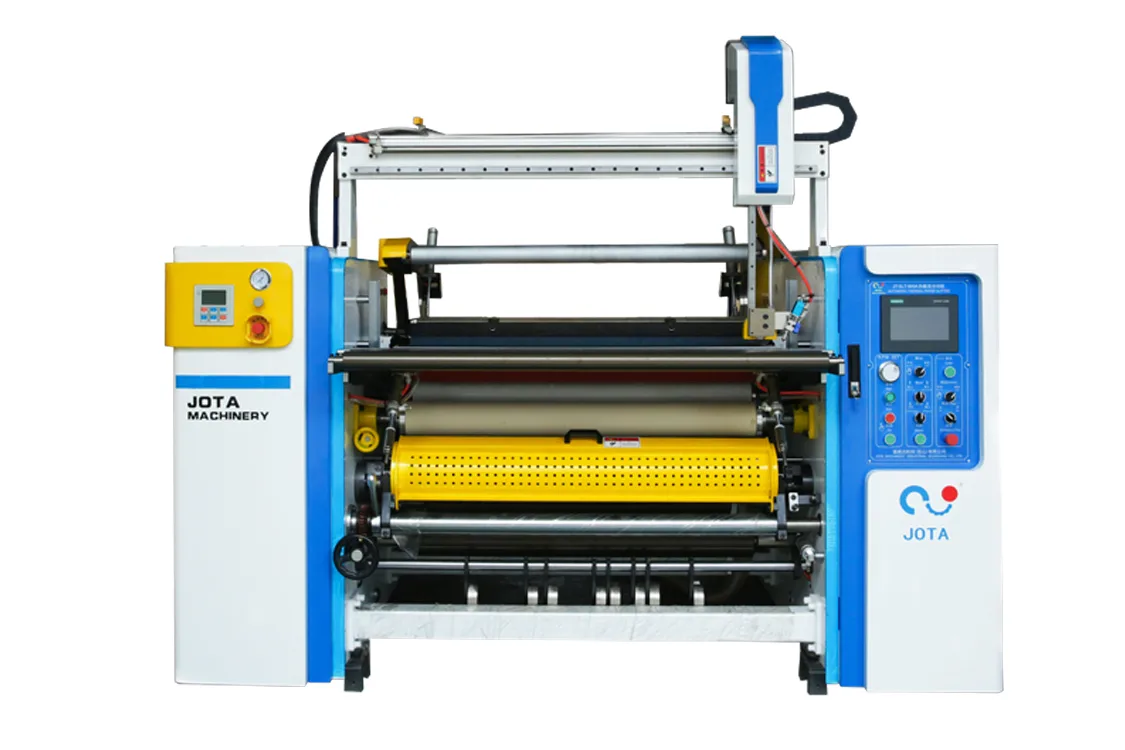
For standard POS and receipt-roll production, thermal paper jumbo rolls are slit and rewound into the required finished widths, diameters and core specifications.
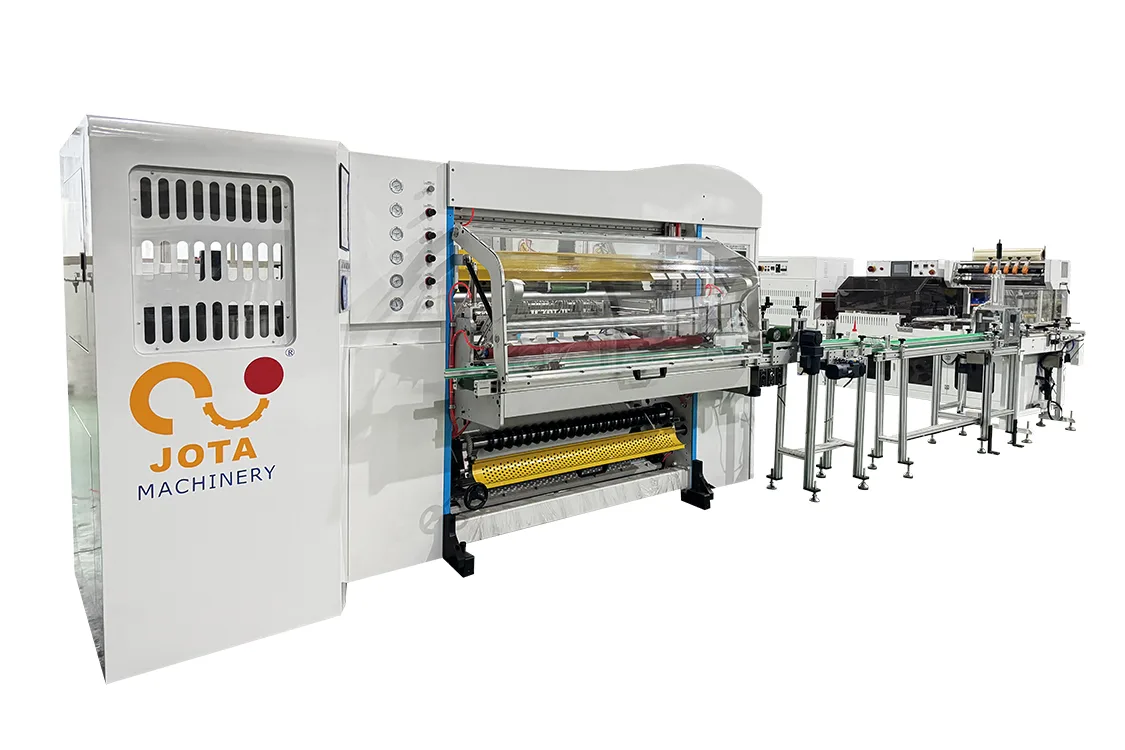
For higher production output, a fully automatic configuration can reduce manual handling and integrate additional roll finishing, packaging or palletizing processes.
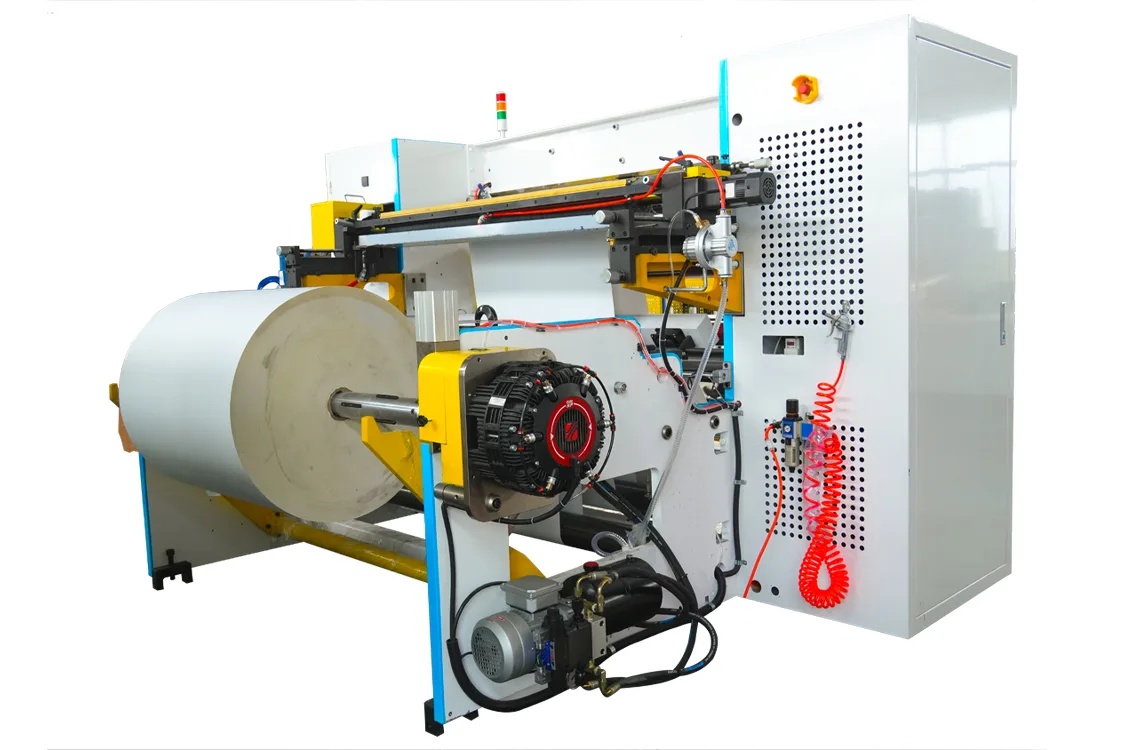
If your rolls require logos or promotional information, inline flexographic printing can be combined with slitting and rewinding in one production process.
For established factories, the requirements may be different.
A company already operating a 900 mm slitter may want to evaluate a wider 1400 mm configuration as its order volume grows.
Another manufacturer may be more concerned about operator handling, winding-cycle efficiency, or downstream production arrangements.
Start With Your Actual Production Data
When discussing a production-capacity problem, useful information includes the jumbo roll width, paper grade, finished roll specifications, required length per roll, and current accepted output.
It also helps to provide the running speed, time required for roll changes, frequency of stoppages, and the defects contributing to rejected products.
These details allow the engineering discussion to focus on the likely source of lost production.
Choosing Between 900 mm and 1400 mm Equipment
If the factory is considering additional capacity, JOTA can review the intended jumbo paper width and finished roll mix.
A wider configuration may offer more slitting lanes, while a more automated machine may reduce selected handling operations.
The most appropriate solution depends on which limitation is affecting the current factory.
Explore JOTA Thermal Paper Slitting and Rewinding Solutions
Conclusion: Improve Saleable Output, Not Just Machine Speed
When a thermal paper slitting machine produces fewer rolls than expected, the answer is rarely found in the speed setting alone.
Material waste, cutting layout, inaccurate roll length, web breaks, winding defects, and rejected products can reduce the number of rolls obtained from each jumbo.
Operator experience, roll-changing time, machine stoppages, and downstream packaging can reduce output per shift.
The first step is to measure where the losses occur.
A factory should distinguish material yield from productive running time, track accepted finished rolls, and record recurring defects and downtime.
Once avoidable problems have been addressed, the manufacturer can evaluate whether the existing machine has sufficient working width and automation for future demand.
At JOTA Machinery, we provide 900 mm and 1400 mm thermal paper slitter rewinder configurations for different production needs.
For growing manufacturers, a wider or more automated production line may help expand capacity when the raw material, production workflow, and customer demand support the investment.
The goal is not to run the machine at its maximum advertised speed.
The goal is to manufacture more acceptable thermal paper rolls, consistently, during the time and material available.
Is Your Thermal Paper Slitting Machine Producing Less Than Expected?
Whether you are troubleshooting an existing production line or considering an upgrade from a 900 mm to a 1400 mm slitter rewinder, JOTA Machinery can review your production requirements.
Send us your jumbo paper specifications, finished roll sizes, actual output per shift, and the main problems affecting production.
Our engineering team can discuss suitable slitting and rewinding configurations based on your requirements.
Contact JOTA Machinery About Production Capacity
Last Updated on 28/10/2026 by Jota Machinery