

Written by Bruce Zhou
Founder & Managing Director | JOTA Machinery
Paper converting machinery specialist since 2002.
Connect with me on LinkedIn
Published: 23,October, 2026
Last Updated: 23,October, 2026 18:56:59 PM GMT+8
Every time someone pays at a supermarket, restaurant, petrol station, or retail counter, a receipt may be printed.
Behind that small piece of paper is a business that manufactures, packages, and distributes thermal receipt rolls.
Some companies purchase finished rolls and resell them. Others import the products in bulk and supply local distributors.
And some have taken a different path: they manufacture the thermal paper rolls themselves.
If you already trade thermal receipt paper, supply POS consumables, or have a plan to enter the industry, there is a question worth considering.
Why remain dependent on purchasing finished rolls if your business could develop its own manufacturing capabilities?
Becoming a thermal printer paper roll manufacturer means taking responsibility for production, material purchasing, quality control, and delivery.

It also gives your business greater control over the finished roll specifications, manufacturing schedule, and products you can offer.
Of course, establishing a factory requires an investment. Owning machinery does not guarantee customers, profits, or market share.
But if you have a workable business idea and can identify real demand, you can start turning that idea into a production plan.
At JOTA Machinery, we provide turnkey thermal paper roll converting solutions, from slitting and rewinding machinery to optional inline flexo printing and downstream automation.
For customers preparing to establish their own production facility, we help determine what equipment is needed to manufacture the rolls they intend to sell.
The Business Opportunity Isn’t Just Selling Receipt Paper
A thermal printer paper roll is a consumable product.
Businesses using receipt-printing equipment need replacement paper as their stock is consumed.
These applications include supermarkets, restaurants, payment terminals, ticketing systems, kiosks, and other equipment that uses compatible direct thermal paper.
However, not every payment terminal prints receipts, and paper consumption varies by business.

Before entering the market, you need to understand which customers actually purchase thermal rolls, which specifications they use, and how frequently they reorder.
Think Beyond Individual Retail Stores
A new manufacturer does not necessarily have to sell one carton at a time to individual shops.
Potential business customers include POS consumables distributors, stationery wholesalers, companies supplying retail equipment, and organisations purchasing receipt paper for multiple locations.
Some buyers need standard white thermal paper rolls.
Others may require specific roll lengths, packaging quantities, or branding printed on the reverse side.
Each customer category creates different production and supply requirements.
The opportunity for a manufacturer is to identify the products that customers already need and determine whether those requirements can be supplied competitively through local converting.
Distribution Experience Can Become an Advantage
If you currently purchase finished thermal receipt rolls for resale, you may already understand your market.
You know which roll sizes customers request, how frequently orders arrive, and which products generate repeat business.
That information can be valuable when planning a converting factory.
Instead of guessing which products to manufacture, you can evaluate your purchasing and sales history.
Look for recurring orders, common specifications, and customers that may be interested in a direct manufacturing relationship.
This does not eliminate investment risk, but it gives you a more credible starting point.
What Changes When You Become a Manufacturer?
A distributor purchases finished thermal paper rolls and sells them to customers.
A converter purchases jumbo thermal paper and manufactures the finished rolls using slitting and rewinding equipment.
The two businesses may serve the same customers, but their operating responsibilities are different.
As a distributor, you depend on suppliers for manufacturing schedules, product specifications, and finished product availability.
As a manufacturer, you take control of those production decisions within the capabilities of your equipment.
You also take responsibility for raw material purchasing, machine operation, maintenance, inspection, packaging, and inventory.
Manufacturing Gives You More Control, Not Automatic Profit
Owning a converting machine can allow you to choose which compatible finished roll specifications to produce.
For example, your business may manufacture standard POS receipt rolls, compact card machine rolls, or larger thermal paper rolls for other applications.
If a customer requests a different paper length or roll diameter, you can assess whether the machine can produce it.
However, manufacturing introduces new costs.
Machinery depreciation, labour, electricity, factory space, consumables, material waste, and working capital must all be included when calculating the cost of a finished roll.
A successful business decision should compare the total manufacturing cost with the cost of purchasing equivalent finished products.
The purpose of building a factory is not simply to own equipment.
It is to establish a production operation that can reliably supply products customers are willing to buy.
Start With Customers, Not the Machine Catalogue
Imagine that you want to establish a thermal receipt roll factory.
You contact a machinery manufacturer and ask for the fastest fully automatic thermal paper roll making machine.
But the supplier asks a different question:
“What thermal paper rolls do you plan to manufacture?”
You may not yet have the answer.
That is why production planning should begin with the finished product.
Identify Your Main Products
Determine which thermal paper roll specifications have genuine demand in your target market.
These may include paper rolls for:
- POS receipt printers
- Card payment terminals with built-in printers
- Cash registers
- ATM machines
- Ticketing and self-service kiosks
- Other compatible thermal printing applications
Each application may require different paper widths, outside diameters, core specifications, and paper lengths.
Not all printers accept the same roll.
A factory should therefore define its initial product range before choosing converting machinery.
Estimate Your Production Requirements
If you intend to supply several distributors, estimate their likely monthly orders.
Separate confirmed commitments from enquiries and projected sales.
Then determine the quantity of finished rolls the factory would need to produce.
This information helps establish the required production capacity.
A compact production setup may be suitable for a business entering the industry with a limited product range.

An established distributor handling large repeat orders may require a more extensively automated line.
The appropriate equipment depends on actual requirements, not the assumption that larger machinery always creates a stronger business.
What Equipment Do You Need to Manufacture Thermal Paper Rolls?
A converting business does not normally manufacture the heat-sensitive paper coating itself.
Instead, it purchases coated jumbo thermal paper and converts it into finished rolls.
The main machine is a thermal paper slitting rewinder.
The jumbo thermal paper is loaded onto the unwind section, fed through the machine, slit into the required widths, and rewound into finished rolls.
Additional equipment may be needed depending on the product specifications and intended production volume.
| Production Stage | Equipment or Requirement |
|---|---|
| Raw material handling | Jumbo roll loading and unwinding arrangement |
| Slitting | Thermal paper slitting system |
| Rewinding | Suitable finished roll winding configuration |
| Paper cores | Core preparation or compatible coreless arrangement, as required |
| Length control | Measuring and control system where specified |
| Custom printing | Flexographic printing equipment, if required |
| Finished roll handling | Manual or automated handling according to capacity |
| Packaging | Wrapping, packing, or other selected equipment |
| Dispatch preparation | Carton handling and optional palletizing |
Not every new factory requires all these systems on its first day.
The production line should be planned around the intended products, available budget, and expected order volume.
Semi-Automatic or Fully Automatic?
A smaller operation may choose a configuration with more operator involvement.
A manufacturer targeting larger repeat orders may consider automation that reduces selected manual handling tasks.
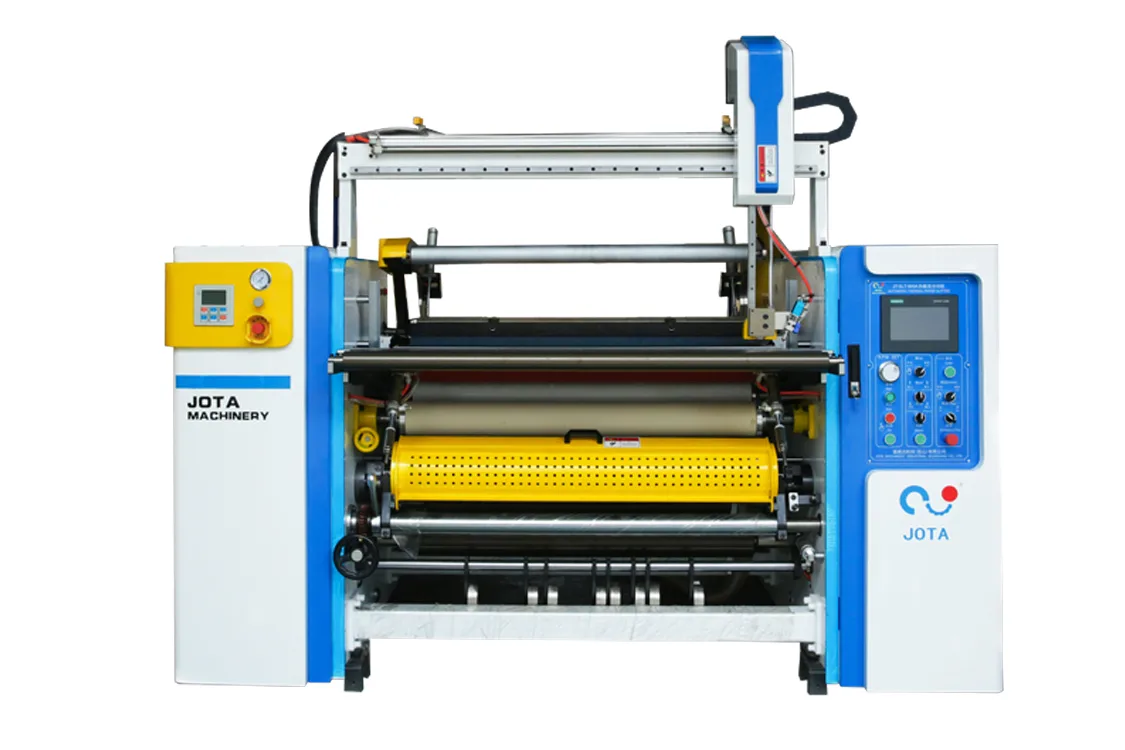
For standard POS and receipt-roll production, thermal paper jumbo rolls are slit and rewound into the required finished widths, diameters and core specifications.
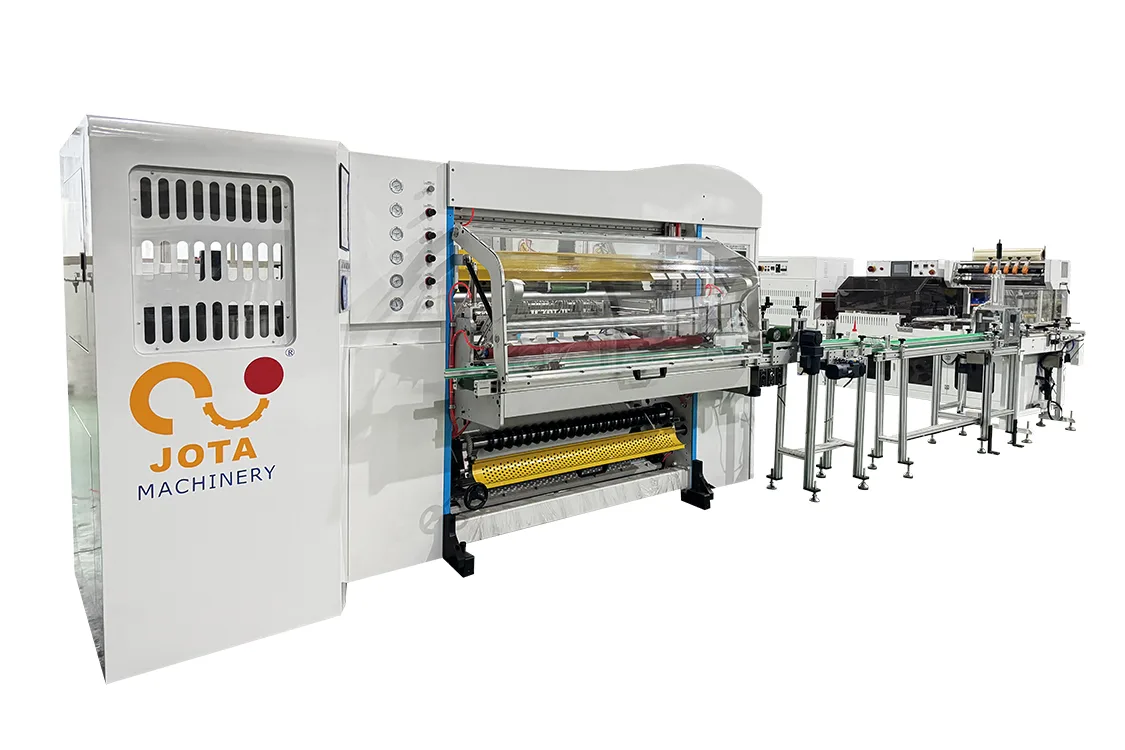
For higher production output, a fully automatic configuration can reduce manual handling and integrate additional roll finishing, packaging or palletizing processes.
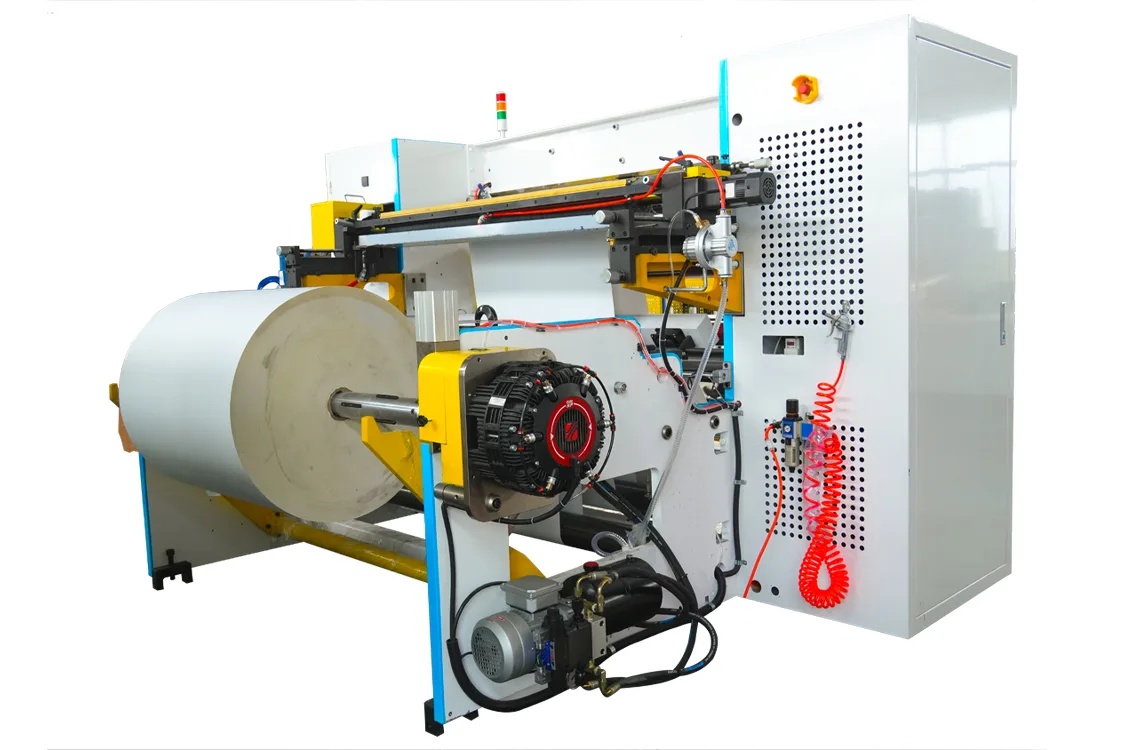
If your rolls require logos or promotional information, inline flexographic printing can be combined with slitting and rewinding in one production process.
The difference is not simply machine speed.
Ask how jumbo rolls are loaded, how the finished rolls are completed, how often operators intervene, and how the products are transferred to packaging.
The complete operating cycle determines how the line will function in your factory.
A machine described as automatic should be evaluated according to its actual included functions.
Can You Build a Business Around Custom Printed Thermal Rolls?
One way to develop a broader product range is to offer custom printed thermal paper rolls.
Some retailers want logos, promotional messages, return policies, or company information printed on the reverse side of their receipt paper.
These products require an additional printing process.
For a distributor that already supplies plain thermal receipt rolls, customer enquiries for branded paper can provide a reason to consider expanding into printed-roll manufacturing.
However, custom printing should be based on genuine orders.
It involves artwork preparation, printing plates, inks, colour requirements, setup time, and quality control.
Separate Printing or Inline Flexo Printing?
One manufacturing arrangement uses an independent flexographic printing press.
Unprinted jumbo thermal paper is printed first, then transferred to a slitter rewinder for conversion into finished rolls.
Another option is an inline flexo printing slitting machine.

The unprinted jumbo thermal paper passes through an integrated flexographic printing unit before being slit and rewound.
This allows printing and converting to take place within one production line without a separate intermediate jumbo roll transfer.
For manufacturers receiving regular printed-roll orders, the integrated arrangement can be worth considering.
Think About What Your Customers Need
Before purchasing an inline printing system, establish the number of printing colours and the required artwork repeat lengths.
A customer requesting a simple one-colour logo may need a different configuration from one requiring multi-colour artwork.
The printing system must also be compatible with the thermal paper grade, printing width, and finished slitting layout.
At JOTA Machinery, we can review these requirements when preparing an integrated printing and converting proposal.
The Real Question: How Many Rolls Can Your Factory Sell?
It is tempting to calculate a new factory’s potential revenue from the maximum number of rolls a machine can produce.
But production capacity is not the same as customer demand.
A factory capable of manufacturing thousands of rolls per shift still needs customers prepared to purchase those products.
Before making an investment, establish a realistic sales plan.
Work From Confirmed or Credible Demand
Talk to the distributors and businesses you intend to supply.
Identify their preferred products, required quantities, quality expectations, and purchasing conditions.
Try to understand whether orders are recurring or seasonal.
Where possible, obtain written specifications and purchase commitments.
A forecast based on actual customer discussions is more useful than an unsupported market-share estimate.
Understand Your Cost Per Saleable Roll
The cost of producing thermal paper rolls includes raw materials, labour, machine operation, packaging, waste, and factory overhead.
Only rolls meeting the agreed quality specifications should be counted as saleable output.
A simplified calculation is:
Manufacturing Cost Per Saleable Roll = Total Attributable Production Cost ÷ Accepted Finished Rolls
This calculation can help you compare different machine configurations and production methods.
It can also help you evaluate whether local converting would be competitive against your current finished-roll purchasing costs.
Leave Room for Working Capital
A new factory needs more than enough money to purchase machinery.
It may need funds for jumbo thermal paper inventory, packaging materials, spare parts, wages, utilities, logistics, and customer payment terms.
These requirements should be included in the business plan.
A technically capable factory can still experience financial pressure if its working-capital needs are underestimated.
From Business Idea to Production Line: Where JOTA Fits In
You may have the customers but not the production equipment.
You may already distribute thermal paper rolls and want to manufacture them yourself.
Or perhaps you have identified a market and are considering your first converting factory.
In each case, the equipment decision should follow the production requirements.
JOTA Machinery provides turnkey thermal paper roll converting solutions to help customers plan and establish suitable manufacturing lines.
Our scope can include slitting and rewinding equipment, compatible printing configurations, and selected downstream handling or packaging automation, depending on the project.
The exact equipment and services are defined in the technical proposal.
Step 1: Define What You Want to Manufacture
Tell us which thermal paper roll products you intend to supply.
We need to understand your required widths, roll diameters, cores, paper lengths, and raw material specifications.
If you already have customer samples, those can provide a useful reference.
Step 2: Select the Production Configuration
Our engineering team reviews the proposed products and expected production volume.
From there, we can discuss a suitable slitting and rewinding configuration.
If customers require printed receipt rolls, inline flexo printing can be evaluated as part of the project.
If the business needs higher automation, we can review the relevant roll-handling and downstream production requirements.
Step 3: Review the Factory Requirements
The proposed line must suit the available production space and material-handling arrangements.
Important considerations include electrical supply, machine dimensions, operator access, jumbo roll loading, finished product movement, and maintenance clearance.
The factory layout should also account for raw material storage and packaging operations.
Step 4: Manufacture and Test the Equipment
JOTA’s manufacturing facility is located in Kunshan, China.
We established our own machinery manufacturing operations in 2011 and work on machine design, assembly, electrical control, and testing.

For thermal paper converting projects, relevant equipment functions are checked during commissioning.
Buyers can also agree on Factory Acceptance Testing requirements before shipment.
Step 5: Prepare for Installation and Production
After machine delivery, the factory needs appropriate installation, operator preparation, and commissioning.
The scope of installation guidance, technical support, and training should be established in the project agreement.
Actual production can begin once the equipment, materials, operators, and acceptance requirements are ready.
A turnkey machinery solution reduces the need to source and coordinate unrelated converting machines, but commercial operations such as raw material procurement, customer acquisition, staffing, and local regulatory requirements remain the factory owner’s responsibility.
Build a Factory That Can Deliver Consistent Quality
Customers purchasing thermal printer paper rolls expect more than the correct product label.
The rolls must fit the intended printer and perform consistently.
A manufacturer should therefore establish quality checks before regular production begins.
Important characteristics may include:
Finished roll width: The paper must meet the agreed dimensional tolerance.
Outside diameter: The roll must fit the intended printer compartment.
Paper length: Where a specific length is required, the actual metres per roll should be verified.
Winding quality: Rolls should be sufficiently stable for handling and printer feeding.
Thermal printing performance: The selected paper grade should produce acceptable images in compatible printers.
Packaging: Finished rolls should be protected against handling and distribution damage.
These checks help protect the business from complaints and rejected orders.
Why Engineering and PLC Control Matter
A thermal paper slitter rewinder must coordinate material movement, slitting, winding tension, length measurement, and completion of the winding cycle.
For example, a meter counter may use a measuring wheel and encoder to calculate how much paper has passed through the machine.
The control program must interpret the electrical signals correctly and apply the appropriate calibration.
At JOTA, our in-house programmers review the technical documentation of the relevant electrical components when developing the machine control system.
Accurate programming helps reduce avoidable measurement errors, but the result must also be checked against actual finished roll measurements.
A well-designed machine should be evaluated by the quality and repeatability of the products it manufactures.
Don’t Wait for the Perfect Moment—Prepare the Right Project
If you’ve been considering a thermal paper roll manufacturing business, there is little value in endlessly comparing machinery without defining the business you want to establish.
But moving forward does not mean placing an equipment order without research.
It means taking the next concrete steps.
Identify the customers you intend to serve.
Confirm the thermal receipt roll specifications they need.
Estimate realistic monthly demand and the investment you can support.
Determine whether you want to manufacture plain rolls, printed rolls, or both.
With these details, a machinery manufacturer can help turn a general business idea into a workable technical proposal.
You do not need to know every engineering detail at the beginning.
You do need a clear understanding of the products you want to sell.
Ready to Start Your Thermal Paper Roll Manufacturing Business?
JOTA Machinery can help you evaluate the equipment required for your proposed production line.
Whether you’re entering the thermal paper converting industry or expanding from wholesale distribution into manufacturing, we can discuss slitting, rewinding, inline flexo printing, and selected packaging automation according to your requirements.
Explore JOTA Thermal Paper Roll Manufacturing Solutions
Your Factory. Your Products. Your Customers.
Building a thermal printer paper roll manufacturing business is a significant decision.
You are taking on new responsibilities, but you are also creating the possibility of greater control over production specifications, scheduling, quality, and product development.
For an established distributor, this may be the next stage of business growth.
For a new investor, it may be the starting point for entering the thermal receipt paper industry.
In either case, the objective should be the same: establish a factory capable of manufacturing products that customers actually need, at a cost the business can sustain.
That requires market research, suitable equipment, trained operators, dependable raw materials, and a realistic sales plan.
Build your own production. Compete on your own terms.
At JOTA Machinery, we help customers take the machinery side of that step through customised thermal paper converting and turnkey production-line solutions.
Have a Business Idea? Turn It Into a Production Plan.
Tell us about your target market, intended thermal paper roll sizes, expected production capacity, and available factory space.
If you also want to manufacture custom printed thermal paper rolls, share your artwork and printing requirements.
Our engineering team can review the equipment configuration and prepare a project-specific quotation.
Contact JOTA Machinery — Start Your Thermal Paper Roll Factory
Last Updated on 23/10/2026 by Jota Machinery