

Written by Bruce Zhou
Founder & Managing Director | JOTA Machinery
Paper converting machinery specialist since 2002.
Connect with me on LinkedIn
Published: 16,October, 2026
Last Updated: 16,October, 2026 18:13:45 PM GMT+8
If you’re planning to purchase a thermal till roll making machine for your factory in South Africa, the first price you receive from a manufacturer may not represent your total investment.
A machine quoted at US$15,500 does not necessarily cost US$15,500 by the time it arrives at your workshop and is ready for production.
There may be international freight charges, customs clearance fees, applicable import duties, VAT, local transportation, electrical installation, and other startup expenses.
The total also depends on the type of machine you’re buying.
A semi-automatic slitter rewinder intended for smaller production volumes cannot be compared directly with a fully automatic thermal paper converting line that includes additional roll-handling and packaging equipment.
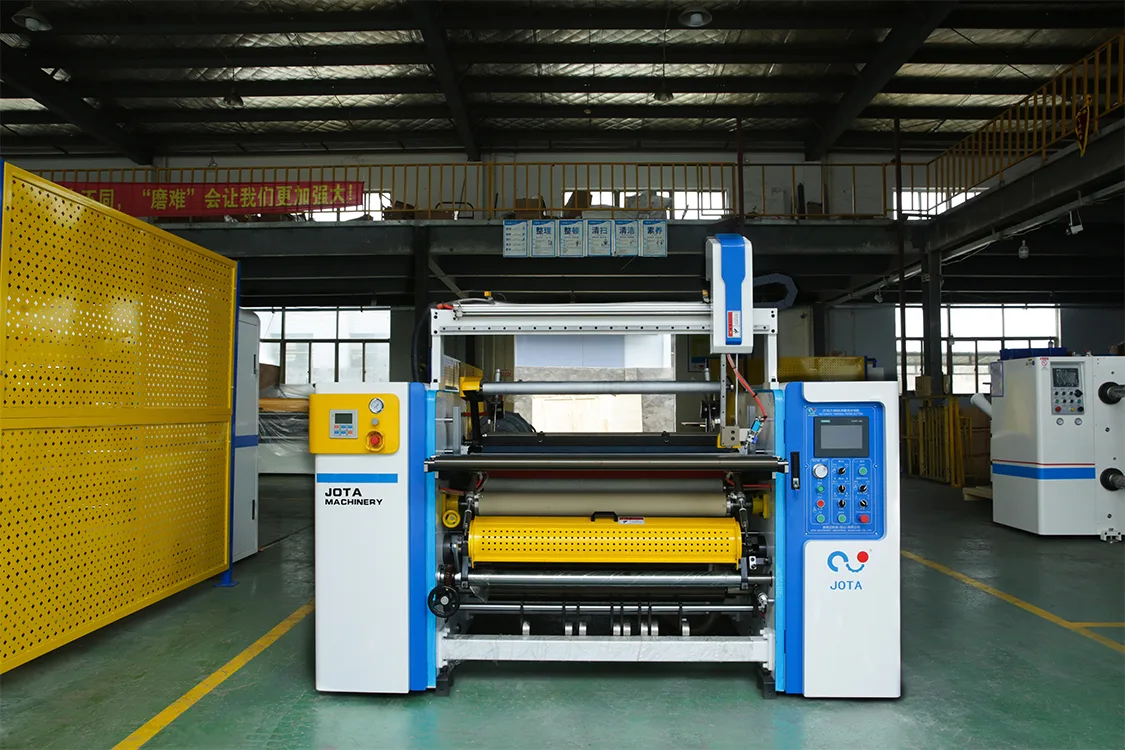
JT-SLT-900A Thermal Paper Roll Slitting Rewinding Machine
Planning to start a thermal paper roll manufacturing business? The JT-SLT-900A converts thermal paper jumbo rolls into finished POS, ATM, and cash register rolls in different sizes. It offers a practical entry point for new manufacturers looking to establish their own production facility. Whether you’re preparing a business plan or evaluating your first slitting machine, our team can help you review the equipment specifications and production requirements.
This guide explains the main machinery price ranges, what affects the quotation, and how South African manufacturers can prepare a more realistic equipment investment budget.
1. Thermal Till Roll Making Machine Price Ranges
Thermal till roll making machines are also known as thermal paper slitting rewinding machines, POS roll making machines, or receipt paper roll converting machines.
Their primary function is to convert wide jumbo thermal paper rolls into smaller finished rolls for card machines, cash registers, and POS receipt printers.
JOTA Machinery’s published equipment price references provide the following general ranges.
| Machine Type | Indicative Price (USD) | Production Scope |
|---|---|---|
| Entry-Level / Semi-Automatic Slitter Rewinder | From approximately $15,500 | Thermal paper slitting and rewinding with more operator involvement |
| Fully Automatic Thermal Paper Roll Line | Approximately $80,000–$120,000 | Higher automation for small-roll production |
| High-Specification Converting Line | Up to approximately $150,000 | More extensive automation and customised production requirements |
These are budget references, not fixed selling prices or current South African landed quotations.
The figures represent different levels of equipment investment. They should not be compared as though each quotation includes the same functions.
For example, one quotation may cover only the main slitting and rewinding machine. Another may include additional paper handling, automatic roll-changing functions, packaging machinery, or other equipment.
Before comparing prices, always request a written specification and a detailed list of what is included.
2. Why Do Thermal Till Roll Machine Prices Vary?
Two machines may both be advertised as thermal till roll making machines while having very different capabilities and prices.
The main differences usually relate to automation, roll dimensions, production requirements, and optional functions.
Automation Level
A semi-automatic machine typically requires more operator involvement in some production operations.
More extensively automated equipment may reduce manual handling during roll changes, rewinding, or downstream processes, depending on the model.
However, automatic slitting and rewinding should not be confused with a complete automatic production line.
If you want automatic wrapping, carton packing, or palletising, confirm whether these functions are included or require separate equipment.
Jumbo Roll Dimensions
The width, diameter, and weight of the parent roll affect machine design and material handling.
A factory processing large jumbo rolls may require a suitable unwind stand, lifting arrangement, and sufficient space for loading.
The maximum jumbo roll width and diameter should be confirmed before a machine is quoted.
Finished Thermal Till Roll Sizes
South African manufacturers may produce several thermal roll specifications, including 57 × 40 mm card machine rolls and 80 × 83 mm POS receipt rolls.
The machine must support the required cutting widths, finished diameters, and core specifications.
If you expect to change between several sizes, ask how the cutting arrangement is adjusted and how much operator work the changeover requires.
Printing Requirements
Plain thermal till rolls do not require flexographic artwork printing.
However, some customers order receipt rolls printed with store logos, return policies, or promotional information.
In these cases, a manufacturer may use a separate flexographic printing press before slitting or a slitter rewinder equipped with an inline flexographic printing unit.
Printing equipment adds costs that should be evaluated against the expected volume of printed orders.
3. What Does It Cost to Import a Thermal Till Roll Making Machine Into South Africa?
For South African buyers, the factory quotation is only one component of the final machinery investment.
The complete amount depends on the delivery terms, shipment arrangements, customs classification, taxes, and the location of the factory.
Before requesting a quotation, determine whether the supplier’s price is EXW, FOB, CIF, or another agreed Incoterms basis.
EXW, FOB and CIF: What Is the Difference?
EXW — Ex Works
The supplier makes the equipment available at the agreed location. The buyer takes on substantial transportation and export-related responsibilities under the agreed terms.
FOB — Free on Board
For sea shipments, the seller’s delivery responsibilities extend to loading the goods on board the vessel at the agreed port. The buyer arranges the main international carriage and subsequent transportation.
CIF — Cost, Insurance and Freight
For sea shipments, the seller arranges and pays for freight and insurance to the named destination port, subject to the agreed Incoterms. Import customs clearance and inland delivery are not automatically included.
Even with a CIF quotation, a South African buyer should still budget for customs procedures, applicable taxes, port-related charges, local transportation, and installation.
Customs Duties and Import VAT
South African imports are administered by the South African Revenue Service (SARS).
The applicable customs duty depends on the correct tariff classification and other relevant customs rules.
A thermal paper slitting rewinding machine should be classified according to its actual functions and technical characteristics. Do not assume that every converting machine has the same duty rate.
South Africa currently applies a standard VAT rate of 15%.
For goods imported from outside the Southern African Customs Union, SARS generally calculates import VAT using a customs value adjusted by a 10% uplift and applicable non-rebated duties.
This does not mean that the customs duty is automatically 10%. The uplift is part of the import VAT calculation and is separate from any customs duty that may apply.
Before placing an order, consult a qualified South African customs clearing agent and confirm the correct tariff classification, expected taxes, and import documentation.
Official reference: SARS – Duties and Taxes for Importers.
4. Example: Estimating the Total Equipment Budget
Consider a South African business reviewing an entry-level thermal paper slitting rewinding machine.
The quoted equipment price is approximately US$15,500.
Before converting that amount into South African rand, the buyer should first identify the additional expenses.
| Budget Item | Example / Calculation Basis |
|---|---|
| Machine Price | US$15,500 indicative reference |
| Export Packing | Confirm whether included |
| International Freight | Obtain a freight forwarder’s quotation |
| Marine Insurance | Depends on insured value and shipment |
| Customs Duty | Apply the confirmed tariff classification |
| Import VAT | Calculate according to SARS requirements |
| Customs Clearance | Confirm clearing and related fees |
| Local Transportation | Destination port to factory |
| Installation | Electrical, mechanical and commissioning requirements |
| Initial Spare Parts | As specified in the purchase agreement |
The final cost in South African rand will also depend on the exchange rate used for payments and customs valuation.
For this reason, converting a US dollar machine quotation into rand using a single exchange rate is not enough to establish the complete project cost.
A useful budget separates three figures:
1. Equipment Purchase Price: The amount payable to the machine supplier under the agreed contract.
2. Landed Equipment Cost: The cost of bringing the machine to the agreed destination, including relevant freight, import charges, and local delivery expenses.
3. Production-Ready Investment: Landed equipment cost plus installation, factory preparation, initial raw materials, auxiliary equipment, and other startup expenditure.
The third figure is especially important for businesses opening a new converting factory.
5. What Other Equipment and Costs Should a New Factory Consider?
Buying the slitter rewinder does not automatically mean the factory is ready to manufacture and distribute finished thermal till rolls.
Depending on your production plan, additional items may be required.
Raw Material Inventory
You will need jumbo thermal paper suitable for the rolls you intend to manufacture.
Before ordering, confirm the material width, diameter, GSM, caliper, coating properties, and delivery lead time.
A large initial raw material purchase ties up working capital, so align inventory with realistic customer orders.
Paper Cores and Packaging
If your finished rolls require paper cores, these need to match both the machine’s rewinding setup and your customers’ printer requirements.
You may also need shrink film, bags, carton boxes, labels, and suitable packaging equipment.
Factory Space and Handling
Allow space for jumbo roll storage, machinery, finished roll handling, packaging, and dispatch.
Large parent rolls may also require suitable material-handling equipment. The exact arrangement depends on the jumbo roll weight and the selected unwind system.
Labour and Electricity
Check the actual machine power requirements, available workshop electrical supply, operator tasks, and working schedule.
Additional labour may be necessary for packaging, raw material movement, and quality inspection even where the main slitting process is automated.
Maintenance and Spare Parts
Include routine maintenance and commonly used spare parts in the operating budget.
For machines using slitting knives, blade condition and proper knife setup directly affect finished roll quality.
6. Is a Semi-Automatic or Fully Automatic Machine Better for South Africa?
The best choice depends on the volume and type of orders you expect to receive.
A new business supplying a small number of wholesalers may be better served by an economical production setup.
An established thermal till roll manufacturer supplying regular high-volume orders may place greater value on automated production and reduced handling time.
The most useful comparison is not simply machine price against machine price.
Instead, consider:
| Purchase Factor | Semi-Automatic Setup | Fully Automatic Line |
|---|---|---|
| Initial Investment | Generally lower | Generally higher |
| Operator Involvement | More manual tasks | More operations automated |
| Production Planning | Suitable for appropriate lower-volume requirements | Suitable for appropriate higher-volume requirements |
| Auxiliary Equipment | Depends on scope | Depends on scope |
| Payback Assessment | Based on costs and confirmed orders | Based on costs, output and labour savings |
A fully automatic line is not automatically the most profitable option.
For example, if a factory has insufficient customer demand to keep the line operating regularly, the additional capacity may remain unused.

Conversely, a lower-cost machine may become restrictive if frequent manual operations prevent the factory from meeting confirmed orders.
Before selecting equipment, compare realistic saleable output, production labour, maintenance, and operating costs.
7. How Many Thermal Till Rolls Can the Machine Produce?
Machine manufacturers usually describe performance using web speed, production cycles, or other operating parameters.
However, mechanical speed alone does not tell a buyer how many finished rolls will be produced per shift.
Production also depends on:
- Number of usable slitting and rewinding positions
- Finished roll length
- Material running speed
- Roll-changing and unloading time
- Job changeovers
- Inspection and production stoppages
Consider two orders: 57 × 40 mm card machine rolls and 80 × 83 mm POS rolls.
The products require different cutting layouts and finished winding diameters. Their roll lengths may also be different.
Even when manufactured on the same slitting rewinding machine, they may not have the same finished roll output per hour.
Before buying, ask the supplier to estimate production using your actual paper and roll specifications.
For a more reliable comparison, request factory testing or production video showing a comparable roll format.
8. What Should You Check Before Paying a Machinery Deposit?
A written quotation should allow the buyer to identify exactly what is being purchased.
Before confirming an order, review the technical scope carefully.
Machine Specifications: Confirm the model, jumbo roll limits, working speed, cutting width range, finished roll diameter, and rewinding arrangement.
Included Accessories: Check which knives, spacers, shafts, chucks, and other accessories are supplied with the machine.
Automation Functions: Identify which operations are automatic and which still require manual handling.
Factory Acceptance Testing: Agree on the materials, roll specifications, and acceptance criteria that will be used during testing.
Electrical Requirements: Confirm voltage, frequency, power requirements, and any adjustments needed for the destination factory.
Delivery Terms: Verify the agreed Incoterms, shipment arrangements, export packing, and responsibilities for customs clearance.
Warranty and Technical Support: Review the stated warranty, spare parts arrangements, installation requirements, and available remote or on-site assistance.
The cheapest quotation is not necessarily the lowest-cost option if important equipment or services are excluded.
Need a Machine Quotation for South Africa?
If you already know the thermal till roll sizes you plan to produce, JOTA Machinery can review your production requirements before recommending a machine.
Send us your jumbo paper width, finished roll dimensions, core specifications, and expected production volume.
Our engineering team can help identify a suitable thermal paper slitting rewinding machine configuration and clarify the equipment included in the quotation.
Explore Thermal Till Roll Making Machines for South Africa
Last Updated on 16/10/2026 by Jota Machinery