

Written by Bruce Zhou
Founder & Managing Director | JOTA Machinery
Paper converting machinery specialist since 2002.
Connect with me on LinkedIn
Published: 13,October, 2026
Last Updated: 13,October, 2026 17:35:10 GMT+8
A slitting machine cuts a wide roll of material into narrower rolls or strips so they can fit the next production process or the customer’s required dimensions. The incoming wide roll is called a parent roll, master roll, or jumbo roll. After cutting, the narrower lanes are usually rewound onto separate cores.
Slitting is a roll-converting process. It changes the material’s width and roll format; it does not, by itself, print the material or cut it into sheets.
From One Wide Roll to Finished Narrow Rolls
| Machine section | What happens |
|---|---|
| Unwind | The parent roll feeds into the machine under controlled tension. |
| Slit | Blades cut the moving web lengthwise at set positions across its width. |
| Rewind | Each narrow lane is wound into a finished roll, often on its own core. |
The machine’s controls help manage web tension and alignment as the material moves through the cutting section. These factors matter because unstable feeding can affect the edges and winding of the finished rolls.
Why Manufacturers Use Slitting Machines
A parent roll may be wider than the equipment that will use it. Slitting lets a converter supply several useful widths from that roll, ready for printing, packaging, dispensing, or another manufacturing step.

For example, a converter can slit paper into receipt-roll widths, kraft paper into tape widths, or film into rolls for packaging equipment. The required width, roll diameter, core size, and material properties determine how the machine should be configured.
Materials and Cutting Methods
Slitter rewinders are used with many roll materials, including paper, thermal paper, plastic film, foil, laminates, adhesive tape, nonwovens, and fabrics. Metal coil slitting is also common, but it uses equipment designed for metal and is a separate machine category.
The blade method depends on the material and the required cut:
- Razor slitting is used for some thin webs.
- Rotary shear slitting uses overlapping circular blades and is selected when a shearing cut is required.
- Score or crush slitting cuts or scores material through pressure and is used for certain products.
These are not interchangeable settings. The suitable method depends on the web’s thickness, structure, and cutting requirements.
What to Check When Choosing a Slitter Rewinder
Start with the finished product and work backward to the machine. A manufacturer will need details such as:
- Material type, thickness, or grammage
- Parent-roll width and diameter
- Finished roll widths and number of lanes
- Core diameter and finished roll diameter
- Required cutting method and edge quality
- Expected production volume
A slitter rewinder for thermal paper, for instance, may need different unwinding, tension, and rewinding arrangements from a line for adhesive tape or film. The machine specification should match the actual material and finished-roll requirements.
Discuss Your Roll-Converting Requirements
Jota Machinery supplies slitting and rewinding equipment for paper, thermal paper, film, foil, tape, labels, and other roll materials. Send us your material details, parent-roll dimensions, finished roll sizes, and production target. We can review the requirements and discuss a suitable machine configuration for your converting line.
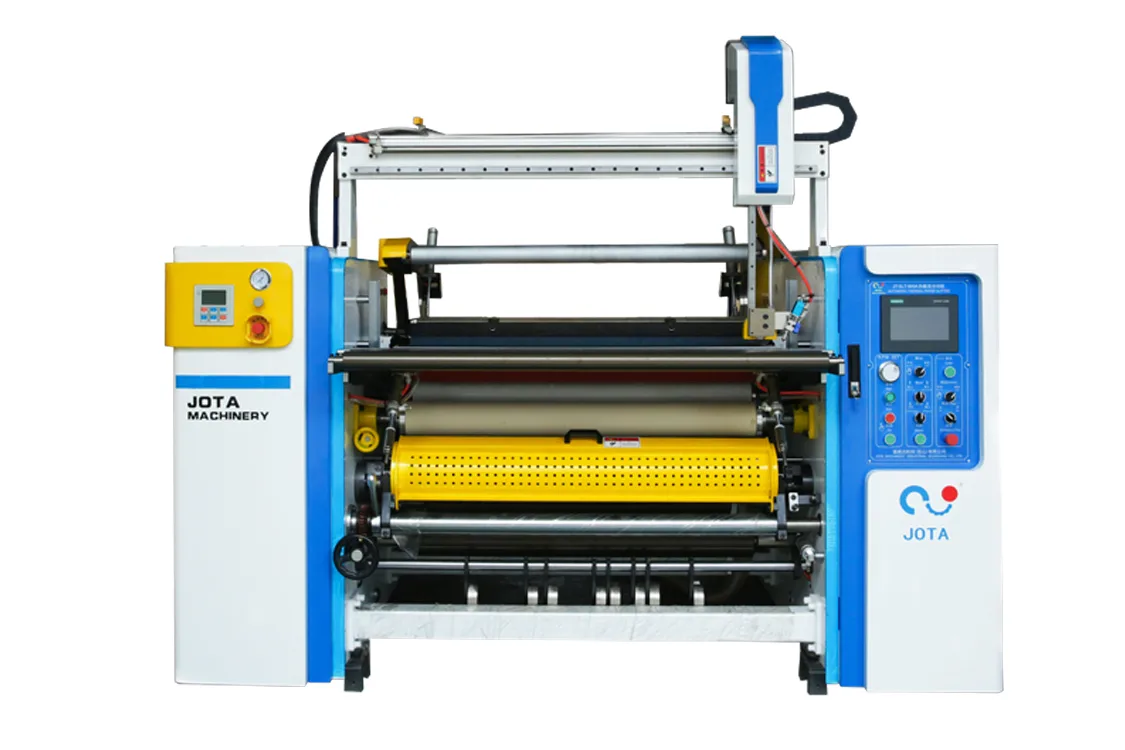
For standard POS and receipt-roll production, thermal paper jumbo rolls are slit and rewound into the required finished widths, diameters and core specifications.
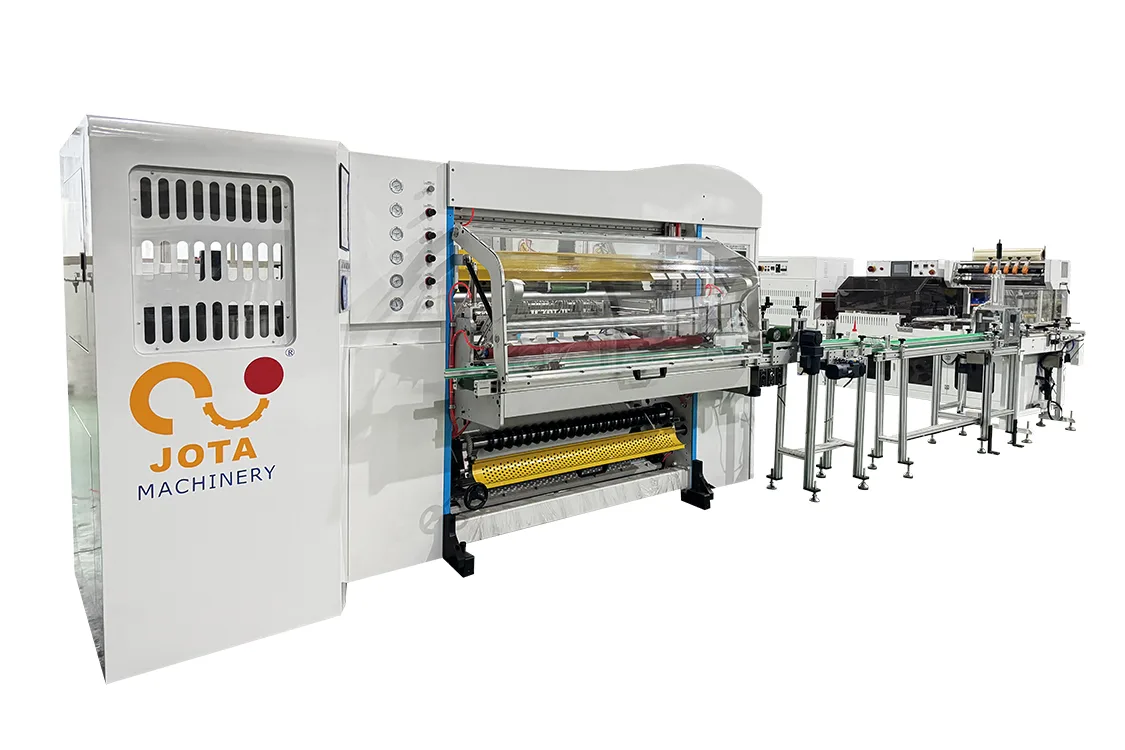
For higher production output, a fully automatic configuration can reduce manual handling and integrate additional roll finishing, packaging or palletizing processes.
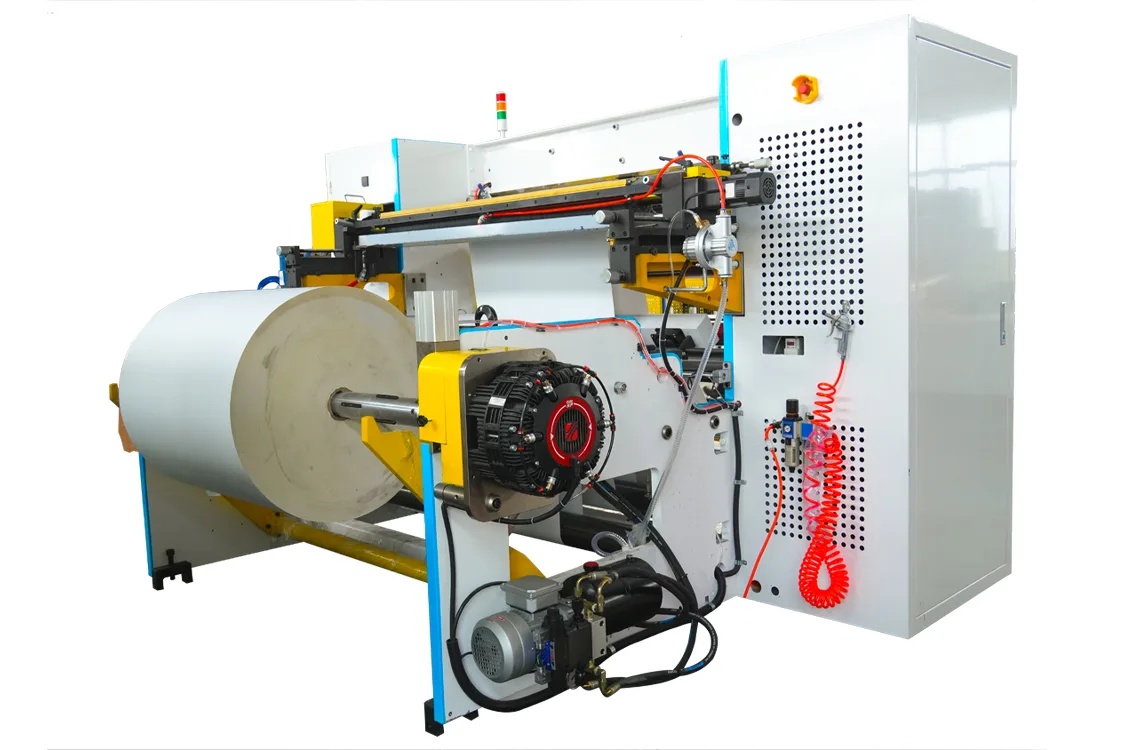
If your rolls require logos or promotional information, inline flexographic printing can be combined with slitting and rewinding in one production process.
Last Updated on 13/10/2026 by Jota Machinery