

Written by Bruce Zhou
Founder & Managing Director | JOTA Machinery
Paper converting machinery specialist since 2002.
Connect with me on LinkedIn
Published: 08,October, 2026
Last Updated: 08,October, 2026 19:04:30 GMT+8
Heat-sensitive thermal paper, commonly called thermal paper, is a coated paper designed to develop an image when exposed to controlled heat. It is used in direct thermal printers for applications such as receipts, shipping labels, tickets, and medical recording strips.
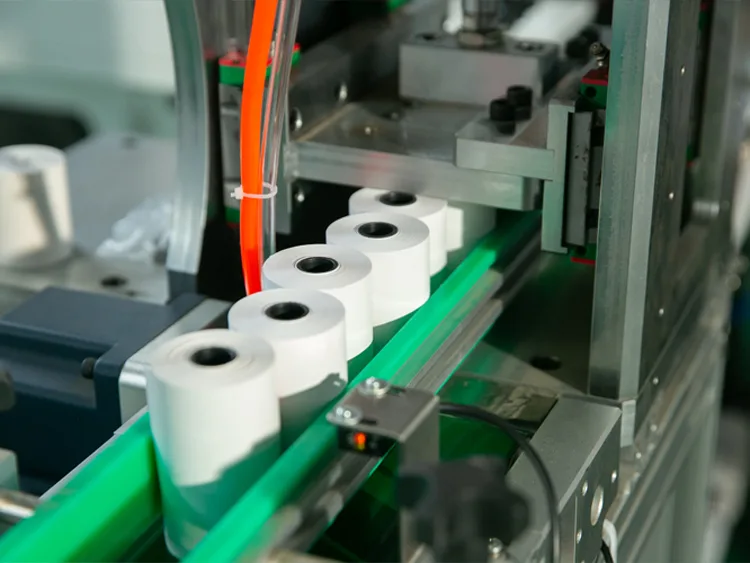
Unlike conventional printing, direct thermal printing does not apply ink or toner to the paper. Instead, the printer activates a reactive coating on its surface.
How does heat-sensitive thermal paper work?
The printable side of thermal paper contains a heat-reactive coating. Its components typically include a leuco dye, an acidic developer, and other ingredients such as sensitizers and stabilizers. The specific formulation varies by paper grade.
A direct thermal printer uses a printhead containing small heating elements. As the paper moves across the printhead, selected elements apply heat to precise areas of the coating. The dye and developer react in those areas, producing text, barcodes, or images—usually in black. The image forms directly on the paper as it cools.
The term direct thermal printing distinguishes this process from thermal transfer printing. Thermal transfer printers use heat to transfer ink from a ribbon onto a label or other printable material.
Where is thermal paper used?
Thermal paper is commonly supplied in rolls for:
- Point-of-sale receipts and payment terminals
- Shipping labels
- Tickets
- Medical recording strips, including ECG paper
- Portable direct thermal printers
The required paper grade depends on the printer, the intended use, and the expected storage conditions.
Key characteristics and storage considerations
A direct thermal system does not require ink, toner, or a transfer ribbon to create the image. This can simplify printer operation and reduce the number of printing supplies required.
Print durability varies by grade and formulation. Heat, light, oils, plasticizers, and aging can cause the image to fade. Standard grades and top-coated or longer-life grades may perform differently, so paper selection should reflect how long the image must remain readable and the conditions in which it will be stored.
The printable side is often slightly glossier than the reverse side. Friction can also create a dark mark by heating the coating locally, although printer loading instructions should be followed to confirm the correct orientation.
Thermal paper’s coating can affect its suitability for recycling. Converters and end users should refer to the paper supplier’s product information and local recycling guidance.
What should thermal paper converters consider?
Converters turn wider thermal paper jumbo rolls into finished rolls for specific printers and applications. Important product specifications may include roll width, diameter, core size, winding quality, and packaging. These requirements determine the converting process and the slitter rewinder configuration.
Jota Machinery supplies slitter rewinders for thermal paper roll production. If you are planning a new converting line or reviewing existing equipment, provide your parent-roll and finished-roll specifications so the appropriate machine configuration can be discussed.
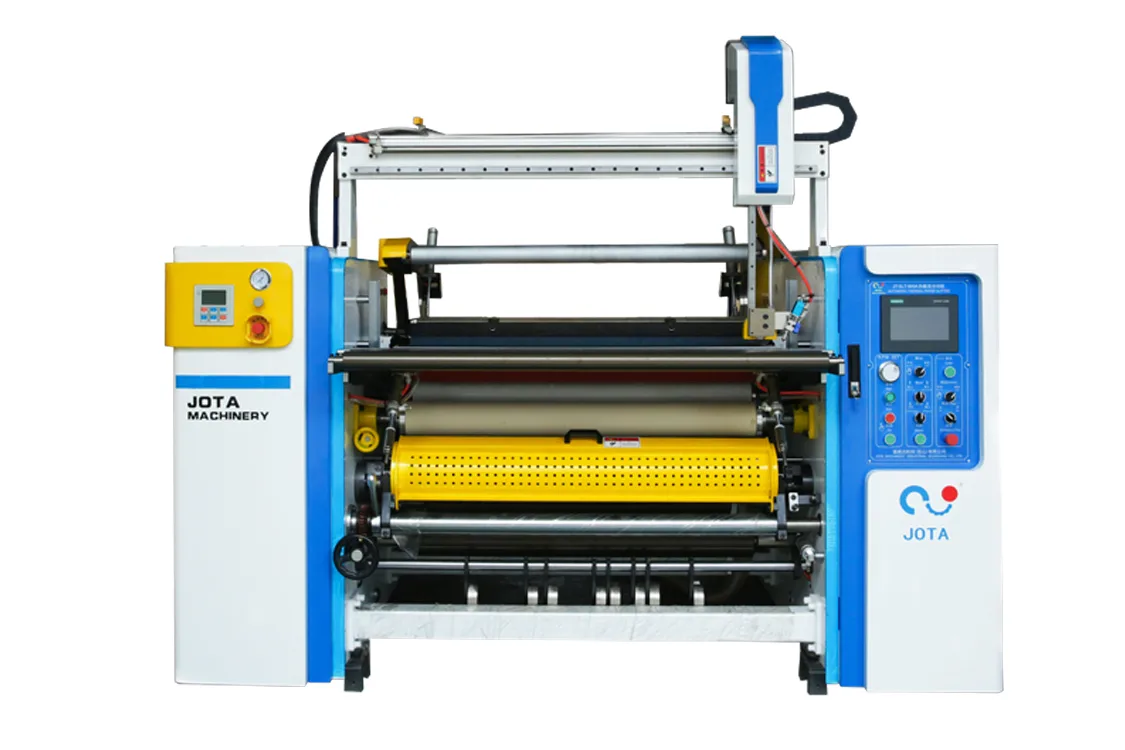
For standard POS and receipt-roll production, thermal paper jumbo rolls are slit and rewound into the required finished widths, diameters and core specifications.
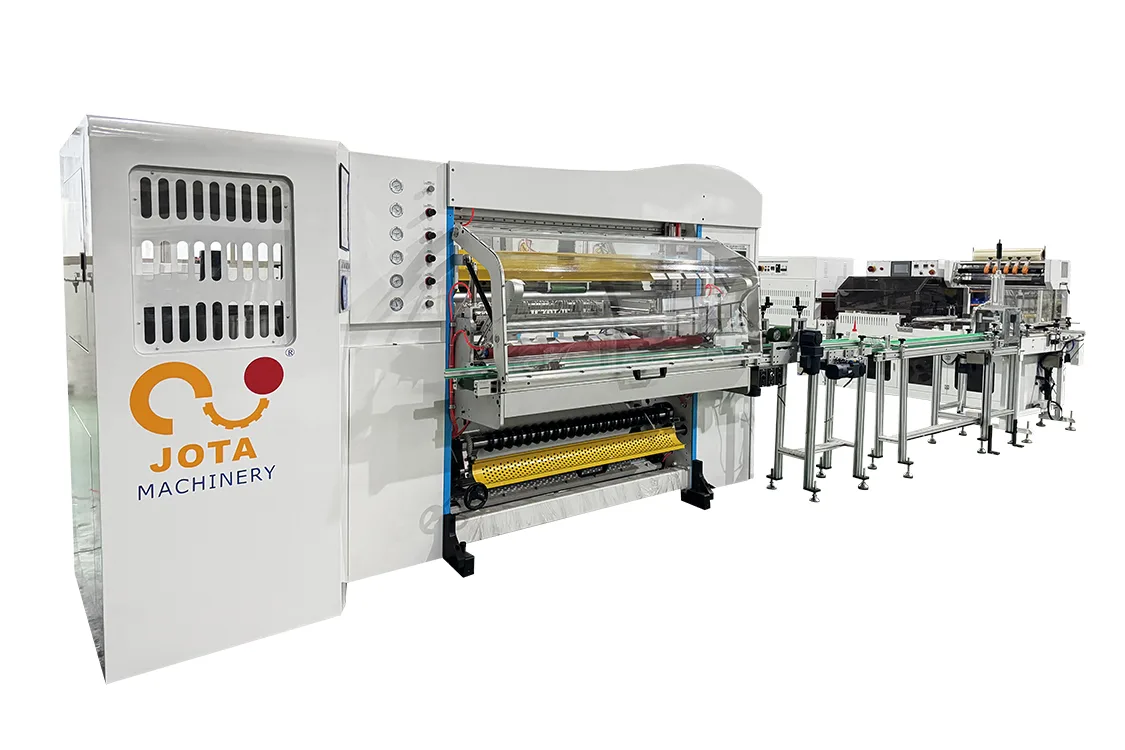
For higher production output, a fully automatic configuration can reduce manual handling and integrate additional roll finishing, packaging or palletizing processes.
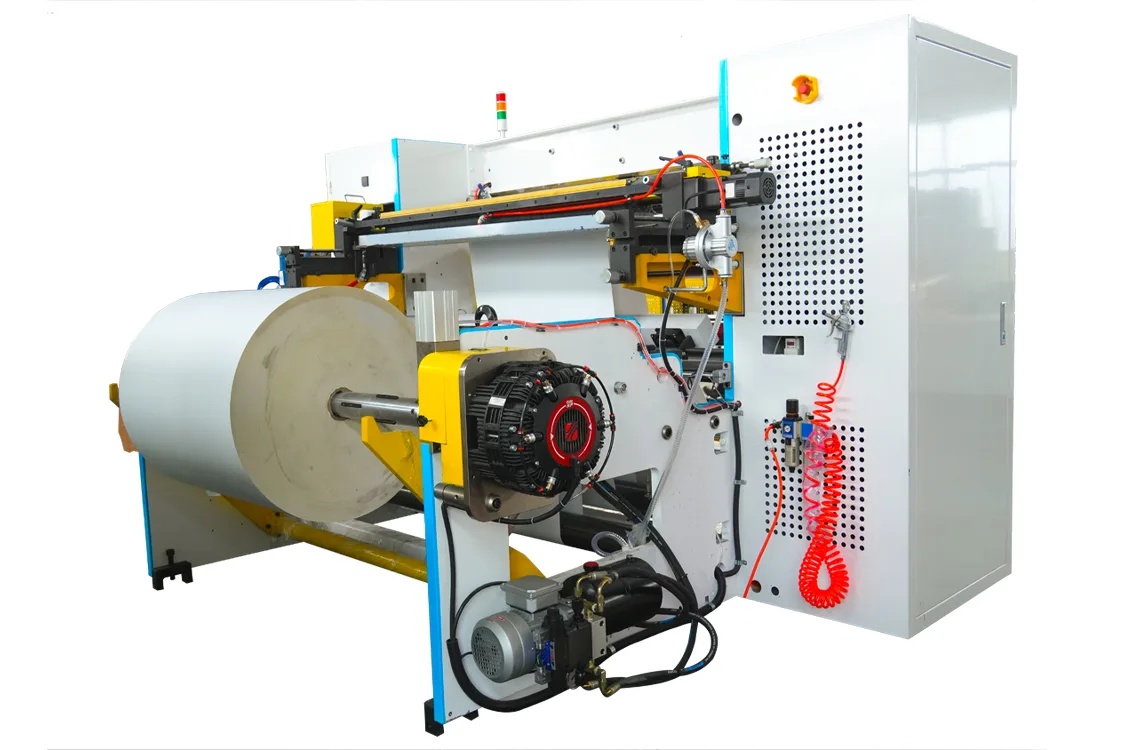
If your rolls require logos or promotional information, inline flexographic printing can be combined with slitting and rewinding in one production process.
Frequently asked questions
Is heat-sensitive paper the same as thermal paper?
Yes. “Heat-sensitive paper” describes how the paper responds to heat. “Thermal paper” is the common name for the coated paper used in direct thermal printing.
Does thermal paper require ink?
No. In direct thermal printing, the printhead heats selected areas of the paper’s coating to form the image.
Is thermal transfer paper the same as direct thermal paper?
No. Direct thermal paper develops an image through a heat-reactive coating. Thermal transfer printing uses a ribbon to transfer ink onto the printable material.
Last Updated on 08/10/2026 by Jota Machinery