
Published on APRIL 17, 2026 by Jota Machinery | 10:34:59 | Bruce Zhou

Paper converting refers to the processes used to change paper or paperboard into rolls, sheets or other formats for a specific application. Depending on the product, these processes may include slitting, rewinding, sheeting, printing, coating, laminating, perforating or die cutting.
For roll products, a converter may start with a jumbo roll and produce finished rolls to specified widths and diameters. The required process and equipment depend on the paper grade, product format and production requirements.
What Does Paper Converting Mean?
Paper converting is the processing of paper or paperboard after the base material has been made. Depending on the product, converting may begin with a roll or sheets and may involve changing the material’s width, length, surface, structure or format.
A roll-to-roll example is:
Jumbo roll → Unwinding → Printing or other processing, if required → Slitting → Rewinding → Finished rolls
Not every paper product uses every process shown here. For example, a POS roll may mainly require slitting and rewinding, while a printed or coated product may need additional steps.
The mill makes the substrate.
The converter changes that substrate into something functional, sellable, and application-specific.
That may include:
- narrowing a jumbo roll into smaller rolls
- cutting rolls into sheets
- adding coatings or adhesives
- printing logos, marks, or product information
- laminating multiple layers
- perforating, embossing, folding, or packaging
So when someone asks, what is paper converting, the most accurate answer is this:
Paper converting is the industrial transformation of parent paper rolls or sheets into finished paper products with defined size, structure, function, and market value.
Why Paper Converting Matters More Than Many Buyers Realize
The quality of a converted roll depends on both the incoming material and the converting process. During slitting and rewinding, factors such as web tension, knife condition, roll alignment and rewind settings can affect edge quality and roll formation.
If the process is unstable, the finished roll may show wrinkles, uneven edges, loose winding or telescoping. The specific defects depend on the material and production setup, so converters should assess finished rolls against their own product specifications.
It decides:
- final roll appearance
- usable yield
- printing quality
- packing efficiency
- machine compatibility
- customer acceptance
In other words, paper converting is where paper becomes a product.
What Products Are Made Through Paper Converting?
Converted paper products are part of daily life, even if most buyers never think about how they are made.
Common examples include:
- thermal paper rolls for POS systems, ATMs, kiosks, and ticketing
- self-adhesive labels and sticker stock
- kraft paper tapes and packaging papers
- corrugated packaging components
- office paper formats such as A4 cut-size sheets
- medical and specialty papers
- food-grade wrapping papers
- printed paper rolls for retail and logistics use
The end product can be simple or highly engineered.
Some converted items require only slitting and rewinding. Others need printing, coating, laminating, die cutting, folding, and final packing in one connected line.
The Main Processes in Paper Converting
Paper converting is not a single machine operation. It is a chain of controlled steps, each of which affects the next.
1. Slitting and Rewinding
For roll products, this is often the backbone of the entire converting process.
A wide jumbo roll enters the machine, is slit into narrower widths, and then rewound into smaller finished rolls.
This is the core process behind:
- thermal receipt rolls
- ATM paper rolls
- label stock rolls
- kraft tape rolls
- plotter paper rolls
- medical recording paper rolls
From the outside, slitting may look easy.
In reality, this is one of the most sensitive stages in the entire converting line.
Good slitting and rewinding requires control over:
- web tension
- knife selection
- edge quality
- rewind tightness
- roll alignment
- dust control
- static behavior
If this part is unstable, the finished roll may show:
- wrinkles
- telescoping
- soft edges
- loose winding
- core crushing
- poor printer feeding
That is why serious converters do not judge a slitter rewinder by speed alone. They judge it by whether it can hold quality at speed.
2. Printing
Printing is where paper converting often moves from basic processing into higher-margin manufacturing.
Printed converting allows the paper product to carry:
- brand identity
- usage instructions
- tracking codes
- advertising
- batch details
- colored marks or warning lines
Flexographic printing can be integrated into suitable roll-to-roll lines. Whether it is appropriate depends on the paper, print requirements, production speed and line configuration.
Printing can add logos, instructions, tracking information or other graphics to a paper roll. The print method and whether it is integrated inline depend on the product and production requirements.
3. Coating and Laminating
Some paper products need more than shape and size. They need function.
That function is often created through coating or laminating.
Examples include:
- thermal coating for heat-reactive receipt paper
- barrier coating for water, grease, or oil resistance
- adhesive coating for labels and tapes
- surface coating for printability or durability
- laminated structures for strength or multi-layer performance
This part of paper converting is especially important in packaging, food contact applications, thermal media, and specialty technical papers.
From an equipment standpoint, coating precision is not only about coverage. It is about uniformity, drying behavior, bonding strength, and line stability.
Coating quality should be checked against the product’s required coverage, surface performance and downstream use.
4. Sheeting and Die Cutting
Not all converted paper stays in roll form.
In many operations, the web is cut into flat sheets or custom shapes.
This is common in:
- office paper production
- label manufacturing
- packaging blanks
- inserts and forms
- paperboard components
Sheeting is used where exact flat-size output is required.
Die cutting goes further by creating defined product shapes, windows, contours, or structural patterns.
This is particularly important in the packaging and label sectors, where visual finish and dimensional accuracy directly affect product presentation and downstream use.
5. Embossing, Perforating, Folding, and Final Packaging
These finishing processes may look secondary, but they often define usability.
Examples include:
- embossing tissue for softness and bulk feel
- perforating for controlled tearing
- folding napkins or interleaved sheets
- automatic bagging, shrink wrapping, and bundling
At this point, the converting line is no longer just processing paper.
It is preparing the product for shipment, display, storage, and end-user convenience.

That is the final stage where industrial output becomes commercial merchandise.
Where Paper Converting Sits in the Industrial Value Chain
A paper mill and a paper converter are not the same kind of business.
The mill focuses on bulk production.
The converter focuses on market adaptation.
Here is the difference in practical terms:
| Aspect | Paper Mill | Paper Converter |
|---|---|---|
| Main output | Jumbo rolls or base paper | Finished or semi-finished products |
| Core focus | Substrate production | Product customization |
| Production logic | Volume and consistency | Flexibility and value addition |
| Customer need | Standard paper grades | Application-ready specifications |
Converters may focus on particular materials, product formats or customer specifications. The suitable product range depends on local demand, material supply and available production capabilities.
A Practical Example: Thermal Paper Converting
Thermal paper is one of the clearest examples of how paper converting works in real factory conditions.
A standard production flow may look like this:
- source jumbo thermal paper rolls from a paper mill
- load the parent roll into a slitter rewinder
- slit the web into target widths such as 57 mm or 80 mm
- rewind into finished roll diameters
- print logos, red marks, or promotional content if required
- shrink wrap, label, and carton pack the rolls
The raw material itself is not yet a sellable retail product.
Only after converting does it become:
- POS rolls
- ATM rolls
- kiosk rolls
- terminal rolls
- packaged consumer stock
This is exactly why converting carries so much strategic value.
What Makes a Good Paper Converting Operation?
A good converting line is not defined by how impressive the machine looks on the factory floor.
It is defined by how well it controls production variables over time.
The strongest converting operations usually share the same characteristics:
Stable tension control
This keeps the web running smoothly and reduces wrinkles, wandering, and inconsistent roll build.
Correct slitting method
Razor, shear, or score slitting must match the substrate, thickness, density, and finish requirement.
Consistent rewinding hardness
A finished roll must be tight enough to stay stable, but not so tight that it crushes the core or deforms the edges.
Reliable automation
Auto core loading, automatic unloading, inline printing, and packaging help reduce labor dependence and raise throughput.
Low waste generation
Margin is lost very quickly when trim loss, setup waste, or defect rates are poorly controlled.
Repeatable output quality
Customers do not pay extra for one good batch. They pay for dependable batches.
That is where machine design, operator skill, maintenance discipline, and process control all meet.
Different Types of Paper Converting
The paper converting industry covers more than one production model.
Roll-to-roll converting
This is continuous web processing and is widely used for thermal rolls, label stock, kraft tapes, plotter media, and coated paper applications.
Sheet converting
This focuses on cutting rolls into flat sheets for office, printing, and packaging applications.
Tissue converting
This includes embossing, perforating, folding, rewinding, and packaging of tissue-based products.
Packaging converting
This includes processes that transform paper or paperboard into bags, wraps, cartons, sleeves, or structural packaging components.
Each type has its own machine logic, product standards, and margin structure.
Is Paper Converting a Good Business?
Whether paper converting is a suitable business depends on the target product, local demand, access to base paper, operating costs and the specifications customers require. A converting line is only one part of the decision.
Before investing, define the product and finished-roll or sheet specifications. Then assess material supply, expected order volumes, labor, packaging, waste handling and the equipment required for each process.
But success does not come from buying a machine alone.
It comes from understanding:
- what product you are targeting
- what specification the market needs
- how much quality tolerance customers will accept
- where waste is likely to occur
- how automation affects labor and yield
Equipment selection should follow the product and production plan. Confirm the material, web width, finished dimensions, required processes and target output before comparing machine configurations.
The Real Meaning of Paper Converting
If you ask from a factory floor perspective, paper converting is not just a manufacturing step.
It is where paper gains commercial identity.
It is the stage where a generic roll becomes:
- a receipt roll
- a label stock roll
- a tissue product
- a branded packaging format
- a coated specialty material
So the right way to understand it is this:
Paper converting is the industrial discipline of turning base paper into application-specific products through controlled mechanical, surface, and functional processing.
That is why it matters.
And that is why converters—not just mills—play such a powerful role in the paper value chain.
Final Thoughts
The right converting process depends on the paper grade, incoming roll dimensions and finished product requirements. For a slitting and rewinding project, start by confirming the parent-roll width and diameter, paper type, finished widths, roll diameter, core size and required output.
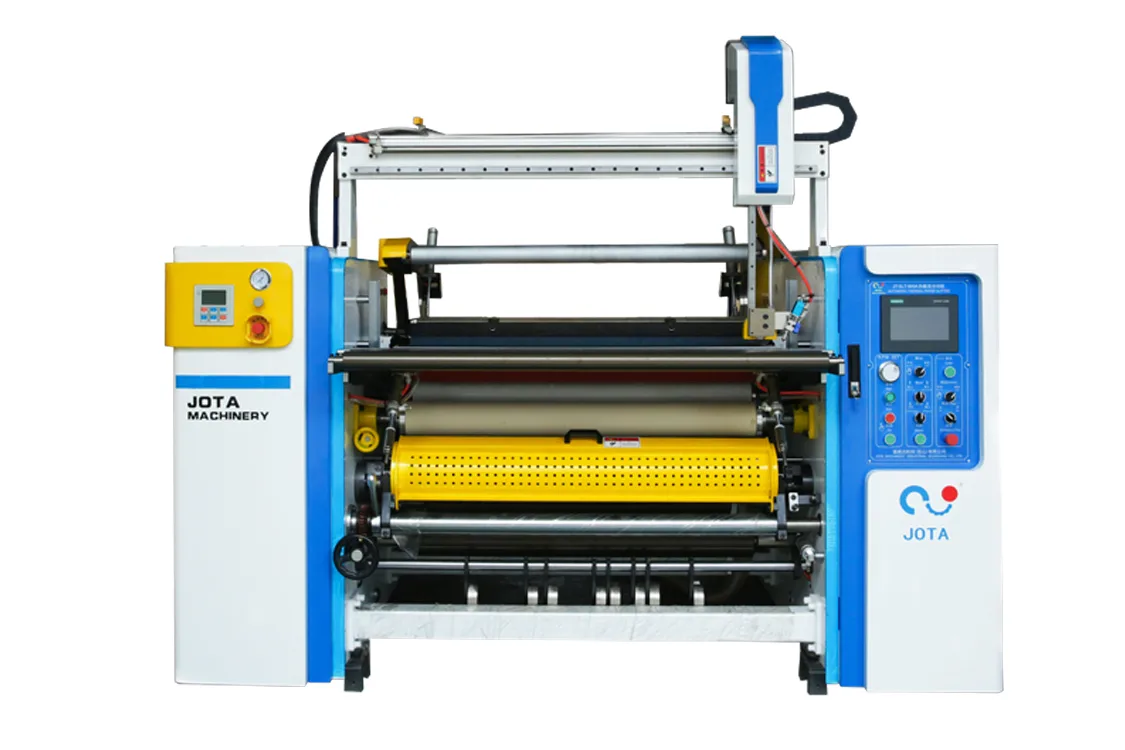
For standard POS and receipt-roll production, thermal paper jumbo rolls are slit and rewound into the required finished widths, diameters and core specifications.
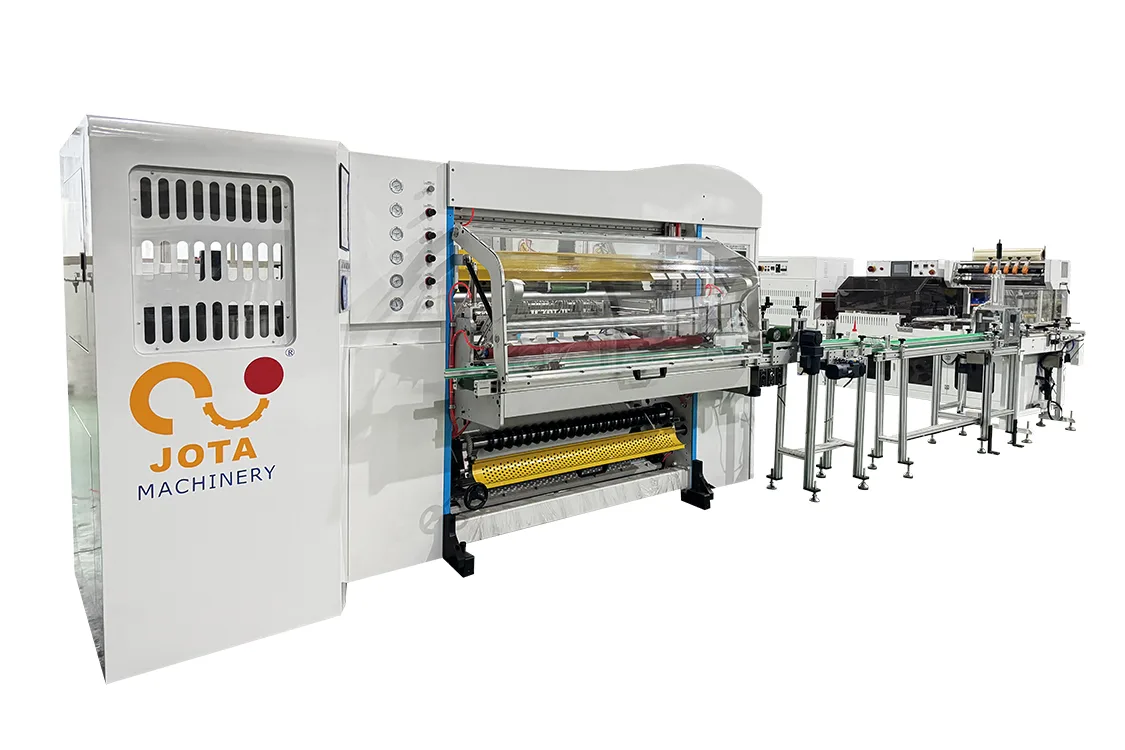
For higher production output, a fully automatic configuration can reduce manual handling and integrate additional roll finishing, packaging or palletizing processes.
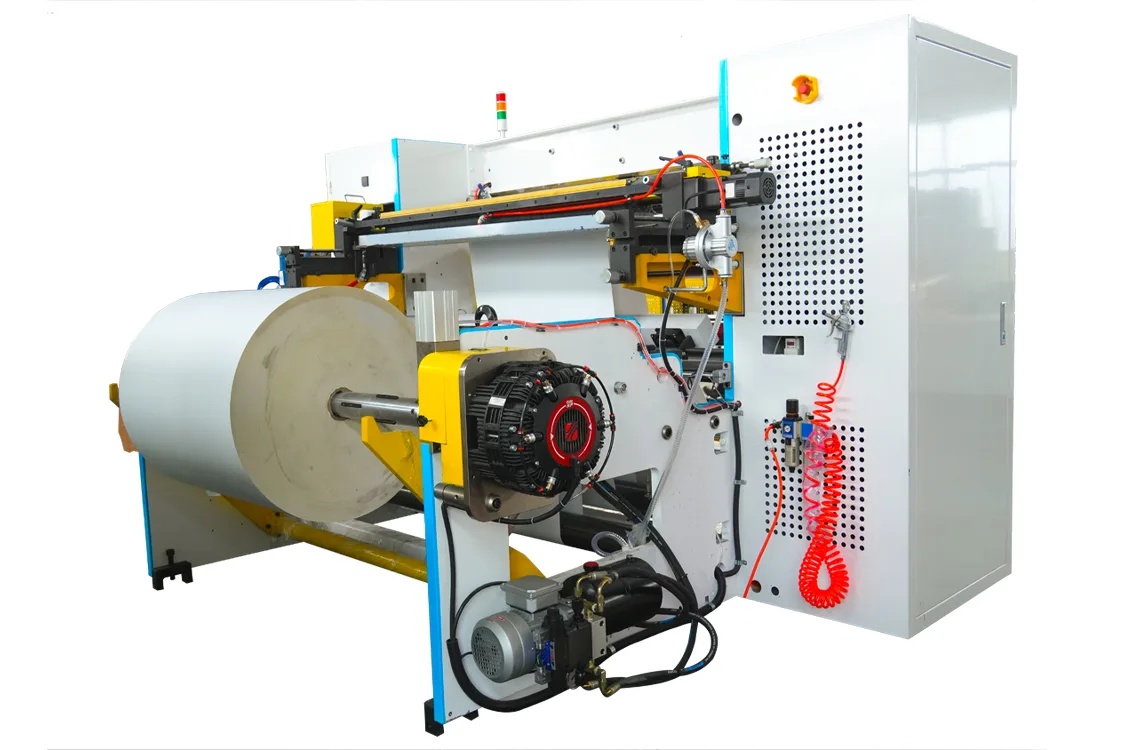
If your rolls require logos or promotional information, inline flexographic printing can be combined with slitting and rewinding in one production process.
Jota Machinery supplies roll-to-roll and roll-to-sheet converting equipment for paper applications. Share your material and product specifications with our team to discuss a suitable machine configuration.

paper converting machinery manufacturer based in China.
We specialize in flexible packaging and paper converting machinery, delivering reliable slitting, rewinding, and coating solutions for global clients.
Our mission is to help manufacturers improve productivity, quality, and sustainability through advanced roll-to-roll technology.


About Me – Bruce Zhou
Bruce Zhou is the founder and strategic leader of Jota Machinery, a global innovator in the thermal paper slitting machine industry. With over 23 years of experience in precision machinery and industrial automation, Bruce has grown Jota into a high-performance, export-driven enterprise serving markets across Europe, the Middle East, and beyond.
Since establishing the company in 2008 and relocating its factory to Kunshan in 2015, Bruce has consistently driven 30% annual growth by combining engineering excellence, customer-centric product development, and intelligent manufacturing. Under his leadership, Jota Machinery has become known for its advanced CNC production capabilities, robust quality control systems, and commitment to customized solutions.
Beyond his role as an industrialist, Bruce is a lifelong learner, deeply engaged in the YTT Decision-Making Executive Training Program. He applies the strategic wisdom of thinkers like Drucker, Inamori, and Wang Yangming in guiding Jota’s growth, while also nurturing a high-trust, results-oriented organizational culture.
A passionate marathoner, global traveler, and advocate for holistic leadership, Bruce brings a mind-body-spirit philosophy to entrepreneurship—building not only machines, but people, systems, and enduring value.