

Written by Bruce Zhou
Founder & Managing Director | JOTA Machinery
Paper converting machinery specialist since 2002.
Connect with me on LinkedIn
Published: 13,October, 2026
Last Updated: 13,October, 2026 17:14:53 GMT+8
The slitting process converts a wide roll of material into narrower strips or rolls with specified widths. Manufacturers and converters use it to prepare parent rolls—also called master rolls or jumbo rolls—for printing, packaging, further processing, or end use.
A roll may be too wide for the customer’s equipment or application. Slitting divides it into narrower formats that fit the next production step, such as a packaging line, label press, POS printer, or tape dispenser.
Materials and Industries That Use Slitting
Slitting is used across many industries, but the machine design must match the material being processed. Common roll materials include:
- Paper: Thermal paper, receipt paper, plotter paper, and other paper grades
- Packaging materials: Plastic films, foil, laminates, and flexible packaging webs
- Adhesive products: Paper tape, film tape, labels, and other adhesive materials
- Nonwovens and textiles: Materials converted into narrower rolls for manufacturing or further processing
- Specialty webs: Certain composite and industrial materials that require specific tension and cutting arrangements
In metalworking, coil slitting is used to cut metal coils into narrower strips. Metal coil lines have different machine requirements from paper and flexible-web slitters, so they should be treated as a separate equipment category.
How the Roll Slitting Process Works
In a roll-to-roll slitter rewinder, the material passes through three main stages:
- Unwinding: A wide parent roll is mounted on the unwind stand and fed into the machine.
- Slitting: Blades cut the moving web lengthwise into the required widths. The method may use razor, shear, or score/crush cutting, depending on the material and edge requirements.
- Rewinding: The narrow strips are wound onto cores as finished rolls, often called slit rolls or daughter rolls.
Tension, web alignment, blade position, and winding quality all affect the finished product. The required settings depend on the material and roll specifications.
Roll Slitting and Log Slitting
Roll-to-roll slitting unwinds the parent roll, cuts the moving web, and rewinds the slit strips. This method is widely used for paper, films, foil, tape, labels, and other flexible materials.
Log slitting cuts a wound roll without unwinding it. The method is used for certain products and is not interchangeable with roll-to-roll converting. The suitable process depends on how the material is supplied and the finished roll format required.

Why Is Slitting Important?
Slitting helps manufacturers and converters:
- Produce widths that match customer or machine requirements
- Convert large parent rolls into saleable or production-ready rolls
- Supply multiple widths from one wide roll
- Prepare material for later processes such as printing, packaging, or dispensing
The quality and efficiency of the result depend on choosing a machine configured for the material, target widths, roll dimensions, and production volume.
Choosing a Slitter Rewinder
Before requesting a machine configuration, define the material and finished product as clearly as possible. Useful details include:
- Material type and thickness or grammage
- Parent-roll width and diameter
- Required slit widths and number of lanes
- Finished-roll diameter, length, and core size
- Required cutting method and edge quality
- Production speed and expected output
A slitter rewinder designed for paper may not be suitable for every film, tape, or composite material. The machine should be selected around the material’s behavior and the required finished rolls.
Discuss Your Slitting Requirements With Jota Machinery
Jota Machinery supplies slitting and rewinding equipment for paper, film, foil, tape, labels, and other roll materials. Machine configuration depends on your material and production requirements.
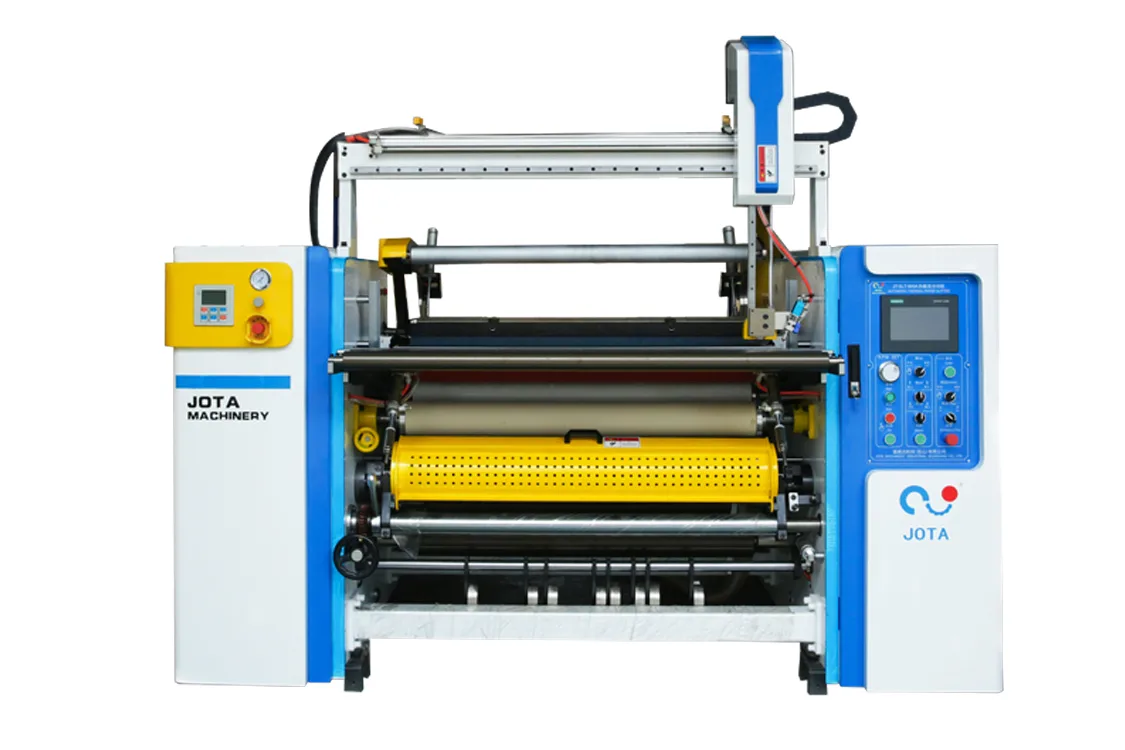
For standard POS and receipt-roll production, thermal paper jumbo rolls are slit and rewound into the required finished widths, diameters and core specifications.
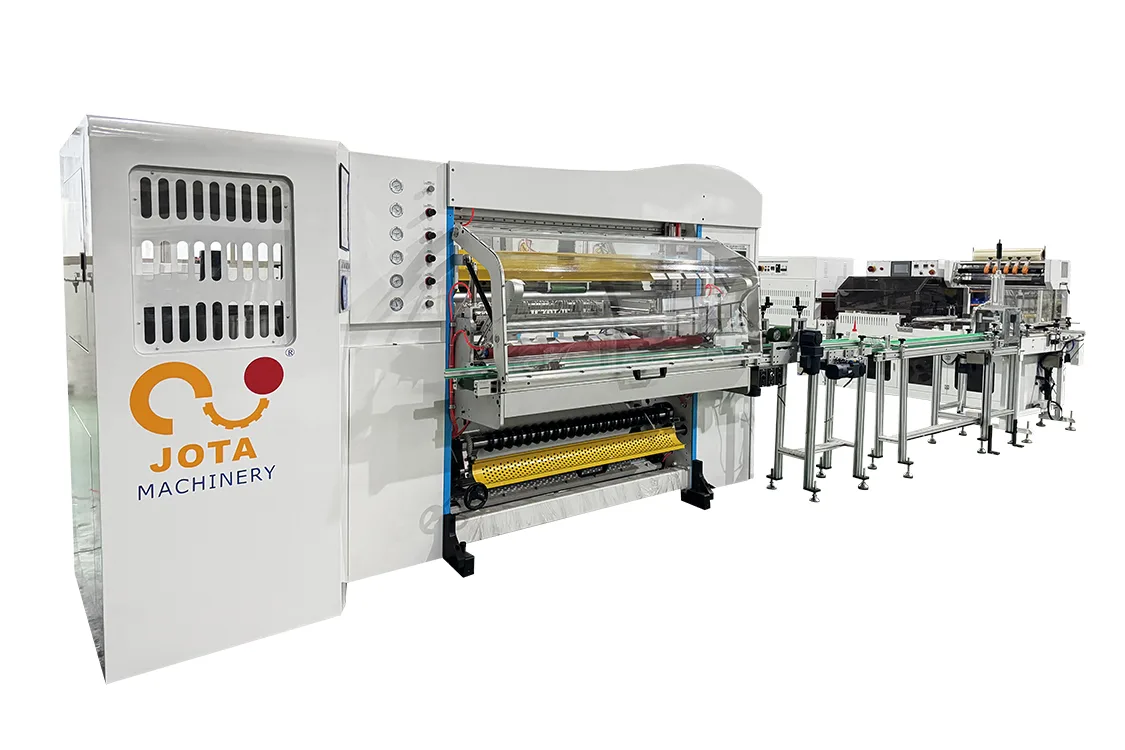
For higher production output, a fully automatic configuration can reduce manual handling and integrate additional roll finishing, packaging or palletizing processes.
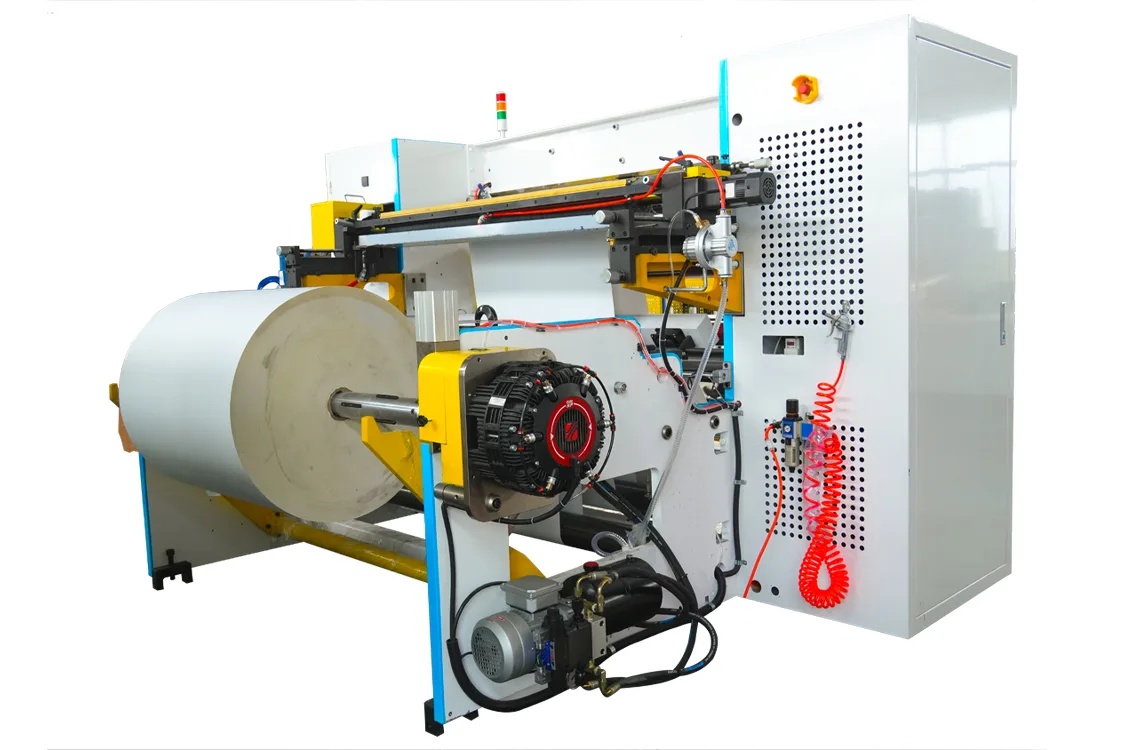
If your rolls require logos or promotional information, inline flexographic printing can be combined with slitting and rewinding in one production process.
Send us your material specifications, parent-roll dimensions, finished widths, core sizes, and target output. Jota Machinery can review the requirements with you and discuss a suitable slitter rewinder configuration for your production line.
Last Updated on 13/10/2026 by Jota Machinery