
How Does Thermal Paper Work? A Guide from the Frontlines of Paper Roll Manufacturing
If you’ve ever held a receipt fresh from a supermarket or withdrawn money from an ATM, you’ve used thermal paper. But have you ever wondered what makes this paper turn black without ink? As a company that builds and tests thermal paper roll slitting machines every day, we work with thermal paper hands-on—cutting it, inspecting it, and debugging machines that process it. That’s why we’re often asked: how does thermal paper actually work?
Let’s break it down clearly, from structure to chemistry to real-world printing—and why all of this matters.

What Exactly Is Thermal Paper?
Thermal paper is a specially coated paper designed to produce images when exposed to heat. Unlike regular paper, it doesn’t require ink or toner. Instead, when a thermal printer head applies heat, the coating on the paper reacts and turns black where heated.
We see this happen every day in our testing lab. Whether it’s a high-speed POS roll slitter or a coreless rewinder, every machine we build relies on understanding how thermal paper responds to heat, friction, and pressure. So what’s inside this type of paper?

Layers That Make It Work
Thermal paper is engineered in layers—each playing a specific role in making the image clear and long-lasting (or, in some cases, temporary).
1. Base Paper
This is ordinary paper made from wood pulp. It’s the foundation that gives the roll its thickness and stiffness. When slitting rolls, we must ensure uniformity here, or uneven cuts and edge breaks can occur.
2. Pre-Coat (Primer Layer)
This smooths the surface and protects the print head. In our experience, low-quality thermal paper often skips this step—leading to coating dust or poor thermal response.
3. Thermal Coating (Active Layer)
Here’s where the magic happens. This layer contains:
- Leuco dyes (colorless in normal conditions)
- Developers (usually BPA or BPS, but phenol-free alternatives are growing)
- Sensitizers to lower the melting point
- Stabilizers for long-term image retention
When heated, this layer activates: the dye and developer interact, turning the paper dark at that exact spot.
4. Top Coat (Optional)
Some high-grade papers include a protective layer to resist oils, UV light, and scratching. This is especially important in industries like medical or logistics where label legibility matters.

How Thermal Printers Use the Paper
Inside a thermal printer, a print head made up of microscopic heating elements selectively heats the coating on the paper.
The printer head doesn’t touch the paper like an inkjet; instead, it heats specific spots. As the paper passes under the head, these spots heat up to around 180°C (356°F), triggering the thermal layer to darken instantly.
It’s a fast, clean process—no ink cartridges, no toner, just paper reacting to heat.
Everyday Applications of Thermal Paper
From our perspective in the manufacturing industry, we see how different types of thermal paper rolls are used worldwide. Here are the most common examples:
- POS Receipts: Grocery stores, fashion outlets, restaurants—all rely on 57mm or 80mm rolls for receipt printing.
- ATM Rolls: These require longer length, tighter rewinds, and smooth edges to avoid jamming machines.
- Logistics Labels: Often used in thermal transfer form for shipping labels (with added resin ribbon).
- Medical Charts: ECG, ultrasound, and blood test printers use ultra-sensitive thermal paper.
- Lottery and Transit Tickets: Governments and metro systems rely on thermal rolls for short-term ticketing.
Advantages of Thermal Paper (And the Caveats)
✅ No Ink, Fewer Consumables
There’s no need for refilling cartridges or ribbons. This means lower operating costs for end users—one of the key points we emphasize when customers ask about return on investment in thermal roll production.
✅ Fast and Quiet Printing
Thermal printers can generate a 20cm receipt in a second. That’s critical in fast-paced environments like retail checkouts.
✅ Compact Equipment
Thermal printers are often much smaller than dot matrix or laser printers. This also applies to our slitting machines, where we design compact winding modules for fast roll changes.
But it’s not all perfect:
❌ Image Fades Over Time
The same chemistry that enables quick printing also makes the paper sensitive to heat, UV, and oils. Leave a receipt on your car dashboard in summer, and you’ll see it vanish in days.
❌ Environmental and Health Concerns
Traditional thermal coatings often use BPA or BPS—both of which are endocrine disruptors. This has raised questions about safety, especially for workers who touch receipts daily. That’s why more manufacturers are moving to phenol-free papers.
Are All Thermal Papers the Same? No.
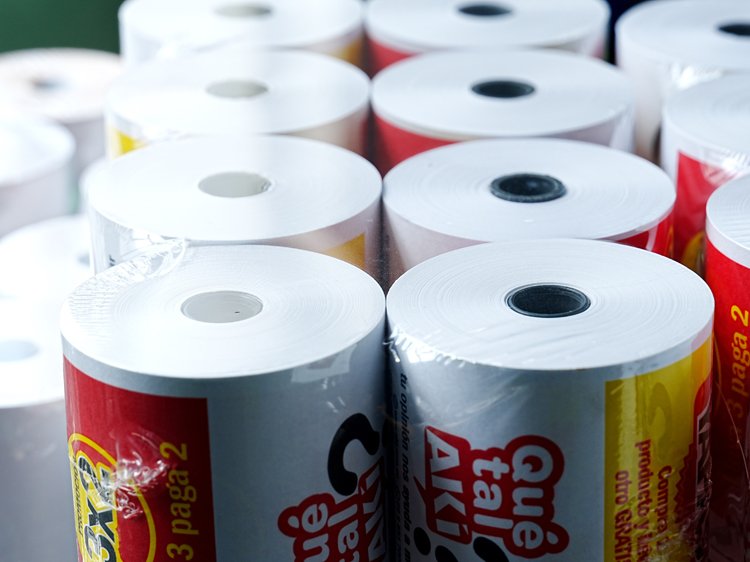
As machine builders, we touch paper rolls from mills all over the world: China, Korea, Germany, and beyond. Some rolls perform perfectly—uniform coating, no dust, smooth tension during unwinding. Others? Full of coating dust, prone to telescoping or edge curl.
For our customers, we always recommend:
- Choosing wider jumbo rolls (like 810mm+) to leave space for clean slitting.
- Avoiding discounted thermal jumbo rolls that look fine but cause printer jams due to uneven coatings.
If you’re producing rolls for POS or ATM systems, your reputation depends on consistent output. And that starts with the right paper.
Innovation: What’s Changing in the Thermal Paper World?
- BPA-Free & Phenol-Free Options: Many brands now offer safer alternatives using vitamin C or other organic developers.
- Topcoated Labels for Harsh Environments: Ideal for cold chains or chemical labeling.
- Digital Receipts: Some retailers are shifting toward email receipts to reduce thermal paper use.
- Color Thermal Printing: Rare, but growing—used in instant photo printers like Fujifilm and Kodak.
Final Thoughts: Why We Care So Much About Thermal Paper
At Jota Machinery, we don’t just build slitting machines. We run them. We test them. We debug with real thermal paper rolls under real working conditions. That means we’ve seen firsthand the difference between a well-coated roll and a problematic one.
Understanding how thermal paper works is not just about chemistry—it’s about optimizing a full supply chain, from jumbo roll to final print.
Whether you’re a print converter, paper mill, POS roll supplier, or someone looking to invest in roll production, we hope this article helped you see the full picture.
✅ Looking to Start a Thermal Paper Business?
Let’s talk. We’ll walk you through machine selection, raw material sourcing, and how to avoid the common traps that hurt small converters.
Last Updated on 03/07/2025 by Jota Machinery