
Malaysia has an established market for thermal paper rolls used in retail, banking, logistics and other transaction-based applications.
For a business entering this market, one of the first decisions is whether to trade finished thermal paper rolls or establish local converting production.
This guide looks at both models, with a focus on the production requirements businesses should consider before investing in thermal paper roll converting equipment.

📊 Market Landscape: Growth Amidst Transformation
According to Maximize Market Research, the global thermal paper market is projected to grow from USD 4.65 billion in 2023 to USD 6.54 billion by 2030, at a CAGR of 5%. Meanwhile, Malaysia’s domestic thermal paper sector is witnessing double-digit growth with a CAGR of 12.1% between 2019 and 2025 (KBV Research).
Export data reinforces this bullish trend. Malaysia shipped 1,489 thermal paper roll consignments between November 2023 and October 2024, with Singapore, Vietnam, and the U.S. as top destinations. This data highlights Malaysia’s rising status not just as a consumer, but as a regional supplier of thermal paper rolls.
🏭 Manufacturing vs. Trading: Choosing the Right Model
✅ Manufacturing Thermal Paper Rolls
Advantages:
- Greater control over finished-roll specifications and quality
- Ability to produce different roll sizes according to customer requirements
- More flexibility for pre-printing, branded rolls and packaging
- Direct control over the converting process
Considerations:
- Requires investment in converting equipment
- Requires production space, operators and raw-material inventory
- Production planning depends on the target roll sizes and expected output
Trading Thermal Paper Rolls
Advantages:
- Lower production requirements
- Faster entry into the market
- Finished rolls can be sourced from existing suppliers
Considerations:
- Greater dependence on third-party manufacturers
- Less control over production and lead times
- Product differentiation depends more heavily on sourcing, service and branding
Businesses can also begin with trading and later consider local converting after establishing consistent demand.

💡 Strategic Insight:
A hybrid approach—starting as a trader with plans to vertically integrate into manufacturing—can be optimal. It allows you to test market demand, build a client base, and reinvest profits into machinery or local converting lines.
🌿 Sustainability & Innovation: The Future-Proof Angle
BPA-free and recyclable thermal paper is no longer just a trend—it’s a requirement.
Countries including France and the U.S. are enforcing eco-label regulations for printed materials. Forward-looking businesses should position themselves as sustainable solution providers by:
Thermal paper businesses may need to supply different paper grades, roll sizes and printed formats according to customer requirements.
For businesses moving into local production, converting equipment can also be configured for functions such as inline flexographic printing when pre-printed branding or other printed information is required.
The production configuration should therefore follow the products you intend to sell rather than machine speed alone.
📈 Planning Thermal Paper Roll Production
Before selecting converting equipment, define the thermal paper rolls you intend to produce.
Start with the product requirements already discussed above:
- Finished-roll size
- Thermal paper grade
- Printed or unprinted roll
- Packaging requirement
- Expected production output
These requirements provide the basis for evaluating the converting setup for a local thermal paper roll production business.
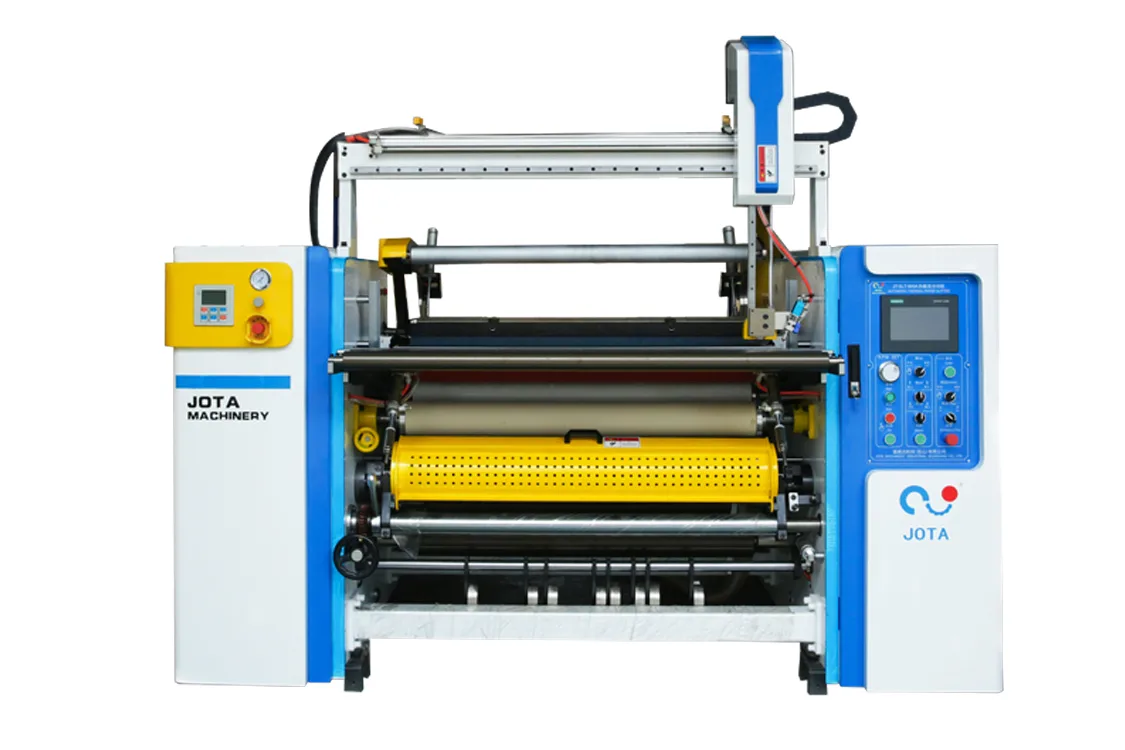
For standard POS and receipt-roll production, thermal paper jumbo rolls are slit and rewound into the required finished widths, diameters and core specifications.
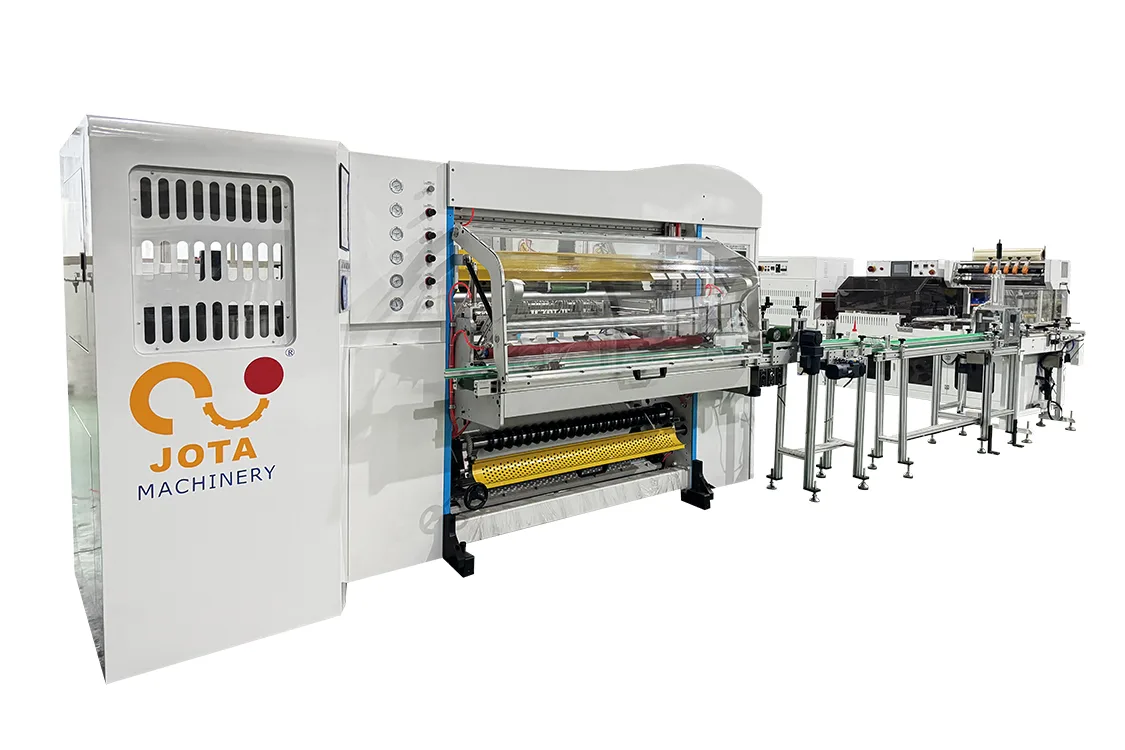
For higher production output, a fully automatic configuration can reduce manual handling and integrate additional roll finishing, packaging or palletizing processes.
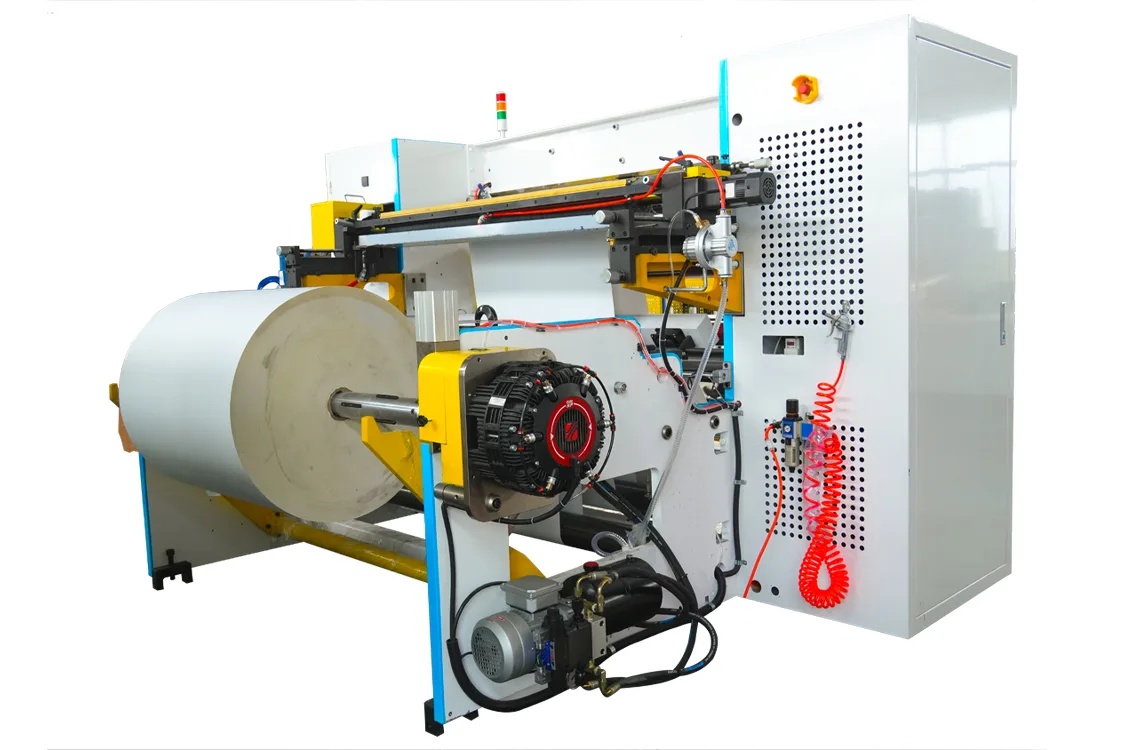
If your rolls require logos or promotional information, inline flexographic printing can be combined with slitting and rewinding in one production process.
📌 Key Players in Malaysia
Tele-Paper Malaysia – ISO-certified, with global distribution
Sonofax Sdn. Bhd. – Strong presence in F&B and financial retail
Megix Industries – Custom roll printing and regional coverage
🔍 Building a Competitive Thermal Paper Roll Business
Businesses can differentiate through faster lead times, custom roll sizes, pre-printed branding, packaging and reliable product quality.
For manufacturers, production efficiency also becomes important as order volume grows. The appropriate level of automation should be selected according to the finished-roll range, required output and packaging requirements.

For businesses serving Malaysia and nearby ASEAN markets, production planning should also consider how the finished rolls will be stored, packed and delivered.
✅ Planning to Produce Thermal Paper Rolls in Malaysia?
If you are considering local thermal paper roll production, start with the products you intend to sell.
Share your finished-roll sizes, thermal paper requirements, printing requirements, packaging method and expected production output with JOTA Machinery.
These requirements can be used to discuss the appropriate thermal paper slitting, rewinding and printing configuration for your production plan.
Planning Thermal Paper Roll Production?
If you manufacture POS, receipt or cash-register rolls, start with your jumbo-roll and finished-roll specifications. These details determine the slitting, rewinding and automation configuration required for production.

Last Updated on 29/09/2026 by Jota Machinery