
Your Ideal Thermal Paper Business Partner
- Many years of paper slitting machine experience
- Trusted by world top corporation
- Profession sales and technical team
- One stop fully business service


Leading thermal paper slitting machine manufacturer
Jota Machinery dedicated in doing thermal paper slitting business more than 10 year.
Through our efforts, we have become partners of many well-known companies, nearly each country have our paper slitting machine, paper core cutting machine, paper core making machine etc.
We not only provide customized service but also provide fully service for freshman whom want to do thermal paper business. You can contact us for more professional suggestions.

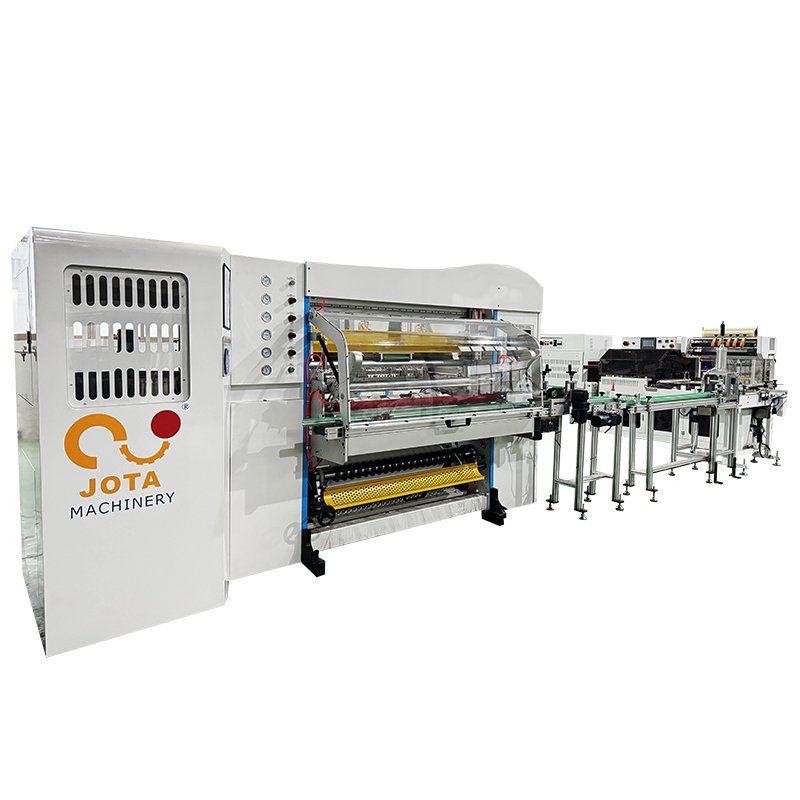


Visable Slitting Machine Quality


Our machine adopts the famous brand of PLC, Electronic parts, cylinder, bearing etc. to ensure the machine running quality.
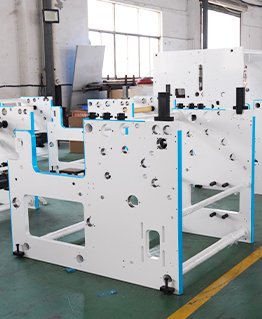
Not only have good configuration but also machine wall is also thickness than others . 45 mm can let you run the machine at high speed.
Jota Machinery's Project
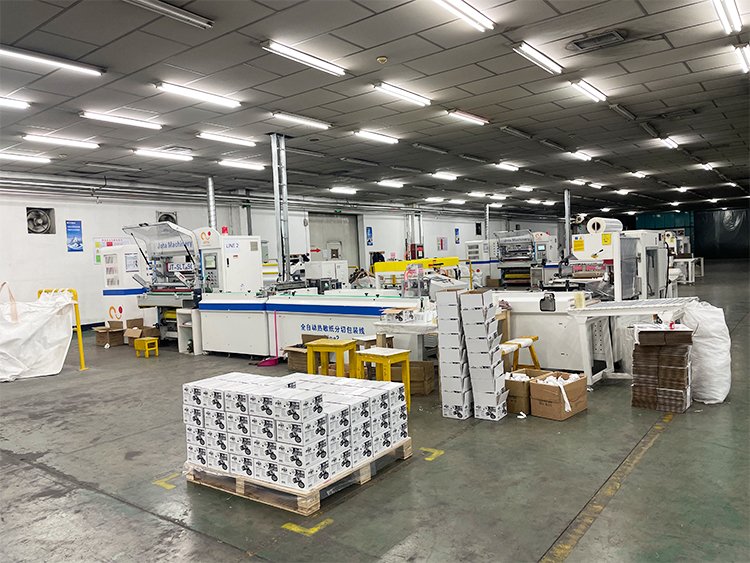
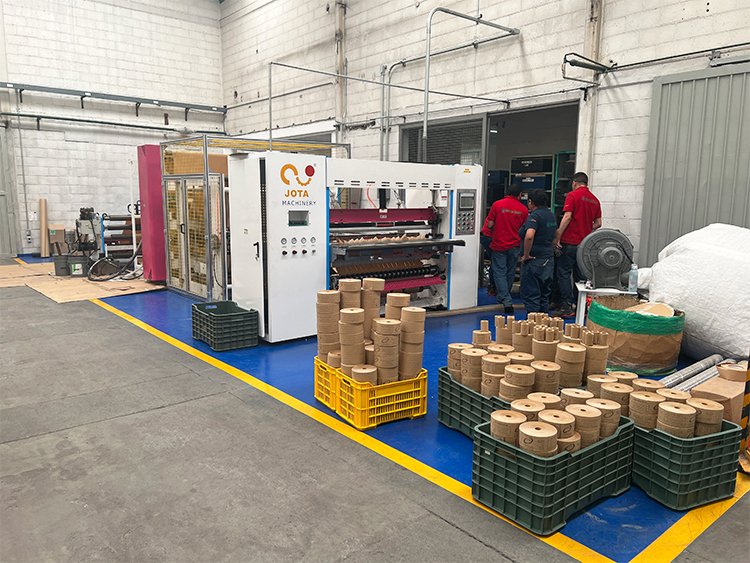

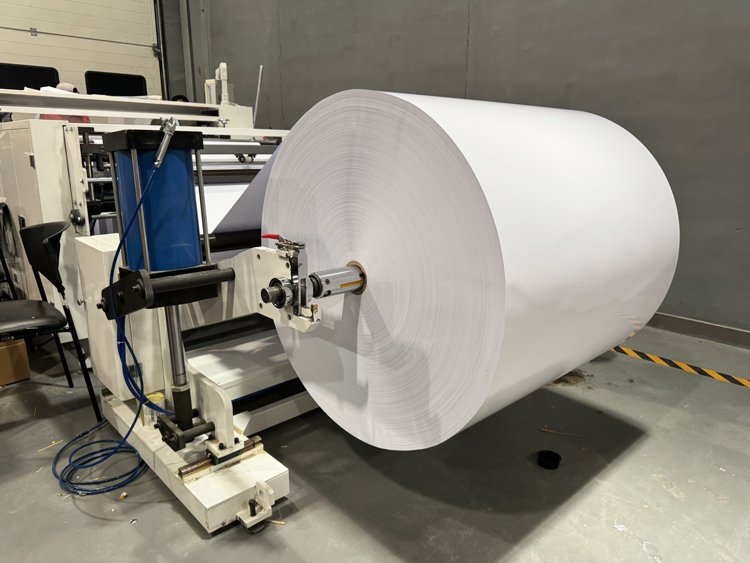

Thermal Paper Printing Slitting Line
- Support Printing And Slitting Synchronous
- Various Width Slitting Rewinding For You Choose
- Famous Brand Machine Parts
- Whole Life Service


45mm Thickness Machine Wall To Ensure The Running Quality
Professional Installation Team
Precision Produced From CNC Center
There Are Tight Connections Between Each Component
- Focus Factory
- Dear Customer
- Professional Team



Around 30-45 days, mainly depends on machine type.
Sure, it is our honor to work for you.
We will offer you some parts as backup, in case any part is broken within one year, we will sent you for free.
Application and Development of Spreader Rollers (Banana Rollers) in the Paper Industry and Slitting Process
In industries such as papermaking, packaging, printing, and even lithium-ion battery electrode processing, the flatness of materials directly impacts the final product quality.
In particular, during the slitting process of continuous materials like roll paper, non-woven fabric, and kraft paper tape, uneven grammage or tension distribution can easily lead to wrinkles during rewinding, which affects production efficiency and product appearance.
To address this issue, engineers have been exploring various flattening devices for a long time, with spreader rollers (also known as banana rollers) becoming the ideal choice due to their unique working principles and effective real-world performance. This paper systematically explores the basic principles, structural design, key technical parameters, installation and adjustment methods, real-world applications, and future development trends of spreader rollers.
1.Technological Background and Historical Evolution of Spreader Rollers (Banana Rollers)
1.1 Early Application Background
The principle behind the spreader roller (banana roller) technology dates back to the early 20th century. Initially, spreader rollers were applied in the transportation and support of materials such as metals, wood, and paper.
As industrial production automation advanced, traditional flat rollers or straight rollers were unable to meet the strict requirements for material flatness and tension distribution during high-speed operation. In particular, during slitting, local wrinkles and distortions often appeared, affecting product quality.
To overcome these limitations, engineers began to develop a design based on the “banana shape” for flattening, inspired by the basic principles of force and deformation in physics.
1.2 Technological Evolution and Industrial Applications
From the mid-20th century, with advancements in mechanical manufacturing and automation control technologies, spreader rollers (banana rollers) began to be widely used in papermaking machines, slitting machines, and printing machinery.
Manufacturers continuously improved the structure of the rollers, incorporating high-precision rolling bearings, wear-resistant rubber materials, and adjustable systems, allowing spreader rollers to not only improve flattening performance but also enhance stability and adaptability.
In the 21st century, the emergence of new materials and technologies further diversified the design of spreader rollers. Their application range has expanded beyond traditional papermaking to include lithium battery, flexible electronics, and high-end packaging industries.
2.Basic Principles and Structural Design of Spreader Rollers (Banana Rollers)
2.1 Working Principle and Key Physical Mechanisms
The core design idea of spreader rollers (banana rollers) is to apply a specific transverse stretching force on the material using a banana-shaped structure. Specifically, when the continuous base material enters the spreader roller from the previous guide roller, the curvature of the roller surface causes the material contact area to gradually expand:
- Central Parallel Operation: The central part of the spreader roller rotates parallel to the material’s direction, exerting a stable force on the material.
- Sideward Stretching: The roller’s sides rotate at a certain angle, causing the material to experience additional transverse pulling force when contacting the sides, thus achieving a uniform flattening effect.
This “differential angle stretching” mechanism directly determines the quality of the flattening effect of the spreader roller, with its effectiveness depending on the “projected arc” of the material on the spreader roller, i.e., the change in curvature of the material’s contact area with the roller.
2.2 Core Structure and Components
A spreader roller (banana roller) typically consists of several key components, each playing an essential role in maintaining flattening performance and equipment stability:
- Banana Core Shaft
The core shaft is usually made of high-strength alloy materials and maintains a fixed arc shape. It is important to note that the core shaft does not rotate during operation, instead serving as the support structure and the force-transmitting skeleton. - Rolling Bearing Assembly
Rolling bearings (typically deep groove ball bearings) on the core shaft ensure that the external rubber sleeve rotates with sufficient balance and flexibility. The quality of these bearings directly affects the roller’s smooth operation and flattening performance. - Rubber Sleeve
The rubber sleeve is mounted over the rolling bearing and comes in various materials such as nitrile, silicone, and EPDM. Different rubber materials have varying elasticity and friction coefficients, making them suitable for different base materials, including thermal paper, non-woven fabrics, and kraft paper tape. - Adjustment and Fixed Mechanism
To meet the requirements of different materials and processes, spreader rollers (banana rollers) are equipped with fine adjustment mechanisms such as handwheels, end caps, and bearing seats. By adjusting these components, the roller’s curvature direction can be precisely controlled, ensuring it remains perpendicular to the material’s direction for optimal flattening.

3. Key Control Parameters for Flattening Effect of Spreader Rollers (Banana Rollers)
To fully utilize the flattening ability of spreader rollers (banana rollers), not only must the structural design and material selection be reasonable, but several key parameters must be carefully controlled during installation and operation. The following are the key technical indicators for ensuring optimal performance of spreader rollers:
3.1 Relative Position of Material and Roller
- Vertical Alignment
The material must enter the spreader roller with its travel direction perfectly perpendicular to the direction of the transverse stretching force. Any deviation between these directions can result in uneven tension distribution, causing “hourglass” or local wrinkles in the material. - Center Alignment
The midpoint of the material must be aligned with the highest point of the spreader roller’s surface curvature. Only with perfect alignment can the material experience balanced stretching on both sides, avoiding incomplete flattening caused by uneven force distribution.
3.2 Angle of Coverage and Contact Area Control
- Definition of Coverage Angle
The coverage angle refers to the area of the material that contacts the roller’s surface. The size of this angle directly affects the amount of stretching force applied to the material:- If the coverage angle is too small, the material will not have enough contact area to flatten properly.
- If the coverage angle is too large, the material may fold back on itself after being stretched, reducing the flattening effect.
Thus, selecting an appropriate coverage angle based on the material’s type and thickness is a critical design parameter.
3.3 Guide Roller Layout and Installation Distance
Spreader rollers (banana rollers) usually form part of a series of rollers in a production line, and their distance and arrangement relative to the preceding and following guide rollers are crucial for flattening performance:
- Infeed Distance
The distance from the previous guide roller to the spreader roller must be long enough to ensure the material is pre-stretched and tension-adjusted before contacting the spreader roller. It is generally recommended that the infeed distance be at least twice the length of the outfeed distance. - Outfeed Distance
The distance from the spreader roller to the next guide roller should not be too long, typically controlled to be within 1.5 times the diameter of the spreader roller. Too long a distance may cause the material to relax or rebound when leaving the spreader roller, reducing the flattening effect.
3.4 Arc Height and Material Adaptability
- Definition and Selection of Arc Height
Arc height (or bow height) refers to the vertical distance between the highest point of the arc and the reference plane. Different processes require different arc heights:- For precision processing in lithium battery electrode and separator applications, arc height is typically 0.5% to 1% of the roller width to control material deformation.
- For papermaking and packaging materials, the arc height is usually between 1% and 2% to meet a broader range of flattening needs.
In practice, the recommended arc height is generally between 0.6% and 0.9% of the roller width, providing sufficient flattening force while avoiding irreversible material expansion or edge distortion.
3.5 Roller Adjustment and Dynamic Coordination
- Arc Direction Adjustment
The highest point of the arc must be perpendicular to the material’s direction. The adjustment of the arc’s direction through the handwheel on the bearing seat ensures that the roller’s curvature remains aligned with the material’s travel direction, especially during start-up or material changeover. - Smooth Curvature Design
The curvature of the spreader roller should be uniform and smooth within the effective flattening range. Irregular curvature could result in material being too tight in the middle and too loose on the sides, leading to unwanted wrinkles. - Rotational Flexibility and Vibration Control
During operation, energy loss and vibrations are inevitable. To ensure smooth performance, the precision and stability of rolling bearings must be guaranteed, and the radial runout of the roller surface must be minimized, particularly for thin materials moving at high speeds, to prevent material damage or wear.

4.Practical Applications and Case Studies
4.1 Application Example in Papermaking Industry
In traditional paper slitting production lines, spreader rollers (banana rollers) are mainly used in the rewinding process for flattening.
In practice, it has been found that by properly arranging the guide rollers and spreader rollers, not only can the occurrence of significant wrinkles during rewinding be reduced, but the flatness of the paper can also be improved, enhancing the precision of subsequent printing and processing.
Many papermaking companies have achieved stable production results by continuously optimizing parameters such as arc height, coverage angle, and guide roller distance, accumulating valuable experience in equipment debugging and daily maintenance.
4.2 Innovative Applications in Lithium Battery Electrode Processing
With the rise of the renewable energy industry, the precise processing of lithium battery electrodes and separators has become a key area. Since materials for these products require high precision in flattening, even the slightest wrinkle can affect battery performance.
In recent years, many battery manufacturers have introduced high-precision spreader rollers (banana rollers), controlling the arc height within 0.5%~1% and carefully managing the infeed and outfeed distances to achieve ideal flattening during winding and rewinding. This has significantly improved the quality of electrodes and extended the lifespan of equipment, becoming a typical case of industry upgrade.
4.3 Expanding Applications in Packaging and Printing Industries
In the printing process of packaging products, the flatness of the roll material directly affects the accuracy and aesthetics of the printed patterns.
Using spreader rollers (banana rollers) for flattening can not only reduce the warping of the paper caused by uneven tension during high-speed operation but also improve the coordination of the printing machine’s transmission system, enhancing the overall stability of the production line.
Several printing and packaging companies have customized spreader roller equipment, adjusting parameters based on material characteristics, leading to significant improvements in production efficiency and product quality.
5.Technological Optimization and Future Development Trends
5.1 Current Technical Bottlenecks and Areas for Improvement
While spreader rollers have been widely used in various industries, there are still challenges and areas for improvement:
- Complexity of Parameter Matching
Different materials have varying flattening requirements. Achieving dynamic matching and adaptive adjustment of parameters in production remains a key research direction. - Precision Manufacturing and Adjustment Mechanisms
With increasing material quality requirements, the precision of roller curvature, rolling bearing accuracy, and adjustment mechanisms must be further enhanced to ensure high-precision, reliable performance during high-speed operation. - Energy Consumption and Environmental Pressure
As modern industry places more emphasis on energy-saving and environmental protection, manufacturers need to address the challenge of achieving low energy consumption and emissions while ensuring effective flattening.
5.2 New Materials and Intelligent Control Applications
The future trend of spreader rollers (banana rollers) will exhibit diversification and intelligence:
- New Wear-Resistant Materials
Utilizing polymer composite or nanomaterials will significantly improve the wear resistance and corrosion resistance of rubber sleeves, reducing long-term maintenance costs. - Intelligent Adjustment and Monitoring Systems
Integrating sensors and automatic control technology will enable real-time monitoring and dynamic adjustment of the spreader roller’s state, improving operational stability and production efficiency. For example, intelligent algorithms could automatically adjust arc height, coverage angle, and guide roller distance, making the equipment adaptable to various production conditions. - Green Manufacturing and Sustainable Technologies
With growing environmental awareness, future spreader rollers will use more recyclable materials in manufacturing and focus on reducing energy consumption and carbon emissions during production, which will help companies gain a competitive advantage in the global green manufacturing wave.
5.3 Cross-Industry Applications and Industry Integration
As technology continues to mature, the application scope of spreader rollers (banana rollers) will continue to expand:
- Flexible Electronics and New Material Processing
Emerging industries like flexible displays and solar cells, which require high material flatness, are expected to benefit significantly from spreader roller technology. - International Standards and Industry Norms
To ensure comparability between spreader roller equipment from different manufacturers, industry standards and technical regulations may be introduced in the future, promoting technology integration and modularization across the industry.
Conclusion
From its early use as an industrial transportation device to its current role as a precision flattening tool, the development of spreader rollers (banana rollers) has evolved from simple mechanical design to intelligent, high-efficiency control systems.
Their unique “differential angle stretching” principle and flexible structure have made them indispensable in industries like papermaking, packaging, printing, and lithium battery electrode processing, where they enhance product quality and production efficiency.
By precisely controlling the material’s direction, coverage angle, arc height, and guide roller layout, engineers can achieve perfect material flattening, avoiding problems caused by wrinkles and distortions in subsequent processes. Meanwhile, with the advancement of new materials, intelligent control, and green manufacturing, spreader rollers will continue to play a prominent role in various industrial fields, promoting modern manufacturing toward high efficiency, energy conservation, and environmental protection.
This airticle has systematically discussed spreader rollers from the perspectives of technical principles, structural design, practical applications, and future trends, aiming to provide theoretical reference and practical guidance for engineers and researchers in relevant fields. With the advancement of technological innovation, spreader rollers are poised to experience new breakthroughs and development opportunities across more industrial sectors.
