
If you are starting a thermal receipt paper roll business, your first question may be: Which slitter rewinder should I buy? A more useful question is: Which finished rolls can I sell repeatedly, and can I produce them at a profit?
The slitter rewinder is essential. But the machine, paper supply, workshop and customer specifications must work together. Here is a practical way to build that plan.
1. Find demand before choosing capacity
Ask prospective customers for the receipt roll sizes they buy, their core and packaging requirements, and how often they reorder. Put those specifications into a short initial product list.
This matters because every additional size may require another setup, more inventory and a smaller production batch. A machine capable of making many sizes is useful; a startup still needs enough orders for each size to make production worthwhile.
Your first milestone: A few clearly specified products with credible prospective buyers.
2. Choose a machine for the whole production run
Give equipment suppliers your intended thermal paper jumbo roll and finished-roll specifications. Request a trial with the paper you plan to use. Inspect the winding, cut edges, roll diameter and length, and record the time spent on setup and size changes.
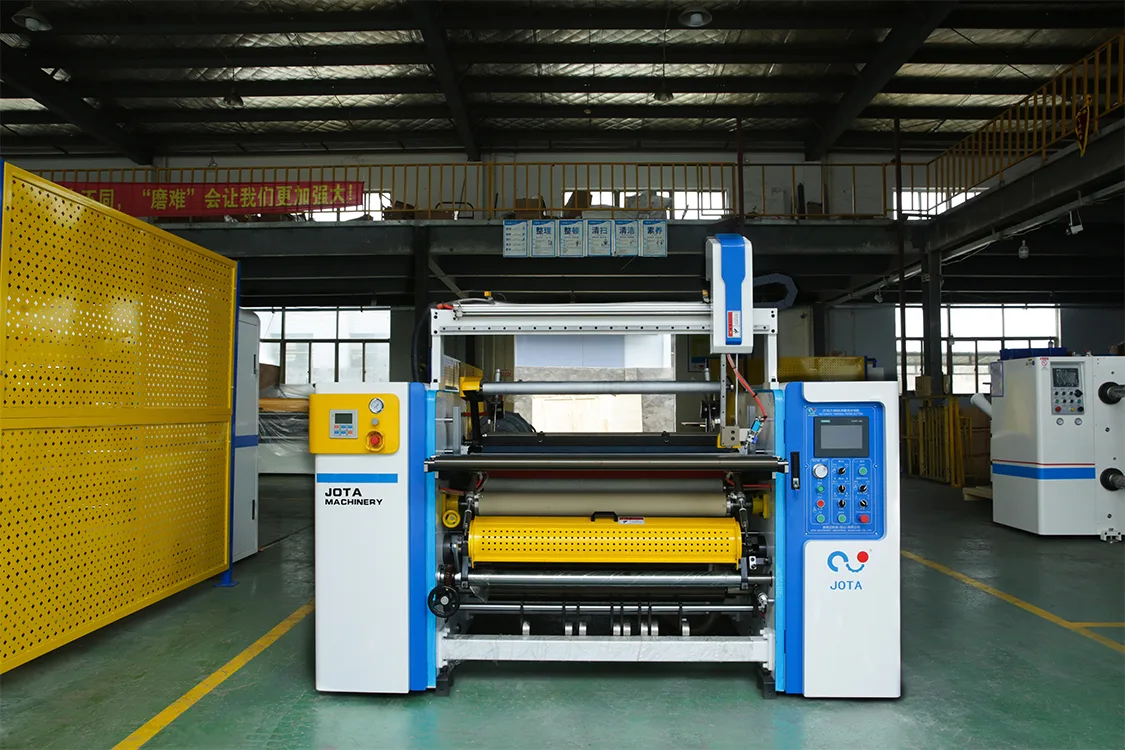
A quoted speed describes the machine while it is running. Your business earns money from acceptable rolls ready to ship. Frequent stops, slow changes or inconsistent winding can narrow the gap between a low-priced and a higher-priced machine—or reverse which one is the better investment.
Your second milestone: A machine trial that demonstrates the products you intend to sell.
3. Design the workshop around the material flow
Set aside space for incoming jumbo rolls, the slitter rewinder, cores, packaging and finished goods. Operators also need room to load materials, inspect rolls and maintain the machine.
Confirm the proposed line’s electrical and compressed-air requirements before installation. The slitter rewinder needs an appropriate air supply, so include a suitable compressor in the setup plan. If buyers require a red end-of-roll warning mark, confirm the printing function and compatible water-based ink as part of the machine specification.

Your third milestone: A workshop layout, utility checklist and complete list of required supplies.
4. Price the roll that passes inspection
Jumbo paper is a major input, but its purchase price does not tell you what a finished roll costs. Cores, packaging, labour, waste, maintenance and delivery all affect your margin.
Calculate the cost of a production run, then divide it by the number of saleable rolls. Test paper suppliers on the machine: a cheaper jumbo roll may be less economical if it causes breaks, dust or inconsistent output. Keep the trial results so you can compare suppliers using actual production performance.
Your fourth milestone: A selling price based on tested yield and full production costs.
5. Let repeat orders guide expansion
Start with pilot orders. Record actual output, waste, changeover time and customer complaints. If buyers reorder and your margins hold, you have a stronger basis for increasing capacity or adding printing and packaging automation.
That is the central lesson for a new thermal paper converter: build a reliable product and sales process first; expand the line when the orders show where the bottleneck is.
Planning your first receipt roll factory? Send JOTA Machinery your target roll sizes, jumbo paper specifications, expected monthly volume and sales market. We can help you review the slitter rewinder, workshop requirements and suitable turnkey options for your business plan.
Last Updated on 23/09/2026 by Jota Machinery