
Your Ideal Thermal Paper Business Partner
- Many years of paper slitting machine experience
- Trusted by world top corporation
- Profession sales and technical team
- One stop fully business service


Leading thermal paper slitting machine manufacturer
Jota Machinery dedicated in doing thermal paper slitting business more than 10 year.
Through our efforts, we have become partners of many well-known companies, nearly each country have our paper slitting machine, paper core cutting machine, paper core making machine etc.
We not only provide customized service but also provide fully service for freshman whom want to do thermal paper business. You can contact us for more professional suggestions.

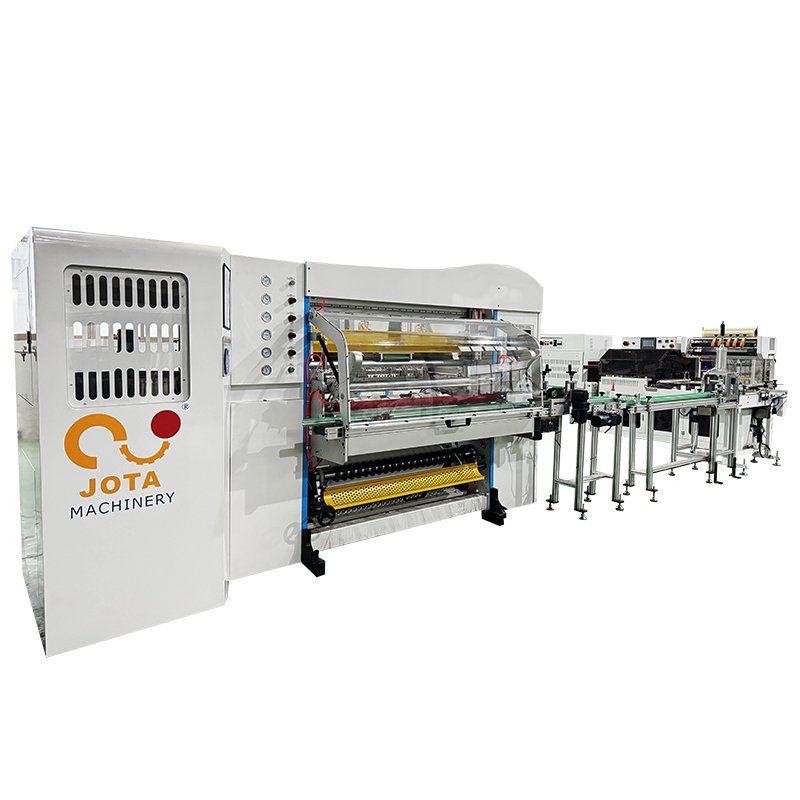


Visable Slitting Machine Quality


Our machine adopts the famous brand of PLC, Electronic parts, cylinder, bearing etc. to ensure the machine running quality.
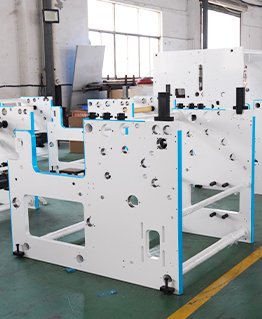
Not only have good configuration but also machine wall is also thickness than others . 45 mm can let you run the machine at high speed.
Jota Machinery's Project
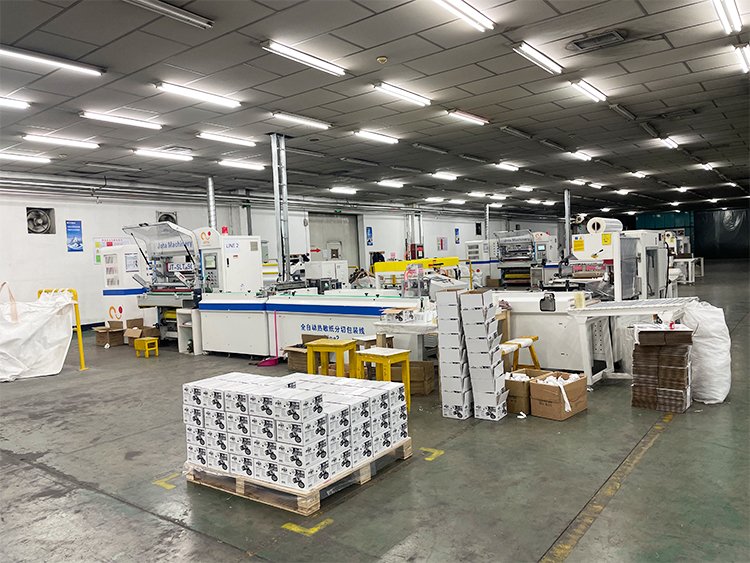
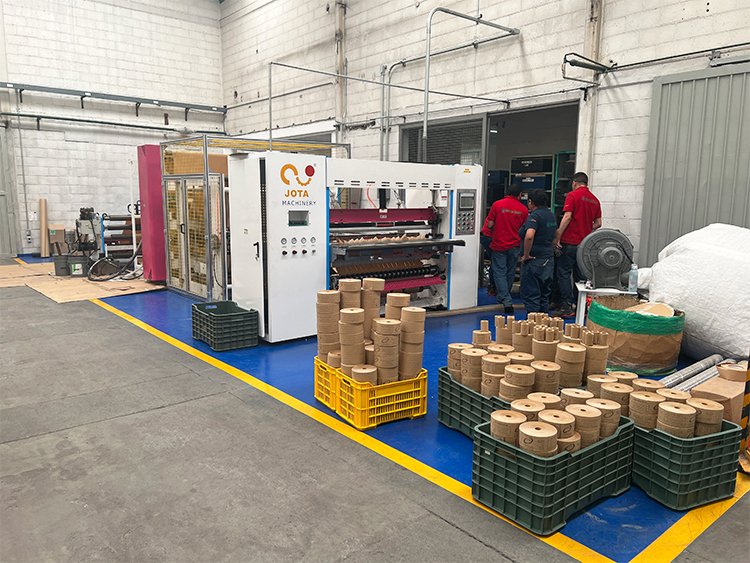

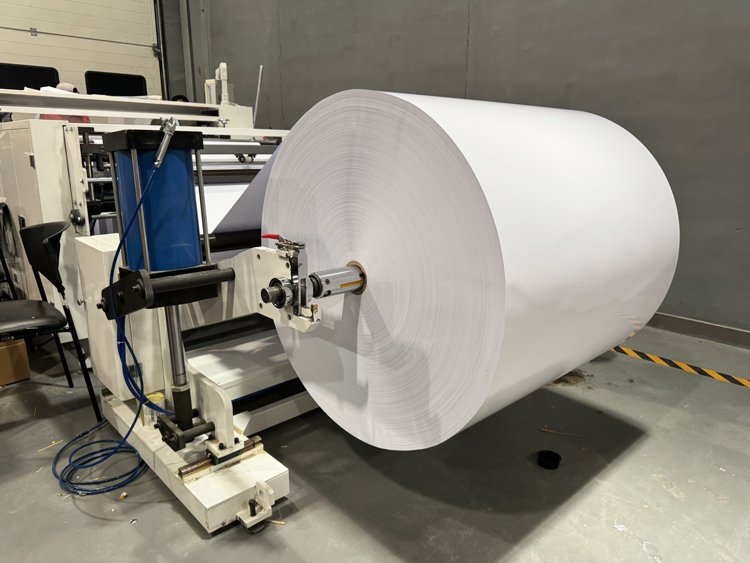

Thermal Paper Printing Slitting Line
- Support Printing And Slitting Synchronous
- Various Width Slitting Rewinding For You Choose
- Famous Brand Machine Parts
- Whole Life Service


45mm Thickness Machine Wall To Ensure The Running Quality
Professional Installation Team
Precision Produced From CNC Center
There Are Tight Connections Between Each Component
- Focus Factory
- Dear Customer
- Professional Team



Around 30-45 days, mainly depends on machine type.
Sure, it is our honor to work for you.
We will offer you some parts as backup, in case any part is broken within one year, we will sent you for free.
Understanding How to Make Thermal Paper Rolls: From Base Paper to Final Product
Thermal paper rolls play a crucial role in modern business operations, especially in industries that require fast, high-quality printing such as point-of-sale (POS) systems, food delivery, and ticketing. These rolls are designed to work without ink or toner, using a heat-sensitive coating that reacts to the heat of a thermal printer to create images and text. This article provides a detailed look at the process of making thermal paper rolls, with a focus on the critical role of the coating, core size, and the technologies involved.
Raw Material Selection: Base Paper
The process of making thermal paper rolls begins with the selection of base paper. The paper must be lightweight and smooth to allow for an even application of the heat-sensitive coating. Typically, the weight of this base paper ranges from 50 to 60 gsm (grams per square meter). The smoothness of the paper ensures the coating adheres evenly and that prints are sharp and clear when the paper passes through the thermal printer.
At this stage, the base paper is uncoated, and the goal is to ensure that it meets the required standards for quality and durability.
Coating the Paper with Heat-Sensitive Chemicals
One of the most critical stages in making thermal paper rolls is the application of the heat-sensitive coating. This coating is what allows the paper to react to the heat from thermal printers, forming readable text and images. The coating typically consists of several chemical components, including:
- Color-forming agents: These chemicals change color (usually to black) when exposed to heat.
- Developing agents: These help the color-forming agents react to heat and form a visible image.
- Stabilizers and additives: These components enhance the longevity of the print and help resist fading over time.
Important Note: The exact formulation of these chemical components is confidential and proprietary to the paper mill. Different paper mills may have their own unique formulations, which they guard as trade secrets. This proprietary coating ensures that each batch of thermal paper performs optimally in thermal printers, delivering sharp, clear prints with long-lasting results.
Drying the Coating
After the thermal coating is applied, the paper must be dried to set the coating and ensure it adheres properly. This is typically done using drying ovens or air-drying systems that remove moisture from the coating. This step is crucial because a poorly dried coating may result in inconsistent prints or premature fading of the print.
Rewinding into Large Parent Rolls
Once the thermal coating is fully dried, the paper is produced in large parent rolls. These parent rolls are wide and represent the bulk material that will later be cut into smaller, usable rolls. At this point, the paper is still in a continuous sheet form. The large rolls are then unwound and passed through a rewinding machine, which cuts and rewinds the paper into smaller rolls of the desired size.
Core Insertion and Size Considerations
For thermal paper rolls, the core size is typically 3 inches, as this size is ideal for most slitter rewinder machines’ unwinding shafts. The core helps the roll maintain its shape and ensures smooth operation in thermal printers. The 3-inch core size is the standard for most thermal paper rolls because it is widely compatible with printers used in retail, food service, and other industries.

Trimming the Edges
After the rolls are rewound, the edges are trimmed to ensure uniformity. This step ensures the thermal paper rolls are neat and consistent, which is essential for preventing issues like paper jams or misaligned prints during use. The trimming process helps ensure that the rolls are ready for high-quality printing.
Final Inspection and Quality Control
Before thermal paper rolls are shipped to businesses or resellers, they undergo rigorous quality control. The key factors checked during this process include:
- Print quality: Ensuring the coating reacts properly to heat and produces a sharp, clear image.
- Coating consistency: Verifying that the heat-sensitive coating is applied uniformly across the paper.
- Smoothness and stability: Ensuring the paper’s surface is smooth for reliable printing and to prevent jams.
- Roll consistency: Ensuring that the size, core, and overall dimensions of the rolls are consistent.
Any rolls that do not meet the required standards are removed from the production line and either reprocessed or discarded.
Packaging and Shipping
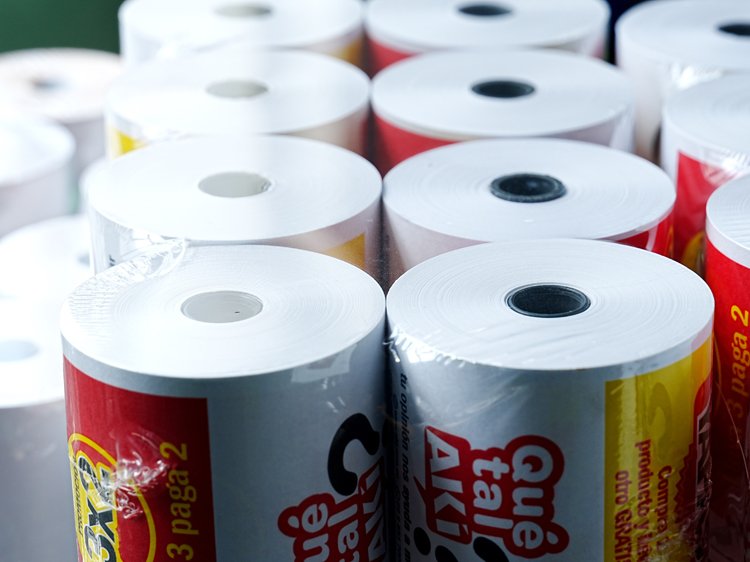
Once the thermal paper rolls pass quality control, they are packaged and ready for shipment. They are typically bundled and wrapped in plastic or packed in boxes to prevent damage during transportation. Each package is labeled with important information, such as the size and type of thermal paper, and shipped to businesses that will use them for POS systems, thermal printers, or other printing needs.
Key Considerations in Making Thermal Paper Rolls
- Coating Formula: The most important component of thermal paper is the coating that reacts to heat. Since the formulation of the coating is confidential and proprietary to the paper mill, each manufacturer’s thermal paper will have slightly different performance characteristics. This is why it’s important for businesses to source their thermal paper from reliable suppliers to ensure optimal print quality and consistency.
- Environmental Concerns: Many traditional thermal papers contain BPA (bisphenol A) in their coatings, which has raised health and environmental concerns. As a result, many manufacturers are shifting to BPA-free thermal paper to address these issues and meet growing demands for eco-friendly products.
- Core Size: The 3-inch core size is standard in the industry because it suits most slitter rewinder machines’ unwinding shafts, ensuring compatibility with a wide range of printing systems and minimizing the risk of paper jams during printing.
Conclusion
The production of thermal paper rolls involves several important stages, from selecting high-quality base paper to applying a proprietary heat-sensitive coating. The confidentiality of the coating formulation is a critical aspect of thermal paper production, as it ensures high performance in printers and durability over time. The 3-inch core size is also a key consideration, making the thermal paper roll compatible with most printing systems used in industries like retail, hospitality, and food service.
Understanding the process and key considerations involved in making thermal paper rolls helps businesses make informed decisions when sourcing thermal paper for their printing needs, ensuring they get the best quality and performance for their specific applications.
This version now emphasizes the confidentiality of the chemical coating components and highlights the core size used in the industry. Let me know if you need any further adjustments!
