
Your Ideal Thermal Paper Business Partner
- Many years of paper slitting machine experience
- Trusted by world top corporation
- Profession sales and technical team
- One stop fully business service


Leading thermal paper slitting machine manufacturer
Jota Machinery dedicated in doing thermal paper slitting business more than 10 year.
Through our efforts, we have become partners of many well-known companies, nearly each country have our paper slitting machine, paper core cutting machine, paper core making machine etc.
We not only provide customized service but also provide fully service for freshman whom want to do thermal paper business. You can contact us for more professional suggestions.

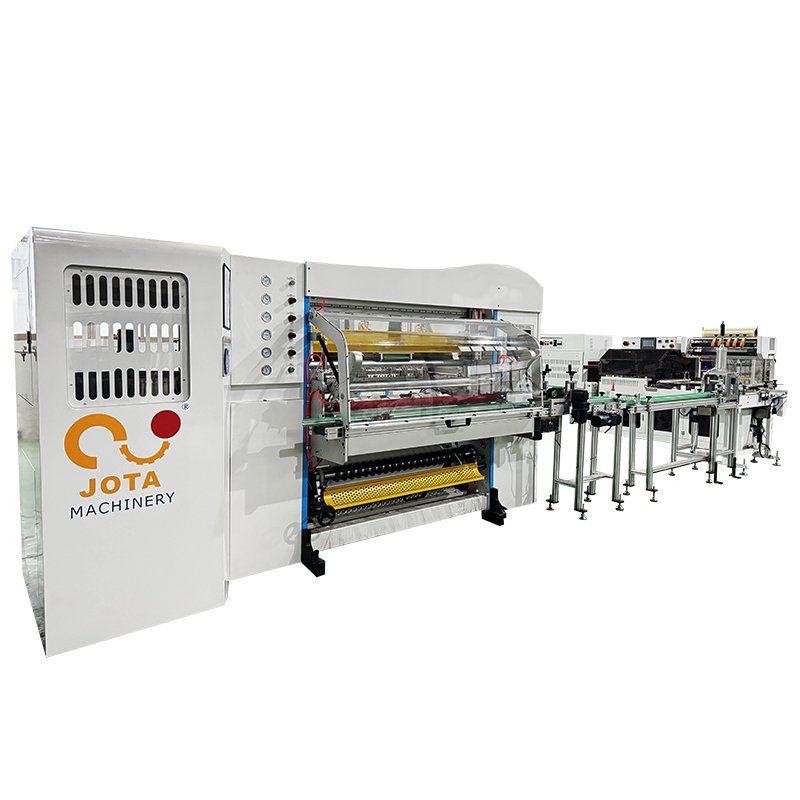


Visable Slitting Machine Quality


Our machine adopts the famous brand of PLC, Electronic parts, cylinder, bearing etc. to ensure the machine running quality.
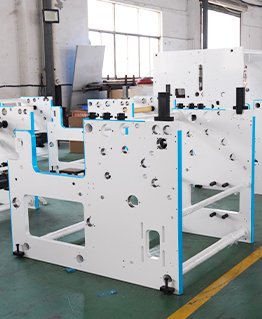
Not only have good configuration but also machine wall is also thickness than others . 45 mm can let you run the machine at high speed.
Jota Machinery's Project
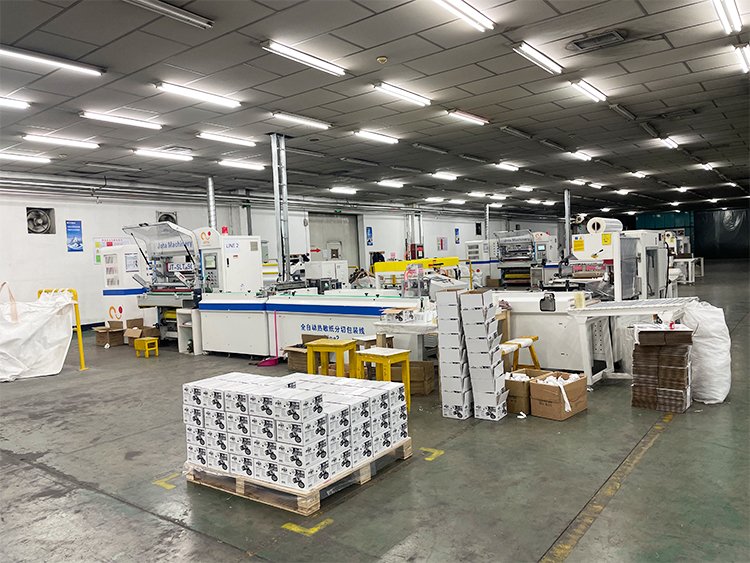
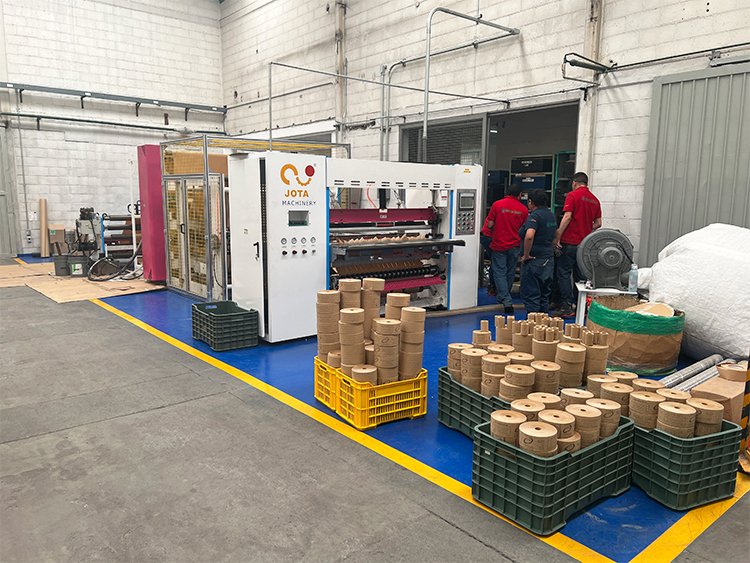

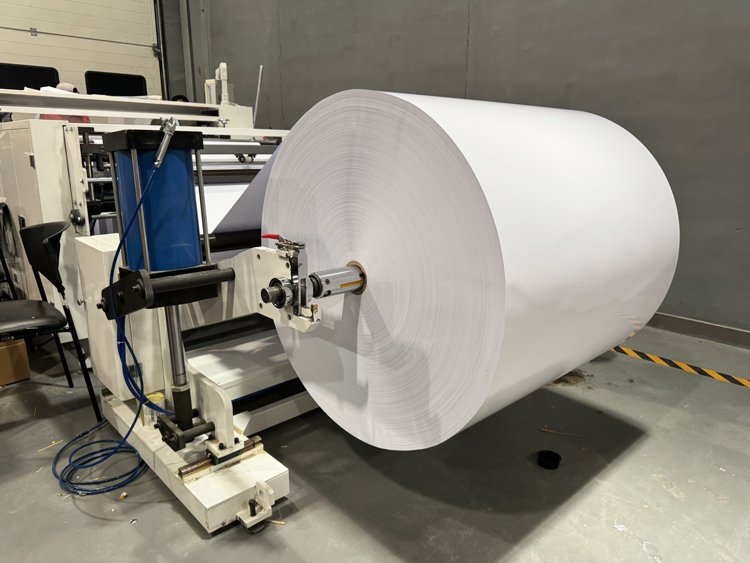

Thermal Paper Printing Slitting Line
- Support Printing And Slitting Synchronous
- Various Width Slitting Rewinding For You Choose
- Famous Brand Machine Parts
- Whole Life Service


45mm Thickness Machine Wall To Ensure The Running Quality
Professional Installation Team
Precision Produced From CNC Center
There Are Tight Connections Between Each Component
- Focus Factory
- Dear Customer
- Professional Team



Around 30-45 days, mainly depends on machine type.
Sure, it is our honor to work for you.
We will offer you some parts as backup, in case any part is broken within one year, we will sent you for free.
Diagnosing Inconsistent Roll Length and Diameter in Center-Wind Slitter Rewinder Machines
In today’s competitive converting industry, consistency is key. Yet, some operators of center-wind slitter rewinder machines for thermal paper often face an occasional problem: rolls that come out with inconsistent lengths or diameters. While the issue may not occur on every run, even intermittent inconsistencies can cause material waste, customer dissatisfaction, and production delays.
This article examines the root causes behind these occasional deviations and details practical steps and best practices for troubleshooting, maintenance, and process improvement.
Understanding the Challenge
When you’re working with thermal paper and center-wind rewinder machines, the design is intended to provide uniform winding. However, even small variances in machine setup, material properties, or environmental conditions can result in:
- Roll Length Deviations: Finished rolls that are either too short or too long.
- Diameter Inconsistencies: Variations in the buildup, where one roll winds more tightly (or loosely) than expected.
While these issues may occur sporadically, they can be traced back to a few critical areas.
1.Tension Control Fluctuations
Why Tension Matters:
Web tension plays a central role in roll quality. In a center-wind system, maintaining uniform tension ensures that the paper is laid down smoothly. If tension fluctuates during the rewind process, the outcome can be a roll that’s unevenly wound—affecting both the measured length and the overall diameter.
Common Causes:
- Manual vs. Automatic Control:
In manual tension setups, subtle operator differences can cause the tension to vary during the roll’s buildup. Even when using automatic tension control, out-of-calibration sensors or incorrect taper settings can lead to noticeable discrepancies. - Tension Taper Issues:
A proper tension profile generally requires higher initial tension for a secure start that gradually decreases as the roll diameter increases. If the taper is not well programmed or correctly applied, you may encounter sections with too much or too little tension.
Best Practices:
- Adopt Automatic Tension Control: Switch to automated tension systems which use load cells and dancer rolls for real-time adjustments.
- Regular Calibration: Make it a routine to calibrate the tension sensors and load cells. This ensures that any drift in the readings is corrected before it impacts roll quality.
- Review Tension Taper Settings: Ensure that the tension curve is appropriate for thermal paper, avoiding both overly tight and overly loose settings as the roll builds.
2.Core Slippage on the Winding Shaft
The Core’s Role:
The paper core (typically a cardboard tube) is the foundation upon which your roll is built. For a center-wind machine, the core must be securely held by an air-expanding shaft or mechanical chuck.
How Slippage Occurs:
- Improper Engagement:
Even a slight gap between the core and the winding shaft can allow for slippage. This intermittent error means that at certain points during winding, the paper is not being tightened correctly on the core. - Core Quality Issues:
Variations in the inner diameter of cores from different suppliers, or cores that have been reused many times, may not fit as precisely as required. A core that is marginally oversized or worn down may not grip properly.
Recommendations:
- Use High-Quality, Precisely Sized Cores: Verify that the core dimensions match the machine’s specifications.
- Check Core Locking Mechanisms: Ensure that air shafts are fully inflated or that mechanical chucks are properly engaged before each run.
- Employ Rider or Lay-On Rollers: These devices press the web tightly onto the core during winding, minimizing the possibility of early-layer slippage.
3.Inaccurate Length Counting and Sensor Calibration
The Digital Edge:
Accurate roll length measurement is critical for meeting customer specifications. Many machines rely on optical encoders or counter wheels to track the length of paper being rewound.
Potential Pitfalls:
- Encoder Slippage or Wear:
Over time, the odometer ring on the encoder can wear out or collect dust, leading to missed counts. Even a few misplaced pulses over a long roll can add up to a significant error. - Sensor Drift:
Environmental conditions such as static charges or temperature fluctuations can cause sensors to give intermittent faulty readings, making the machine think a roll is complete too early or too late.
What to Do:
- Regular Counter Calibration: Use physical measurements as a cross-check against the machine’s recorded lengths.
- Clean and Inspect Sensors: Regular cleaning of encoders and counter wheels prevents issues with dust buildup or static interference.
- Implement Anti-Static Measures: Proper grounding and the use of ionizers or anti-static bars help protect sensor reliability.
4.Material Variations and Web Uniformity
Quality at Source:
Even with precision machinery, the quality of the raw material can have a major impact. Thermal paper should be uniform in thickness and coating, yet slight variations do occur.
Impacts on Roll Consistency:
- Thickness Variations:
Changes in caliper across the width of the web can cause differential winding. Thicker sections of paper build up diameter faster, while thinner sections may lag behind. - Edge Tension Differences:
In a multi-strand slitting process, even a slight difference in how the web is handled on each lane can lead to variation in winding density, affecting both length and diameter.
Mitigation Strategies:
- Material Inspection: Regularly measure the paper caliper across the entire width of the jumbo roll.
- Differential Rewind Shafts: Use individually controlled or differential driven rewind shafts that automatically adjust for minor variations in paper thickness.
- Optimize Web Path: Ensure that the guide rollers and alignment devices are set up to provide uniform tension across the entire web.
5.Environmental Factors: Humidity, Static, and Dust
Beyond the Machine:
The production environment also plays an important role. Variations in humidity and temperature, as well as static electricity and dust, can all impact roll consistency.
Environmental Effects:
- Low Humidity and Static Buildup:
In environments with low relative humidity, static electricity can develop on the surface of thermal paper. This interferes with how layers settle on the roll, potentially causing pockets of uneven winding. - Dust and Contaminants:
Dust can settle on contact rollers, encoder wheels, or even on the paper itself, leading to slippage or miscalibration.
Environmental Controls:
- Maintain Ideal Humidity (40–55% RH): Control the environment to reduce static buildup.
- Install Anti-Static Devices: Use ionizers, anti-static tinsel, or grounding techniques to keep static under control.
- Implement Dust Extraction Systems: Reducing airborne contaminants helps maintain proper sensor function and consistent paper behavior.
Proactive Maintenance and Best Practices
A consistent process is built on both high-quality equipment and rigorous maintenance routines. Here are some best practices to prevent or swiftly resolve roll inconsistencies:
- Standardize Operating Procedures:
Use a comprehensive startup and pre-run checklist covering core loading, tension setup, sensor calibration, and environmental checks. - Schedule Routine Maintenance:
Regularly service tension controllers, encoders, air shafts, brakes, and differential drive components. Document calibration routines and schedule preventive maintenance every 3–6 months. - Operator Training:
Ensure that all operators understand the importance of tension consistency, proper core engagement, and environmental monitoring. Consistent techniques lead to more consistent rolls. - Data Logging:
Collect and analyze performance data from each run. Log roll lengths, operator actions, ambient conditions, and any deviations to identify trends and quickly pinpoint areas needing correction. - Upgrade Thoughtfully:
Consider technology upgrades such as automatic tension control, differential rewind shafts, and updated sensor systems. Even modest improvements in control systems can yield a significant increase in roll consistency.
Conclusion: Control Leads to Consistency
Inconsistent roll length and diameter in center-wind slitter rewinders may seem mysterious when they occur only occasionally. However, by understanding and controlling key factors—such as tension stability, core integrity, sensor accuracy, material uniformity, and the production environment, you can achieve greater consistency and improve product quality.
At Jota Machinery, we leverage decades of expertise to help our clients fine-tune their processes, upgrade their machinery, and implement best practices that eliminate these production issues. With the right focus on calibration, maintenance, and operator training, even the most challenging converting environments can deliver consistent, high-quality thermal paper rolls every time.
If you’re encountering inconsistent rolls or want to optimize your slitting and rewinding system further, our dedicated technical team is here to help. Contact us for a consultation or to schedule a maintenance review, and let’s work together to keep your production running at peak performance.
