
What are thermal paper rolls?
- Paper Making Stage Called Jumbo Rolls
- Slitting Stage Called Cash Register Rolls
- Offer You the Roll to Roll Processing Plan
- We Have The Footprint All Over The World


Thermal Paper Slitter Rewinder Machine
Thermal cash register paper slitter rewinder is always Jota’s core product from the very beginning.
Jota thermal paper slitting machine’s iconic clients include Navigator, SS Labels, K.M.S Group, etc.
When you are shopping in the supermarket or having dinner at a restaurant and swiping your credit card, there is a small cash roll of paper,

which is very popular nowadays. It is thermal reception paper or thermal cash register receipt paper.
There is a great demand for this kind of paper in the current market, and it penetrates all aspects of your life.
Therefore, the thermal paper slitting conversion should be a good business for you, it is with a small investment and quick return.
As a professional thermal paper slitter rewinder machine supplier.
We could now provide a full set of thermal paper cashier receipt solutions chain from A to Z, from base thermal paper jumbo roll, paper core (plastic core), thermal paper slitter rewinder machine, flexographic printing machinne, cash roll finishing wrapping line, and packaging film, we could provide a full set of professional solutions.
Submit your requirements now, we will recommend a suitable thermal roll-slitting machine to you.


Jota Machinery: Your Trustworthy Thermal Paper Slitting Rewinding Supplier in China
Jota is a dependable supplier of slitter rewinders for thermal paper; we have our own factory and CNC center.
We can provide a comprehensive solution for your thermal paper roll business.
To obtain a quote for your desired thermal paper roll machine, please submit your request.

Related Machines


Machining Material
- Visible high-quality components
- Famous brands such as Siemens, Yaskawa, Delta, Schneider, Mitsubishi
- Self-supporting CNC processed sheet metal, precision parts
- Assembly raw materials provided by long-term cooperation suppliers


Installation and operation user manual, wire connection diagram, tension controller guide.
Installation and operation video tutorial.
One-on-one remote video call assistance.
On-site installation and operation guidance.
- Factory
- Customer
- Specs


| Max. Unwinding Width | 1400mm |
| Max. Unwinding Diameter | 1000mm |
| Max. Rewinding Diameter | 300mm |
| Min. Slitting Width | 25mm |
| Max. Machine Speed | 300m/min |
Around 30-45 days, mainly depends on machine type.
Sure, it is our honor to work for you.
We will offer you some parts as backup, in case any part is broken within one year, we will sent you for free.
Sure, if we have client in your country, we will offer.
2 Points Undertand What are Thermal Paper Rolls from Jumbo Roll to Slitting Technology
Thermal paper rolls are a common presence in our daily lives, often overlooked despite their significance. Whether withdrawing money, completing a shopping trip, or ordering food, you likely receive a receipt documenting your transaction. These receipts originate from thermal paper rolls, which serve as the raw material loaded into thermal printers by merchants. The output you receive—a neatly printed receipt—is a segment of these rolls.
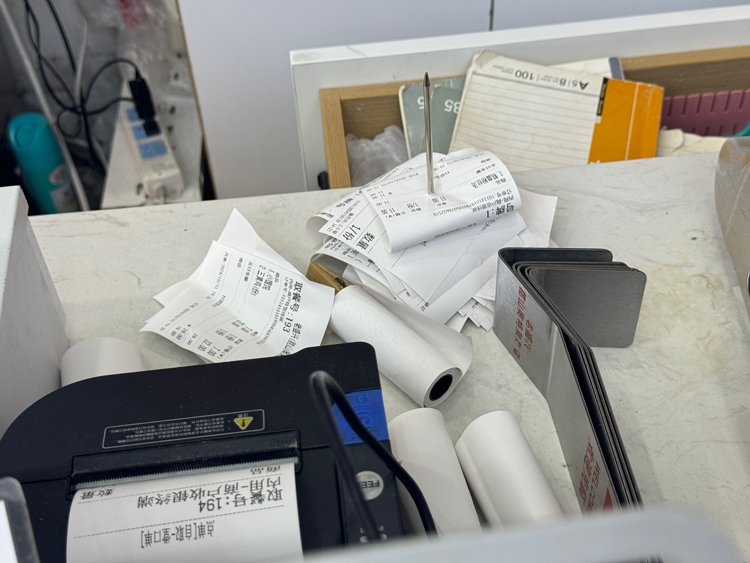
Receipts generated this way are often referred to as “cash register thermal paper receipts,” highlighting the direct connection between the thermal paper rolls and the printed receipts we encounter regularly. This seamless relationship between rolls and receipts underpins the efficiency of modern retail and service industries.
In today’s article, we will explore the journey of thermal paper, from jumbo rolls to the final receipt received by the end user.
When working with A4 paper, the sheets you use for printing are standard paper. In contrast, thermal paper undergoes a specialized manufacturing process where a chemical coating is applied. This thermal coating enables the paper to be printed directly using heat, eliminating the need for ink.
The chemical coating on thermal paper is not visible to the naked eye, so how can you differentiate thermal paper from regular paper?
There are several methods, but the simplest is to scratch the surface or expose the paper to heat, such as holding it near a flame. When exposed to heat, thermal paper changes color, typically to black or blue, depending on the chemical formula applied during the manufacturing process. This reaction is a distinctive characteristic of thermal paper, setting it apart from standard paper.
Due to the unique features of thermal paper, it is compatible with a wide range of printers, including compact handheld mobile POS machines and restaurant cash register printers.
Thermal paper rolls are not only essential for cash registers but are also widely used in medical applications, such as ECG machines and ultrasound scanner devices, making them a versatile and indispensable material across various industries.
Thermal paper produced at the paper mill is typically referred to as a “jumbo roll,” while “thermal paper rolls” usually refer to the smaller rolls used in various applications. These smaller rolls are created by converting jumbo rolls through a roll-to-roll process using the slitting rewinding machines.
The standard widths for thermal paper rolls in the market are typically 56mm and 79mm, depending on their application. However, there is often some confusion about the cutting width. Why is there usually a 1mm gap between the roll’s width and the printer’s specification?
This 1mm gap is essential for ensuring smooth operation. If the roll’s width matches the exact dimensions of the printer, it could cause the paper to jam during use. The slight gap allows the paper to feed smoothly and prevents disruptions while printing. This small but critical adjustment ensures efficient functionality and avoids potential issues during operation.
What are thermal paper rolls used for?
The thermal paper rolls business is a highly profitable industry. However, some clients often face challenges determining the appropriate roll sizes to produce. Below, we provide width information for small thermal paper rolls used across various applications.
Retail Industry
- Application: Cash registers, receipt printers
- Common Widths:
- 56mm (2.2 inches): Widely used in POS systems and receipt printers.
- 79mm (3.1 inches): Suitable for larger receipt printers or systems requiring broader print areas.
Lottery Systems
- Application: Lottery ticket printing machines
- Common Widths:
- 76mm (3 inches): Standard for most lottery systems due to compatibility with printers used globally.
Medical Industry
- Application: Ultrasound devices and ECG machines
- Common Widths:
- 110mm (4.3 inches): Standard width for ultrasound thermal printers to produce detailed images.
- 80mm (3.1 inches): Frequently used in ECG machines for printing patient cardiac data.
ATM Machines
- Application: Transaction receipts and account summaries
- Common Widths:
- 80mm (3.1 inches): The most prevalent size for ATM receipt printers due to its ability to print detailed transaction information.
Handheld POS Machines
- Application: Mobile payment and receipt systems
- Common Widths:
- 57mm (2.25 inches): Ideal for compact handheld POS machines, balancing portability and functionality.
We recommend focusing on a specific field initially. Becoming an expert in one niche can establish your credibility before expanding into other markets.
If a buyer specifies the required roll diameter, always maintain transparency and integrity. Avoid unethical practices, such as using larger inner plastic cores or excessively thick thermal paper to meet specifications artificially. Such shortcuts can damage trust and harm your reputation in the long run. Honesty and quality are key to building long-term success in this business.
One of our clients in Kenya, who operates as a thermal paper rolls wholesaler, recently decided to venture into producing rolls independently after years of development in the industry. He successfully purchased a slitting rewinding machine from us.
A common question we receive from clients is whether a slitter rewinder machine can print red lines on thermal paper rolls.
What is the end of roll warning stripe?
The red line, also known as the end-of-roll warning stripe, typically appears within 1 meter from the end of the roll. This visual cue alerts users that the roll is about to run out, prompting them to replace it with a new one. Highlighting this feature can give you a competitive advantage. When marketing your rolls to distributors, you can emphasize that each roll includes this warning stripe, which sets your product apart from competitors.
Our red line printing system uses advanced flexographic printing technology, which is more efficient and precise compared to traditional methods. The number of printing wheels on the device corresponds to the slitting width.
For example, our 900mm slitter rewinder is equipped with 8 wheels ,1400mm width converting machine have 12 pcs, each wheel printing two stripes. The innovative design ensures high-quality, consistent results, enhancing the value of your thermal paper rolls.
Jota Machinery is a leading manufacturer of slitting machines in China, specializing in roll-to-roll processing for flexible packaging materials. If you’re considering starting your own business in this field, don’t hesitate to contact us for a comprehensive, step-by-step guide to help you get started.
