
Thermal Cash Roll Paper Slitter Rewinder Manufacturer in China
- One stop paper converting service for each clients.
- Offer automatic and semi-automatic slitter rewinder.
- Have published 2023 type servo controlled fully automatic thermal paper slitting machine.
- Jota Machinery have been the supplier of Asia biggest thermal paper jumbo roll paper mill.
- Support customized service based on excellent R&D engineer.
- Supply offline training service and online video call support.


Jota Machinery's Working Principle
Thermal paper rolls, also known as cash register rolls or till rolls, are an integral part of our daily lives.
Many clients often ponder whether venturing into the production of these rolls is a profitable endeavor and grapple with questions surrounding the costs involved in such a project.
At Jota Machinery, we understand these concerns, and as seasoned professionals in the field, we stand ready to provide comprehensive support and a one-stop solution.


With years of experience in the paper converting machinery industry, we have honed our expertise to offer you top-notch service and guidance.
Rest assured, all your queries and uncertainties can find resolution with Jota Machinery by your side.
We are here to address your every need and ensure your success in the thermal paper roll business.

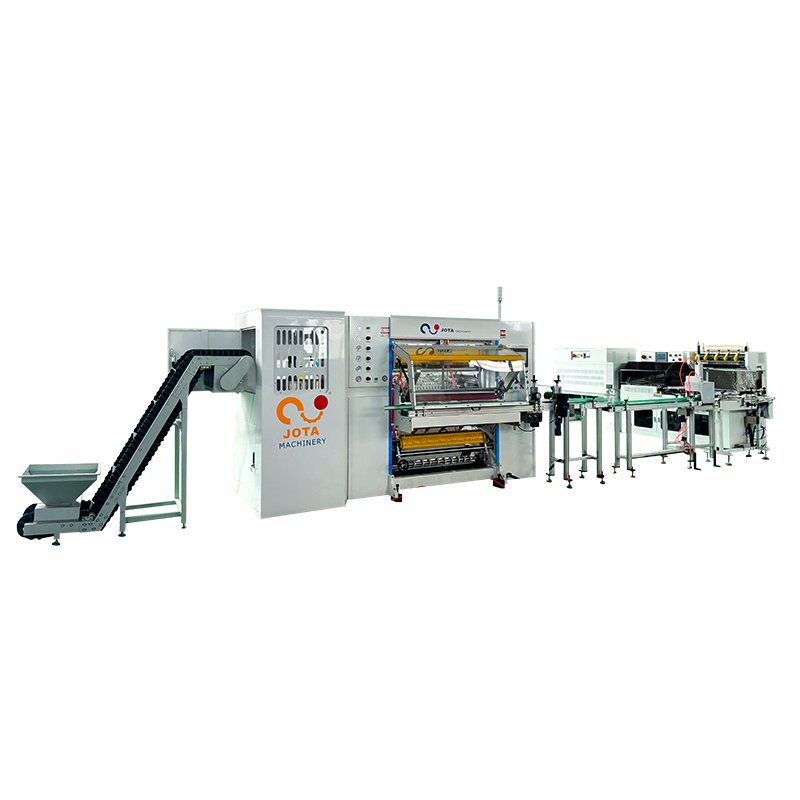


Jota Machinery: Original Slitting Rewinding Machine Manufacturer in China
Jota is capable of manufacturing 30 sets of slitting rewinding machines in 1 month.
We also accept free material converting test, you just need to send some of your material to us.
we will use our Jota slitting rewinding machine test it, then show you the testing video.


Machine Mouthpiece


Machining Material
- Visible high-quality components.
- Famous brands such as Siemens, Yaskawa, Delta, Schneider, Mitsubishi.
- Self-supporting CNC processed sheet metal, precision parts.
- Assembly raw materials provided by long-term cooperation suppliers.


Jota Machinery will support you via online call firstly.
If the issue can’t fixed we will dispatch engneer fly your country.
Expericed machine engineer in Jota Machinery.
100% safitication score from our clients.
- Focus Factory
- Dear Customer
- Professional Team


Around 30-45 days, mainly depends on machine type.
Sure, it is our honor to work for you.
We will offer you some parts as backup, in case any part is broken within one year, we will sent you for free.
Sure, if we have client in your country, we will offer.
12 Key Points to Help You Understand What Is Thermal Paper and How It Works
With the rapid development of technology, handwritten cash register receipts have largely been replaced. In the 21st century, the introduction of thermal paper has transformed receipt printing, allowing shopping results and transaction records to be printed for easier review and storage.

Thermal paper it is a specialized paper with a protective coating that allows printing without the need for ink. The quality of the protective coating plays a critical role in the shelf life of thermal paper.
High-quality thermal paper typically lasts 3-5 years. However, if the coating formula is poor (i.e., low-quality thermal paper) or if the paper is stored improperly—thermal paper should be kept at temperatures between 20-50°C—the shelf life can be reduced to just a few months.
In 2023, the thermal paper market in China reached a size of 337 million RMB, while the global market for thermal paper amounted to 1.37 billion USD. Forecasts indicate that by 2029, the global thermal paper market will expand to 2.013 billion USD.
According to online data, a comprehensive analysis of the market growth over the past five years, along with the current state of the thermal paper market in 2024, reveals clear trends. Additionally, the analysis provides well-founded projections for future market developments.
As a leading manufacturer of slitting machines, we possess extensive knowledge of thermal paper, from its manufacturing process to its various applications. In this article, we will introduce you to 13 key points that explain what is thermal paper and its key characteristics .
- What is thermal paper for ?
- What is the difference between thermal paper and normal paper?
- What are the cons of thermal paper?
- What is thermal paper made of?
- What is thermal paper roll?
- What is thermal paper receipt?
- What is thermal paper size?
- What is thermal paper coated with ?
- Where is thermal paper used?
- What is the difference between thermal paper roll and paper roll?
- How long is an 80mm thermal paper roll?
- Why is thermal paper so expensive?
What is thermal paper for ?
Thermal paper is widely used across various industries for printing receipts, tickets, labels, and other essential documentation. Its unique ability to print without ink or toner, using heat to activate a chemical coating on the paper, makes it an efficient solution for high-volume printing tasks.
In retail, thermal paper is commonly used in cash registers, credit card machines, and point-of-sale (POS) systems to print receipts. It is also an integral part of ticketing systems, such as those for concerts, events, and travel, including train, bus, and airline boarding passes. Furthermore, thermal paper is essential in printing barcodes, product labels, and price tags, making it indispensable for inventory management and retail operations.
In the healthcare industry, thermal paper is utilized for printing medical records, such as ECG/EKG strips and ultrasound images, ensuring accurate and durable documentation. Additionally, thermal paper plays a significant role in the gaming and lottery industries, where it is used to print lottery tickets and gaming vouchers. Automated Teller Machines (ATMs) also rely on thermal paper to generate transaction receipts.

When selecting thermal paper for specific applications, it’s important to choose the appropriate roll size, such as 56mm or 79mm, to ensure the best fit for the task.
For example, 56mm thermal paper is commonly used for smaller receipts in compact POS systems or credit card machines, ideal for businesses with limited space.
In contrast, 79mm thermal paper is suited for larger receipts found in supermarkets, gas stations, and larger retail environments, accommodating more detailed printouts. By understanding the right thermal paper roll size for your needs, businesses can ensure efficient printing, cost-effectiveness, and an optimal customer experience.
What is the difference between thermal paper and normal paper?
The primary difference between thermal paper and normal paper lies in their composition and printing methods.
Thermal paper is coated with a special heat-sensitive chemical that reacts to heat, allowing for inkless printing. When exposed to heat from a thermal printhead, the coating changes color, typically turning black, to form the printed text or images.In contrast, normal paper requires ink or toner for printing, relying on traditional printing technologies like inkjet or laser printers.
Additionally, thermal paper is more susceptible to environmental factors such as heat, light, and chemicals, which can cause the print to fade over time, whereas normal paper generally offers greater durability and longer lifespan when stored properly.
Thermal paper is primarily used in applications like receipts, tickets, and labels, while normal paper is more versatile, being used in a wide variety of contexts such as books, office printing, and stationery.
To directly distinguish between thermal paper and normal paper, you can perform a simple test: scratch the surface of the paper with a hard object. If the paper changes color where scratched, it is thermal paper. If no color change occurs, it is normal paper.
What are the cons of thermal paper?
Thermal paper has several drawbacks, including poor longevity as the print can fade or disappear over time.
This happens because thermal paper relies on heat-sensitive materials that change color when heated but can reverse back to their original state when the temperature stabilizes.
Furthermore, thermal paper is sensitive to environmental factors like heat, which can cause prints to blur or vanish. Additionally, some thermal papers contain Bisphenol A (BPA) and other chemicals, which may pose health risks with prolonged exposure. As such, thermal paper is best suited for temporary records and not for long-term use.
What is thermal paper made of?
Thermal paper is made of a base paper coated with a specialized heat-sensitive layer that consists of colorless dyes, such as fluoran dyes, and acidic substances like Bisphenol A (BPA).
When exposed to heat, the dyes undergo a chemical reaction that causes the paper to change color, creating a printed image or text. This process is reversible, and the print can fade or disappear when heat is removed or under certain environmental conditions. The precise application of the coating is crucial for the print quality and durability of thermal paper.
What is thermal paper roll?
A thermal paper roll is a final product produced by manufacturers for end-users. It comes in two main types: coreless and with a core, depending on the application.
Thermal paper rolls are primarily used in printing systems, such as receipt printers, ticket machines, and point-of-sale (POS) devices, offering a convenient and efficient solution for various industries.
What is thermal paper receipt?
A thermal paper receipt is a printed document used to record transaction and billing information, typically generated by point-of-sale (POS) systems.
It includes essential details such as the date, transaction amount, items purchased, and the seller’s contact information.
These receipts are commonly used in retail, hospitality, and service industries, providing both the consumer and the business with a reliable record of the transaction. The use of thermal paper ensures that the receipt is generated without the need for ink or toner, offering a cost-effective and efficient printing solution.
What is thermal paper size?
Thermal paper sizes can be broadly categorized into jumbo rolls and narrow rolls. Jumbo rolls refer to the paper that has been pre-slit after leaving the paper mill, with typical widths ranging from 575mm, 636mm, and 795mm, to widths exceeding 1000mm, commonly found in EU countries.
Upon entering the slitting machine at the manufacturing facility, these jumbo rolls are further cut into narrow rolls, typically with widths of 56mm and 79mm. The diameters of the narrow rolls can vary, with common sizes including 57mm × 30mm, 57mm × 50mm, 80mm × 50mm, 80mm × 60mm, and 80mm × 80mm.
The thermal paper roll production process generally involves several key stages: paper making, pre-slitting, slitting, rewinding, and ultimately, the sale of the finished rolls to buyers.
What is thermal paper coated with?
Thermal paper is composed of three primary layers: base paper, a heat-sensitive coating, and a protective layer.
The base paper, typically made from short-fiber pure wood pulp or recycled fibers, supports the thermal reaction.
The heat-sensitive coating, which includes colorless dyes and acidic substances like Bisphenol A (BPA), reacts to heat to form the printed image or text. Fillers like calcium carbonate and silica are part of the pre-coating layer, while the protective layer safeguards the printed surface from environmental influences. This formulation and its chemical properties are developed with contributions from industry leaders Asia Pulp and Paper Group.
Where is thermal paper used?
Thermal paper is widely used in a variety of industries for applications such as point-of-sale (POS) systems, automated teller machines (ATMs), lottery ticket printing, and medical devices like ECG/EKG scanners.
It is also commonly utilized in sectors such as retail, transportation, and gas stations for printing receipts, tickets, and transaction records. Its ability to provide quick, cost-effective printing without the need for ink makes it ideal for these high-demand environments.
What is the difference between thermal paper roll and paper roll?
The key difference between a thermal paper roll and a standard paper roll lies in the material’s properties.Thermal paper rolls are coated with a heat-sensitive chemical that enables printing without ink, using heat to produce text or images.
In contrast, regular paper rolls are simply paper based, requiring ink or toner for printing. Thermal paper is specifically used for applications like receipts, POS systems, and ticket printing, while standard paper rolls are used for general printing and writing purposes.
How long is an 80mm thermal paper roll?
The length of an 80mm thermal paper roll can vary based on the manufacturer’s specifications and the thickness of the paper used.
High-quality manufacturers typically provide enough length to reach the desired dimensions, such as 80mm in width and the required length for a specific use.
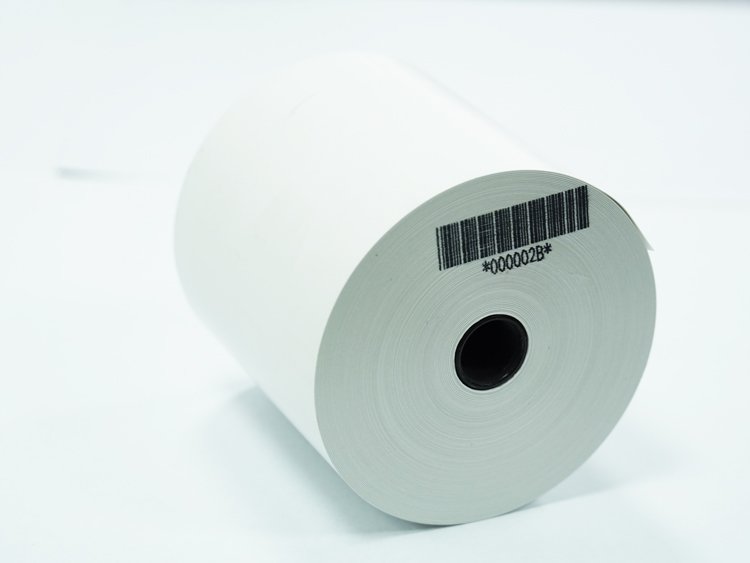
Some manufacturers may use thicker paper or larger plastic cores to reduce the roll’s length while maintaining the 80mm diameter, which can impact the roll’s total length. It’s important to ensure the correct length for your specific needs.
Why is thermal paper so expensive?
Thermal paper is more expensive than regular paper due to the complex manufacturing process involved.
The production of thermal paper requires a specialized coating, including chemical formulations and precise application, which adds to the cost. In contrast, regular paper production involves simpler processes, such as pulping and pressing, without the need for heat-sensitive coatings. Additionally, thermal paper often uses high-quality materials and specialized equipment, all of which contribute to its higher price point.
Jota Machinery, a leading manufacturer of slitting machines, has supported numerous newcomers in the thermal paper roll business. If you’re planning to enter this industry, we encourage you to reach out to us for expert guidance.
Additionally, if you have any questions about thermal paper, feel free to consult with us. We hope this article has provided valuable insights to help you better understand what is thermal paper.
