
Published by Bruce Zhou – Jota Machinery
Publish time: 🕙 Thursday, 27 November 2025 — 16:59:47 PM (GMT + 8)
A Customer Complaint That Reveals an Important Thermal Paper Roll Detail
hile reviewing customer feedback on thermal paper rolls sold on Amazon, one complaint caught our attention: the buyer received receipt rolls without the expected end-of-roll warning mark.
It may seem like a small detail. But for the user operating a POS terminal or receipt printer, the warning mark provides a simple visual signal that the paper roll is approaching its end.
Without that signal, the operator may not realize that the roll needs to be replaced until the paper runs out.
From a thermal paper converting perspective, this complaint raises a more useful question:
Is an end-of-roll indicator a standard feature of every thermal paper roll, or should it be defined as part of the finished-roll specification?
That distinction matters to both buyers and thermal paper converters.

Example: Customer feedback on a thermal paper roll sold through Amazon. The complaint focuses on the absence of an end-of-roll warning indicator.
1. What Is an End-of-Roll Indicator—and Why Does It Matter?
Some POS and credit-card terminal thermal paper rolls use a colored warning mark near the end of the roll.
This mark gives the cashier a clear signal:
- The roll is about to run out
- Prepare a replacement
- Avoid interrupted receipts and disputes

This simple feature is known by several terms in the industry:
- End-of-roll warning mark
- Low-paper indicator stripe
- Paper-end color line
- Receipt roll alert stripe
- End-of-life color band
Whatever name you prefer, the function is the same:
keeping your transaction running smoothly.
2. Why Can a Thermal Paper Roll Arrive Without the Warning Mark?
The Amazon review shows a mismatch between what the customer expected and what was delivered.
However, an end-of-roll warning mark should first be treated as part of the finished-roll specification.
Not every thermal paper roll necessarily uses the same warning mark. Before production, the buyer and converter should confirm:
- Whether an end-of-roll warning mark is required
- Warning color
- Finished-roll length or diameter
- Core specification
- Where the warning should begin
- How much paper should remain after the warning appears
If the warning mark is included in the agreed specification but is missing from the finished roll, the converter can then check the printing, rewinding and final inspection process.
This distinction is important: the absence of a warning mark is not automatically proof of poor thermal paper quality. The real issue is whether the finished roll matches the customer’s required specification.
From a Customer Complaint to a Production Requirement
For a thermal paper converter, an end-of-roll warning line is not only a visual feature. It becomes part of the production specification.
If the warning line needs to be added during converting, the production process may involve:
Thermal paper jumbo roll → Inline printing → Slitting → Rewinding → Finished roll → Inspection → Packaging
The printing section adds the required warning line, while the slitting and rewinding process converts the wider jumbo roll into the required finished rolls.
The warning-line position then needs to correspond with the required finished-roll length.
This is why the converter needs the finished product specification before configuring the production process.
Poor Slitter-Rewinder Process Control
If the slitter rewinder is not equipped with proper synchronization between the marking unit and reel length, the warning stripe may be:
- Misplaced
- Cut off during trimming
- Not applied at all because the operator missed the setting
This is a machinery-level problem—not a paper-level problem.
Lack of QC Inspection at Final Packaging
A responsible factory inspects rolls for:
- Correct length
- Print clarity
- Thermal coating uniformity
- Core alignment
- End-mark visibility
If this inspection step is rushed, the fault slips through.
3. How Missing End-Marks Impact Daily Operations
The Amazon customer described a very real business problem:
- Having to open the CC machine to check the roll
- Interrupting the payment process
- Half-printed receipts
- Customer frustration
- Operational delay
Where the printer relies on a visible end-of-roll warning, a missing indicator can make it more difficult for the operator to prepare a replacement roll before the paper runs out.
4. What Should Be Confirmed for an End-of-Roll Warning Mark?
If the finished thermal paper roll requires an end-of-roll warning, the requirement should be defined before production.
The specification can include:
- Finished-roll width
- Finished-roll length or diameter
- Core size
- Warning color
- Warning-mark position
- Remaining paper length after the warning begins
- Printing requirement
- Packaging requirement
The warning position should follow the required finished-roll specification rather than being treated as the same for every thermal paper roll.
4. What a Professional Thermal Paper Manufacturer Should Deliver
The warning mark should be defined as part of the finished-roll specification.
Before production, confirm:
- Finished-roll width
- Finished-roll diameter or length
- Core size
- Thermal paper grade
- Whether an end-of-roll indicator is required
- Warning color
- Warning-mark position
- Remaining paper length when the warning begins
- Printing requirements
- Packaging requirements
The exact warning position should follow the customer’s product specification rather than a single universal distance.
Slitting and Rewinding
The warning stripe must align with the actual remaining length, not appear randomly.
This requires:
- Accurate tension control
- Stable web guiding
- High-precision rewinding system
(3) Clear Specifications
A trustworthy supplier always lists:
- Roll size (2 1/4″ x 50′)
- Core size
- Coating type
- End-of-roll mark included
- Length tolerance
When a seller avoids these details, customers should be cautious.
(4) Final QC Verification
Each carton should undergo:
- Visual inspection
- Length sampling
- Print test
- End-mark confirmation
That’s the minimum standard in professional manufacturing.
5. How Is the Red Warning Mark Printed During Rewinding?
For a thermal paper roll that requires an end-of-roll warning, the red mark is printed near the completion of the rewinding cycle.
The thermal paper is first slit and rewound according to the required finished-roll specification.
As the rewinding process approaches the end of the finished roll, the printing unit applies red ink to the paper to create the warning section.
The machine then completes the remaining rewinding process.
The production sequence can be understood as:
Thermal paper jumbo roll → Slitting and rewinding → Approaching the end of the finished roll → Red warning printing → Final rewinding → Finished roll
This is why the warning-mark position needs to be coordinated with the finished-roll length.
If the printing starts too early or too late, the red warning section will not appear at the intended position when the customer uses the roll.
6. What Should a Converter Check During Production?
When producing thermal paper rolls with an end-of-roll warning mark, the warning line needs to be considered together with the entire finished-roll specification.
During a production trial, check:
- Finished-roll width
- Finished-roll length or diameter
- Core size
- Rewinding consistency
- Warning color
- Warning visibility
- Warning position
- Remaining paper after the warning begins
The objective is not simply to print a red line. The red warning section needs to appear at the required position on the finished roll.
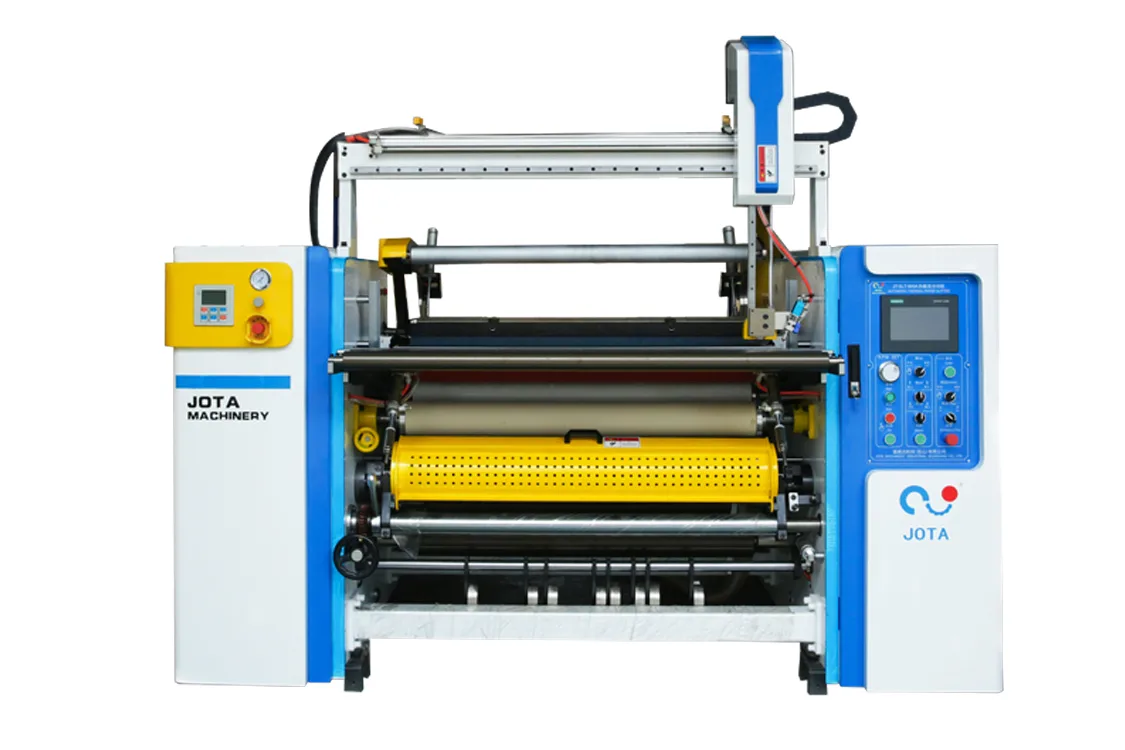
For standard POS and receipt-roll production, thermal paper jumbo rolls are slit and rewound into the required finished widths, diameters and core specifications.
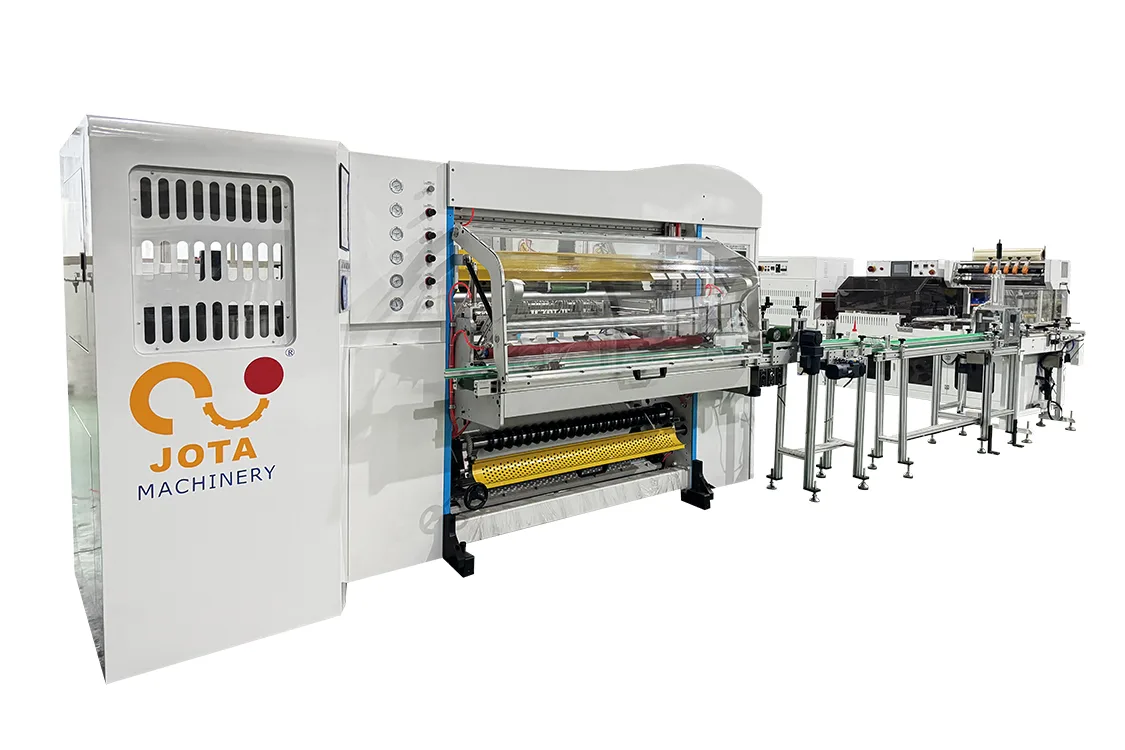
For higher production output, a fully automatic configuration can reduce manual handling and integrate additional roll finishing, packaging or palletizing processes.
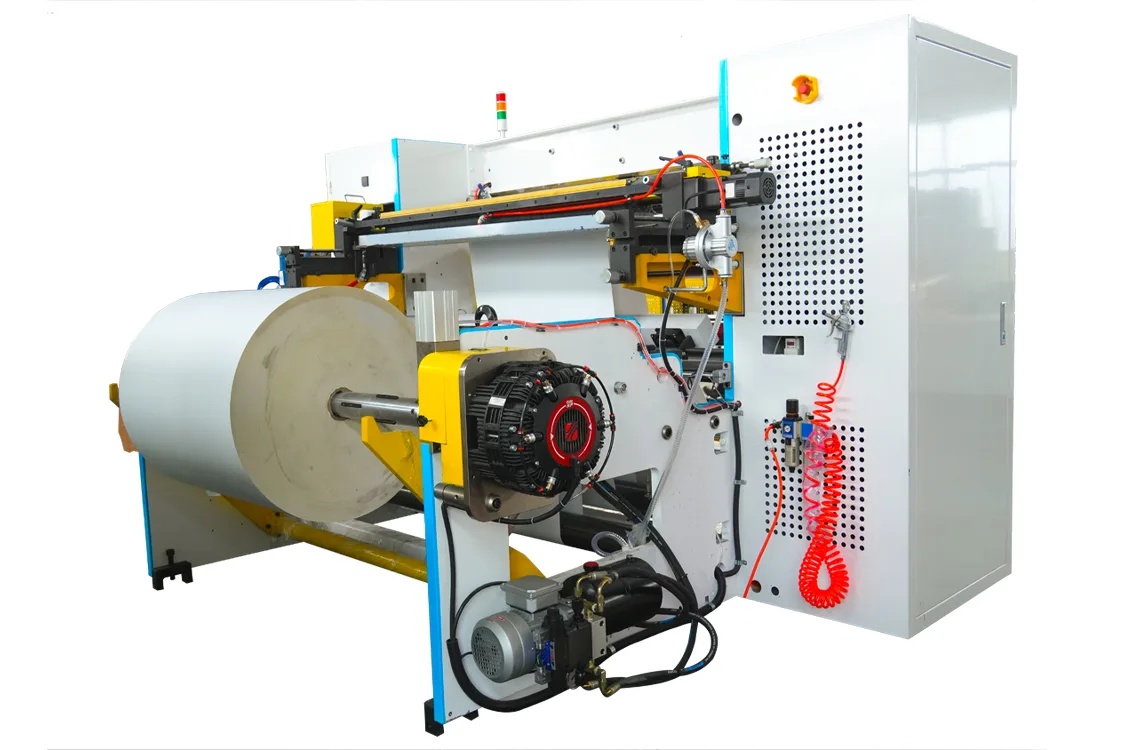
If your rolls require logos or promotional information, inline flexographic printing can be combined with slitting and rewinding in one production process.
6. What Should Buyers Confirm Before Ordering Thermal Paper Rolls?
The Amazon review provides a useful lesson for buyers: small product details should be included in the purchase specification rather than assumed.
Before ordering, confirm:
- Is an end-of-roll warning mark required?
- What color should it be?
- Where should the warning begin?
- What is the finished-roll length or diameter?
- What core size is required?
- What thermal paper grade is required?
- Are the warning-mark requirements shown in the order specification?
If the warning mark matters to your application, make it part of the agreed finished-roll specification before production.
Conclusion: A Small Stripe That Can Become a Real Customer Complaint
The Amazon review shows how a small detail in a thermal paper roll can become a real usability complaint.
For the end user, the red warning mark provides advance notice that the paper roll is approaching its end.
For the buyer, it should be clearly defined in the finished-roll specification.
For the converter, it becomes a production requirement that needs to be coordinated with printing, slitting, rewinding and finished-roll length.
The lesson is simple: if the customer expects an end-of-roll warning mark, it should not be left to assumption.
Last Updated on 30/09/2026 by Jota Machinery