
Published by Bruce Zhou – Jota Machinery
Publish time: 🕙 Saturday, 20 October 2025 — 17:38 AM (GMT + 8)
Introduction: Why Proper Storage Matters More Than You Think
Most people treat thermal paper rolls like regular office supplies—tossed on a shelf, under a counter, or even left in a car. But what many businesses don’t realize is that thermal paper is a living material.
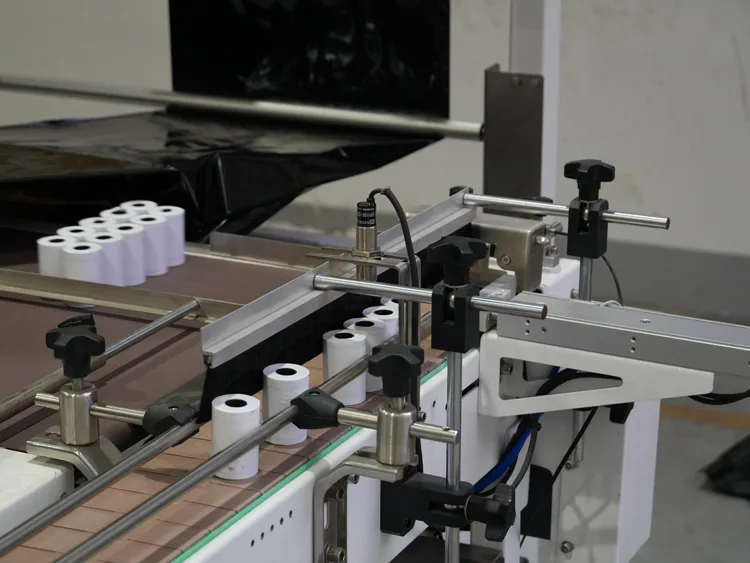
It reacts to light, heat, humidity, and even the oils on your fingers.One careless mistake—like storing rolls beside a sunny window or near a kitchen heater—can shorten their lifespan from years to months.
Whether you’re running a retail chain, a ticketing counter, or a logistics warehouse, how you store thermal paper rolls directly affects print quality, operational reliability, and costs.
Let’s explore the science, the strategy, and the simple habits that keep every roll crisp, clear, and ready to print like new.
1. Understanding Why Thermal Paper Is So Sensitive
Thermal paper looks ordinary, but its coating makes it special—and vulnerable.
Each roll is made of three main layers:
- Base paper: The structural foundation made of refined pulp.
- Pre-coating: A smooth barrier that ensures even heat transfer.
- Thermal coating: A chemical mix of leuco dye and developer that turns black when heated by the printer head.
This top layer is what creates the image—without ink or ribbon.
But it’s also what reacts to heat, UV light, moisture, and contaminants, even when no printer is involved.
Here’s what can go wrong:
- High heat → premature darkening or full blackening.
- Humidity → causes curling, sticking, or coating breakdown.
- UV light → fades printed text or discolors blank rolls.
- Chemicals → dissolve the coating, leaving patchy white marks.
In other words, if your storage conditions aren’t right, your rolls can age five times faster than expected.
2. The Golden Rule: Cool, Dry, and Dark
Every major manufacturer—from Zebra to Telemark to Panda Paper Roll—recommends the same baseline conditions:
| Factor | Ideal Range | Why It Matters |
|---|---|---|
| Temperature | 68–77°F (20–25°C) | Prevents premature reaction of leuco dye and developer. |
| Humidity | 45–65% RH | Avoids curling, brittleness, and coating softening. |
| Light | Dark or opaque environment | UV and fluorescent light cause fading and yellowing. |
A simple way to think of it:
If it feels comfortable for people, it’s comfortable for paper.
Just like food, thermal paper also has a shelf life—typically around 3 years for unused rolls and 7–20 years for printed receipts under correct storage.
3. Temperature Control: Keep It Cool and Consistent
Thermal paper reacts quickly to temperature changes.
- At above 35°C (95°F), chemical reactions begin to accelerate.
- At 50°C (122°F), the coating can permanently darken.
That means you should never store rolls near heat sources like:
- Printers or servers,
- Kitchen ovens or POS counters,
- Sun-exposed shelves or windows.
Instead, store them in climate-controlled rooms—preferably between 20–25°C.
In tropical climates, use air conditioning or dehumidifiers to stabilize the room.
For bulk warehouses, invest in:
- Insulated wall panels
- Temperature loggers
- Air circulation fans
Even a 2°C swing every few hours can create condensation inside boxes, which damages coating edges.
4. Humidity Control: Moisture Is the Silent Destroyer
Humidity is another silent killer.
If it’s too high, paper absorbs moisture, becoming soft, sticky, or warped.
If it’s too low, it turns brittle and prone to static.
To maintain the balance:
- Keep relative humidity (RH) between 45–65%.
- Avoid storing rolls near air vents, doors, or cold walls where condensation can occur.
- Use dehumidifiers during rainy seasons or in coastal areas.
- Add silica gel or desiccant packs inside cartons if the climate fluctuates.
If your rolls ever feel “damp” to the touch, that’s an early warning—the coating is already deteriorating.
5. Light Exposure: The Invisible Threat
Even indoor light can cause long-term fading.
Direct sunlight, UV lamps, and fluorescent tubes emit energy that triggers the same chemical reaction as heat.
Best practices:
- Use opaque packaging (brown cardboard or black poly bags).
- Keep rolls in closed cabinets or covered shelves.
- Avoid transparent film wrap for long-term storage.
- If storing in retail areas, rotate stock quickly—do not expose for more than 7–10 days.
Some premium papers come with a UV-resistant topcoat, but even those degrade faster under constant exposure.
6. Positioning and Handling: Small Habits, Big Difference
Thermal rolls might look sturdy, but internal compression easily distorts them.
That’s why proper positioning matters.
✅ Store rolls upright on their ends, not sideways.
- Prevents flat spots that can cause printer feeding errors.
- Reduces tension deformation around the core.
✅ Handle rolls carefully.
- Avoid fingerprints—skin oils react with the coating.
- Use clean, dry hands or gloves.
- Never bend or crease the paper; micro-cracks destroy the coating.
- Do not drop boxes—impact causes core misalignment.
✅ Avoid overstacking.
Keep stacking height within manufacturer limits (typically 6–8 cartons high).
Compression can permanently flatten rolls or warp cores, especially in humid climates.
7. Packaging and Containers: Your First Line of Defense
Thermal paper should always be sealed away from the environment.
Use:
- Opaque cartons (brown or black)
- Polyethylene bags with tight seals
- Plastic storage bins with lids
- Desiccant packs to absorb moisture
Avoid:
- Cardboard without sealing in humid areas
- Transparent cling wrap or loose film
- Open shelves or wire racks near windows
If you open a carton, re-seal it immediately. Exposed rolls start absorbing ambient moisture within 24 hours.
A simple habit—mark the date each box was opened—helps track freshness.
8. FIFO: The One Inventory Rule You Can’t Ignore
“First In, First Out” (FIFO) isn’t just for groceries—it’s essential for thermal paper.
Here’s why:
Each batch of thermal paper has a chemical shelf life, even under perfect conditions. Older stock will fade faster and print lighter.
Implement a simple FIFO system:
- Label every carton with date received.
- Store new stock behind old stock.
- Train staff to always use the oldest boxes first.
You’ll maintain consistency across all outlets and avoid sudden print failures during busy operations.
9. Where NOT to Store Thermal Paper Rolls
Many storage failures happen not from negligence, but convenience.
Below are the most common mistakes reported by POS suppliers and paper mills.
| ❌ Wrong Storage Area | ⚠️ Risk | ✅ Better Choice |
|---|---|---|
| Inside cars or vans | Heat buildup to 60–80°C | Indoors, climate-controlled storage |
| Near kitchen or oven | Heat and steam cause darkening | Sealed cabinet in cool room |
| Walk-in coolers | Condensation from humidity | Dry storeroom |
| Windowsills or near sunlight | UV light fades paper | Dark cabinet |
| Near chemicals or cleaners | Vapors dissolve coating | Isolated dry area |
| Dusty warehouse corners | Particles damage surface | Airtight plastic bins |
| Under fluorescent lamps | Continuous light exposure | Closed or opaque packaging |
| Floor contact | Moisture absorption | Pallet or rack at least 15 cm high |
Think of thermal paper as a lab material, not a common supply—it must be treated with care.
10. Shelf Life and How to Extend It
Under proper storage:
- Unprinted rolls: up to 3 years
- Printed receipts: 7–20 years depending on grade and coating
To extend shelf life:
- Avoid unnecessary light or handling.
- Keep storage area consistent year-round.
- Use archival-grade thermal paper for long-term documentation.
- For permanent recordkeeping, scan or digitize receipts.
- Never laminate receipts—the heat of lamination can blacken them instantly.
For mission-critical businesses like banks or hospitals, partner with suppliers offering stability-certified papers (e.g., phenol-free, BPA-free with UV topcoat).
11. Common Troubleshooting: Signs Your Paper Is Aging
| Symptom | Likely Cause | Solution |
|---|---|---|
| Yellow edges | Light or heat exposure | Replace rolls; store in darker conditions |
| Gray tint | High humidity or chemical vapor | Check humidity, isolate from solvents |
| Curling | Moisture fluctuation | Re-condition in stable room for 24 hours |
| Smudged prints | Finger oil or handling damage | Use gloves or handle minimally |
| Weak print contrast | Expired or overheated rolls | Replace; store below 25°C |
| Flat spots | Stored sideways or overstacked | Store upright; reduce stacking height |
Inspect cartons monthly. Early detection prevents printer downtime and waste.
12. Advanced Practices for Large-Scale Operations
If you manage hundreds or thousands of rolls, consider these upgrades:
Environmental Monitoring
Install:
- Digital temperature & humidity sensors
- Smart alert systems that notify via app when limits exceed
- Data logging for quality assurance records
Zoning & Airflow Design
- Create separate zones for incoming stock, active stock, and returns.
- Ensure air circulation doesn’t blow directly on rolls.
- Use anti-static mats in low-humidity regions.
Packaging Customization
Request your supplier (like Jota Machinery’s partners) to:
- Use UV-resistant wrapping films
- Print lot expiry labels
- Include desiccant packs in every carton
These small adjustments greatly enhance roll stability in export environments.
13. Jota Machinery’s Perspective: Why Storage Influences Slitting Precision
At Jota Machinery, we’ve observed during on-site installations that many paper roll issues—like curling, uneven rewinding, or friction slippage—originate not from the slitter itself, but from improperly stored jumbo rolls.
Thermal paper that absorbs moisture or warps unevenly causes:
- Tension imbalance during slitting
- Edge curling and misalignment
- Powder buildup on friction shafts
- Increased static and paper dust
That’s why we always advise clients to store jumbo rolls in humidity-stable zones before slitting and converting.
Proper storage isn’t just about paper—it’s about maintaining machine performance, cutting precision, and yield consistency.
If you need assistance designing a storage-friendly converting line,
📧 contact us at jotamachinery@gmail.com or visit 🌐 www.jotamachinery.com.
14. Frequently Asked Questions
Q1: What temperature should thermal paper rolls be stored at?
A: Keep them at 20–25°C (68–77°F), ideally below 25°C, with stable humidity between 45–65%.
Q2: Can thermal paper be stored in a refrigerator or cooler?
A: No. Humidity and condensation from refrigeration can ruin the coating. Always store in a dry, temperature-controlled room.
Q3: Is it safe to store thermal paper near other printing supplies?
A: Only if isolated. Avoid storing near inks, toners, adhesives, or solvents, which emit vapors that degrade coatings.
Q4: How long do thermal paper rolls last?
A: Up to 3 years unprinted. Printed images can last 7–20 years if stored properly.
Q5: Can I store rolls in my car or van?
A: Absolutely not. Interiors can exceed 60°C (140°F), instantly darkening the paper.
Q6: What’s the best packaging material for thermal paper rolls?
A: Use opaque, moisture-proof wrapping or sealed cartons. Avoid transparent films or paper wraps in humid climates.
Q7: How can I tell if my rolls are expired?
A: Look for dull surfaces, yellow edges, or weak print contrast. Always check manufacture dates printed on the carton.
15. Conclusion: Storage Is the Hidden Key to Print Reliability
The next time your receipts look faded or your printer misfeeds, don’t just blame the machine—check the shelf.
Storing thermal paper rolls isn’t about warehouse aesthetics; it’s about protecting a chemical system engineered for precision.
By maintaining the right temperature, humidity, and light protection, you can double your roll lifespan, reduce print failures, and safeguard every transaction record.
Proper storage is low-cost but high-impact—and it separates professional operations from careless ones.
If you’re upgrading your paper roll production or converting setup,
Jota Machinery can help you design not only the perfect slitting solution but also a sustainable storage strategy.
📩 Contact: jotamachinery@gmail.com
🌐 Website: www.jotamachinery.com
Last Updated on 20/10/2025 by Jota Machinery