
Polyether ether ketone (PEEK) resin is a novel semi-crystalline aromatic high-temperature thermoplastic engineering plastic. It is synthesized through a condensation reaction between 4,4′-difluorobenzophenone and hydroquinone in the presence of an alkali metal carbonate, using diphenyl sulfone as a solvent.
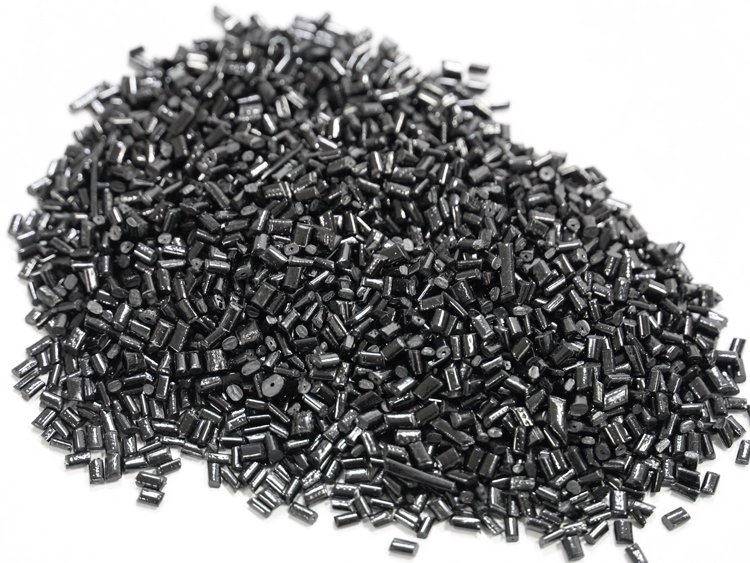
- Glass transition temperature: 143°C
- Melting point: 334°C
- Heat distortion temperature under load: up to 316°C
- Compared to other high-temperature-resistant plastics such as PI, PPS, PTFE, and PPO, the maximum operating temperature is nearly 50°C higher.
Aerospace Applications
PEEK resin can replace aluminum and other metals to manufacture various aircraft components. Leveraging its excellent flame-retardant properties, it is used to produce internal aircraft parts, reducing the risk and severity of fires.
Electronics and Electrical Applications
PEEK resin, with its outstanding electrical properties, is an ideal electrical insulator. It maintains excellent insulation even in harsh environments with high temperatures, pressure, and humidity. This makes electronics and electrical applications the second-largest market for PEEK resin.
Its high purity and stable mechanical and chemical properties minimize contamination during silicon wafer processing.
PEEK components can withstand high temperatures for thermal welding, making it a preferred material in semiconductor manufacturing for wafer carriers, insulation diaphragms, and connectors. It is also used for ultra-pure water transportation and storage equipment, such as pipes, valves, and pumps. Countries like Japan have adopted PEEK in large-scale integrated circuit production.
Medical Applications
In the medical field, PEEK resin is used to produce sterilizable and reusable surgical and dental instruments, as well as precision medical devices.
Its most significant application is as a substitute for metal in artificial bone manufacturing. Artificial bones made from PEEK are lightweight, non-toxic, highly corrosion-resistant, and closely resemble human bone, enabling organic integration with the body. This makes PEEK a revolutionary material for orthopedic applications, with significant potential for future developments.
Energy Sector Applications
PEEK resin’s high temperature resistance, hydrolysis resistance, and radiation tolerance make it suitable for electrical wire insulation, cable coils, and frameworks, which have been successfully applied in nuclear power plants.
Oil and Gas Industry Applications
PEEK is used to produce specialized probe components with unique geometries for exploration and drilling equipment.
Mechanical Engineering Applications
PEEK resin is often used to manufacture compressor valve plates, piston rings, seals, and chemical pump bodies. Replacing stainless steel impellers in vortex pumps with PEEK significantly reduces wear and noise while extending service life. Its high-temperature bonding compatibility makes it a promising material for modern connectors.
Automotive and Industrial Applications
Thanks to its excellent friction resistance and mechanical properties, PEEK resin is a substitute for stainless steel and titanium in manufacturing engine covers, bearings, gaskets, seals, clutch gear rings, and other components.
It is also utilized in automotive transmission, braking, and air conditioning systems. Companies like Boeing, AMD, Nissan, NEC, Sharp, Chrysler, General Motors, Audi, and Airbus have adopted PEEK in their products.
PEEK resin powders can also be used as coatings for metal surfaces, offering insulation, corrosion resistance, heat resistance, and water resistance. These are widely applied in chemical corrosion prevention, household appliances, electronics, and machinery. Additionally, PEEK is used in liquid chromatography columns and ultra-thin tubing for analytical instruments.
Enhanced and Modified PEEK Materials
To meet the demands for high-precision, heat-resistant, wear-resistant, fatigue-resistant, and impact-resistant components, PEEK resin can be modified through blending, filling, and fiber reinforcement. Examples include:
- Blending with Polyetherketone (PEK): Produces materials with specific melting points and glass transition temperatures, improving processing performance.
- Blending with Polyethersulfone (PES): Enhances flame resistance alongside mechanical properties.
- Special Additives: Adding phenolic resin improves friction resistance; blending with PTFE provides superior wear resistance.
- Fiber Reinforcement: Combining PEEK with carbon or glass fibers significantly enhances creep resistance, thermal stability, aging resistance, and impact resistance. These materials find applications in mechanical components such as sliding bearings and sealing rings.
PEEK composites with inorganic nano-material reinforcement combine the advantages of organic resin and high-performance nano-particles. These materials exhibit improved impact resistance, friction resistance, stiffness, and dimensional stability, broadening PEEK’s application scope further.
Advances in PEEK Resin and Its Applications
Victrex PEEK-HT (2002)
With the growing production capacity and expanding applications of PEEK resin, new products are continually being developed. In 2002, Victrex introduced a heat-resistant PEEK resin variant called PEEK-HT. This semi-crystalline polymer has a:
- Glass transition temperature: 157°C
- Melting point: 374°C
Compared to standard PEEK resin, PEEK-HT exhibits:
- Enhanced high-temperature performance, with mechanical and physical properties retained at 30°C higher temperatures.
- Twice the wear resistance under high-temperature conditions.
- Superior creep resistance and fatigue resistance over a broad temperature range.
- Increased tensile strength, flexural modulus, and compressive strength at 250°C.
- Excellent resistance to chemicals, solvents, and fuels.
- Improved processability for injection and extrusion molding, eliminating the need for post-treatment, and enabling mass production of precision parts.
PEEK-HT is available in powder form (PEEK-HTP22) and pellets (PEEK-HT G22). Its primary applications include automotive and aerospace engine housings, headlight reflectors, heat exchanger components, valve bushings, and deep-sea oilfield parts, partially replacing metals and ceramics. Annual sales of PEEK-HT now exceed 100 tons.
Silicon-Modified PEEK (2003)
In 2003, Victrex introduced a silicon-modified PEEK resin, which has:
- Izod notched impact strength: 2–3 times higher than standard unfilled PEEK between -40°C and 140°C.
- Rigidity and impact resistance comparable to polycarbonate.
This material is undergoing evaluation in various industries and is now available in bulk quantities.
Yamakyu Chain PEEK Polymer
Yamakyu Chain Company in Tokyo developed a PEEK polymer for manufacturing system board conveyor chains. These chains:
- Operate at temperatures up to 250°C.
- Run at speeds of 200 m/min without lubrication.
- Exhibit excellent chemical resistance and anti-static properties.
This PEEK polymer can replace metal components and is used in high-performance end products, including automotive and aircraft components, industrial pumps, valves, seals, wafer transport equipment, connectors, and sterilizable surgical tools.
LNP Thermocomp PEEK Composites (2003)
LNP Engineering Plastics introduced two new PEEK composite materials, Thermocomp LF-100-12 and Thermocomp LF-1006:
- LF-100-12: Contains 60% glass fiber and mineral filler, with a flexural modulus of 15,000 MPa.
- LF-1006: Contains 30% glass fiber.
Both materials feature high mechanical strength, superior thermal and chemical resistance, flame retardance, low smoke emission, and relatively low cost. LF-100-12 is 40% cheaper than LF-1006. These materials are particularly suitable for manufacturing wear-resistant gears and bearings. LNP has developed pump impellers for the chemical industry using these composites and is exploring applications in the automotive, electrical, aerospace, and mechanical industries.
Robix and Omnifit Innovations
- Robix: Produced circular PEEK parts via extrusion, with diameters up to 3 meters and thick cross-sections.
- Omnifit Limited: Replaced stainless steel with PEEK for chromatography connectors and accessories. These products exhibit chemical inertness and withstand pressures of 41.34 MPa without interfering with separation and purification processes.
Quadrant Kerton PEEK-GF30
Quadrant Engineering Plastics introduced Kerton PEEK-GF30, which:
- Resists all standard sterilization methods, high-energy radiation, and various chemicals.
- Retains its properties after 250 sterilization cycles, extending the service life of medical devices.
- Offers high strength, rigidity, impact resistance, and wear resistance, with excellent dimensional and inherent stability for precision parts.
Victrex PEEK-450GL30 and Specialized Grades
- PEEK-450GL30: Reinforced with 30% glass fibers, it can operate continuously at up to 300°C, suitable for boiler detection seals.
- Oilfield Pump Seals: Outperform bronze in strength and elongation during wear.
- Pharmaceutical Reactor Valve Bushings: Offer high resistance to cold flow and maintain rigidity and strength within a specific temperature range, achieving ANSI VI-grade sealing.
- Racing Distributor Gears: Provide high wear resistance, withstand long-term high temperatures (up to 260°C), and reduce weight by 81% compared to bronze gears while maintaining physical properties near the melting point (343°C).
PEEK resin continues to advance, offering superior performance across industries and increasingly replacing traditional materials like metals and ceramics in demanding applications.
PEEK Resin in China
Since its introduction, PEEK resin has been regarded as a critical strategic material for national defense and military applications, with exporting countries imposing strict restrictions on its export to many nations. During this period, China could only import small quantities of PEEK resin through research institutions that obtained import approval.
As PEEK resin began to see widespread use in civilian sectors such as automotive, electronics, and machinery, these export restrictions gradually eased. To meet the urgent demands of national defense and civilian applications, the development of PEEK resin was included in China’s Seventh Five-Year National Key Technology R&D Program and the National “863” Plan.
During this time, the Special Engineering Plastics Research Center at Jilin University completed laboratory-scale experiments, successfully developing a proprietary synthesis route for PEEK resin using entirely domestic raw materials. Building on this foundation, during the Eighth Five-Year Plan, the center conducted scale-up experiments for an annual production of 10 tons, achieving small-scale production. By the Ninth Five-Year Plan, the center completed pilot-scale experiments for an annual production of 30 tons, which passed evaluation and acceptance at the end of the period. The main performance indicators of this PEEK resin reached the level of comparable international products.
At the end of 2001, Jilin University High-Tech Materials Co., Ltd. invested 100 million RMB to complete Phase I construction of a 300-ton-per-year PEEK resin production line, which began operation. Phase II, a 500-ton-per-year production line, was approved in August 2001 as a part of the Tenth Five-Year Industrialization Demonstration Project and is currently under implementation. Once completed, Jilin University High-Tech Materials Co., Ltd. will become the second company worldwide after Victrex PLC to commercialize PEEK resin using patented technology.
Additionally, Shandong University of Technology has conducted research on PEEK resin synthesis, producing materials with a melting point of 338.4°C, a melting enthalpy of 32.8 J/g, and a decomposition temperature of 456°C. Other institutions such as Dalian University of Technology, Sun Yat-sen University, Heilongjiang University, Jiangxi Normal University, Shanghai University, Shanghai Materials Research Institute, Jiangsu University of Technology, Anhui Normal University, and Dalian Polytechnic University have also carried out related research.
Although PEEK resin has achieved mass production in China, there remain challenges in application development compared to foreign companies:
- Specialized Grades:
The variety of specialized PEEK grades in China still lags behind foreign competitors. For instance, Victrex PLC offers over 10 standard grades of PEEK resin in Japan, along with self-lubricating and electromechanical grades, while domestic PEEK resin only includes a few basic grades. - Shaped Materials:
Foreign PEEK resin manufacturers not only supply powders and pellets in various grades but also provide pipes, rods, sheets, and other shaped materials. In contrast, domestic manufacturers currently lack the necessary equipment to produce such materials, limiting the scope of PEEK resin applications in China.
To address these challenges, the development of diversified PEEK grades and the expansion of PEEK resin applications will be critical focus areas for China’s future progress.