
Published by Bruce Zhou – Jota Machinery
Publish time: 🕙 Monday, 27 October 2025 — 10:09 AM (GMT + 8)
A Complete 2025 Guide for Label, Sticker, and Paper Converting Professionals
In precision converting, every micron matters. The way a material is cut—how deep, how clean, and how organized the final product appears—can define both production efficiency and product appeal. Two techniques dominate this field: kiss cutting and die cutting.
At first glance, they seem identical—both use a die to slice shapes from materials like vinyl, film, paper, or laminates. But their difference lies in depth, purpose, and outcome. Kiss cutting leaves the backing intact, while die cutting slices through everything.

This subtle mechanical variation creates very different results—one prioritizing efficiency and protection, the other emphasizing presentation and individuality. Understanding this distinction is essential for professionals in packaging, labeling, and roll-to-roll converting.
1. What Exactly Are Kiss Cutting and Die Cutting?
Kiss Cutting: The Art of Precision Without Separation
Kiss cutting—sometimes called pressure-sensitive cutting—is a method where the cutting blade or die penetrates only the top layer of the material (the printable or adhesive layer) and stops just before the backing liner.
The outcome: each label or sticker remains attached to its liner, forming a neat sheet or roll. The backing acts like armor, protecting edges from curling or contamination. It also makes peeling, packaging, and automated dispensing faster and cleaner.
In Jota Machinery’s rotary die-cutting systems, the knife “kisses” the surface with perfectly calibrated pressure—just enough to separate the face stock without cutting the liner. This balance is achieved through micrometer depth control, accurate to 0.001″, ensuring consistent results across thousands of meters of material.
Die Cutting: The Craft of Complete Separation
Die cutting, in contrast, is through cutting—the die slices through all layers, from the printable surface to the backing liner.
This produces fully separated shapes—standalone pieces like decals, box blanks, tags, or gaskets—each cut to the exact contour of the design. Die cutting gives a polished, professional look, ideal for visible branding or mechanical parts that must fit precisely into assemblies.
Where kiss cutting prioritizes workflow efficiency, die cutting celebrates aesthetic completion. It’s the technique that transforms material sheets into borderless works of design.
2. The Core Difference: Depth and Function
| Feature | Kiss Cutting | Die Cutting |
|---|---|---|
| Cut Depth | Partial – cuts top layer only | Full – cuts through all layers |
| Backing Status | Remains intact, acts as liner | Removed or cut away |
| Product Form | Items stay on sheet or roll | Individual finished pieces |
| Peel & Handling | Easy to peel, minimal waste | Borderless, ready-to-use |
| Production Speed | Faster (no full separation) | Slightly slower (requires full force) |
| Tool Wear | Lower – reduced impact force | Higher – metal-to-metal contact |
| Cost per Unit | Lower for high-volume runs | Higher for custom shapes |
| Visual Aesthetic | Bordered (sheet format) | Clean, contour-shaped, borderless |
In short, kiss cutting simplifies logistics, while die cutting perfects the presentation.
3. How Each Process Works
Step-by-Step: Kiss Cutting
- Design Creation – A digital file defines the shape and dimensions.
- Material Setup – Roll or sheet (often adhesive-backed) is loaded.
- Die Calibration – Pressure is precisely adjusted so the blade penetrates only the face layer.
- Cutting – The rotary die or flatbed press performs shallow incisions.
- Weeding – Excess material is removed, leaving clean shapes on the liner.
- Delivery – Final sheets or rolls are rewound and packaged for easy peel-off or machine dispensing.
Kiss cutting’s advantage lies in maintaining web integrity—the liner keeps all pieces organized, perfect for high-speed automatic labeling.
Step-by-Step: Die Cutting
- Design and Tooling – A steel-rule die is fabricated for exact contour accuracy.
- Material Loading – The press aligns the sheet or web beneath the die.
- Full-Depth Cutting – The die cuts completely through all layers, producing individual parts.
- Ejection & Collection – Finished items fall free, ready for immediate use or packaging.
- Optional Finishing – May include lamination, embossing, or perforation.
Die cutting produces standalone parts, which are essential when labels, stickers, or packaging inserts must be applied independently rather than from a liner.
4. In the Paper Converting Industry
Paper converting transforms large paper rolls into functional end products—labels, envelopes, cartons, receipts, and packaging elements. Both kiss cutting and die cutting are fundamental to this ecosystem.
- Kiss Cutting dominates label roll production, where adhesive materials must remain attached to a liner for automatic application.
- Die Cutting leads in carton and packaging fabrication, where full-depth cuts define windows, flaps, or unique box shapes.
Example:
A roll of pressure-sensitive adhesive paper for bottle labels undergoes kiss cutting so that each label stays on its liner. The same factory might use die cutting to produce paperboard inserts or shaped sleeves for premium packaging.
By integrating both processes in one converting line—such as Jota Machinery’s modular rotary die systems—manufacturers can switch between kiss and full die cutting modes within minutes, enabling maximum flexibility for custom orders.
5. Real-World Industrial Examples
| Application | Preferred Method | Reason |
|---|---|---|
| Sticker Sheets & Promotional Labels | Kiss Cutting | Multiple designs per sheet, easy peeling, fast production. |
| Luxury Branding Decals | Die Cutting | Borderless, premium finish for packaging and merchandise. |
| Electronics Adhesive Pads (PSA) | Kiss Cutting | Keeps delicate parts organized for automated pick-and-place. |
| Automotive Gaskets or Seals | Die Cutting | Requires precise, standalone parts for load-bearing fit. |
| Paper Label Rolls for Packaging Lines | Kiss Cutting | Simplifies automated dispensing on production lines. |
| Custom Carton Windows / Inserts | Die Cutting | Provides precise outlines for folding and assembly. |
Kiss cuts are system components—organized, easy to handle.
Die cuts are final components—ready for standalone use.
6. Machinery and Tooling
Rotary Die Cutting Systems
Rotary machines are ideal for kiss cutting due to their continuous, roll-to-roll operation. They maintain tight depth control and support multiple operations—printing, laminating, slitting, and perforating—in one pass.
Flatbed Die Cutting Systems
Flatbeds excel in through cutting thicker materials like carton board or foam. They use higher pressure but slower cycles, making them suitable for low-to-mid-volume custom work.
Tooling Precision
The die’s sharpness and machine control define cut quality.
For kiss cutting:
- Micrometer depth stops ensure sub-millimeter accuracy.
- Insufficient pressure = incomplete cut.
- Excess pressure = liner damage.
Modern systems like those from Jota Machinery allow programmable pressure zones, enabling hybrid jobs—kiss cut and die cut in one run.
7. Technical and Aesthetic Trade-Offs
Kiss Cutting Strengths
- Lower wear on dies and anvil surfaces.
- Continuous web processing.
- Simplified product handling.
- Reduced waste, since liners remain intact.
- Adds printable border area for branding or barcodes.
Die Cutting Strengths
- Visually superior, borderless results.
- Required for thicker substrates or standalone components.
- Excellent for marketing materials and shaped packaging inserts.
Kiss Cutting Weaknesses
- Limited to flexible materials with liners.
- Requires consistent material thickness to maintain cut quality.
Die Cutting Weaknesses
- Higher tooling cost and setup time.
- More waste from full-layer separation.
Choosing between them depends on whether the priority is operational efficiency or visual precision.
8. Precision, Waste, and Cost Dynamics
| Metric | Kiss Cutting | Die Cutting |
|---|---|---|
| Energy Use | Lower – less force required | Higher – full penetration |
| Material Waste | Minimal | More (liner trimmed) |
| Tool Wear | Lower | Higher due to impact |
| Setup Time | Shorter | Longer (die registration critical) |
| Production Speed | Faster on roll-to-roll lines | Moderate, slower for thick substrates |
| Cost Efficiency | Ideal for bulk runs | Best for small to medium, premium jobs |
High-volume converters favor kiss cutting for roll labels and adhesive films, while boutique producers use die cutting for custom packaging and display-grade work.
9. Modern Alternatives: Laser Cutting and Hybrid Systems
Laser kiss cutting offers tool-free precision for short runs, R&D, and quick design changes. However, the heat from the beam can distort sensitive adhesives or films.
Hybrid die-cutting machines combine both methods—using mechanical dies for through cuts and laser heads for fine, kiss-cut detail. This duality supports shorter lead times and mixed job batches, a growing trend in digital packaging and on-demand printing.
10. Sustainability Considerations
With sustainability rising as a global benchmark, kiss cutting offers higher yield and less waste, making it the greener choice. The liner remains intact, minimizing offcuts.
Die cutting, while generating more scrap, now benefits from eco-friendly materials—such as recyclable PET liners and water-based adhesives—that mitigate environmental impact. Advanced converters recycle backing liners into pulp or secondary products, aligning with circular economy goals.
11. Decision Framework: Which Should You Choose?
When deciding between the two, consider five key factors:
- Application Type
- Decorative or structural?
- Material Composition
- Adhesive-backed or rigid?
- Volume & Throughput
- Continuous or small-batch?
- Desired Finish
- Bordered or borderless?
- Automation Needs
- Manual peeling or machine-fed dispensing?
If efficiency and automation are critical, kiss cutting is your ally.
If design precision and premium aesthetics lead your brand, die cutting wins.
12. Integration in Jota Machinery Systems
At Jota Machinery, we integrate both kiss and die cutting functions in our rotary slitter rewinder and label converting systems, ensuring maximum flexibility for clients in paper, packaging, and film processing.
Our machines can:
- Switch between kiss and through cutting modes in one pass.
- Handle laminated, adhesive, and coated substrates.
- Maintain micrometer-controlled pressure for consistent cut depth.
- Deliver finished rolls ready for automated labeling or custom packaging.
This adaptability helps converters respond faster to shifting orders without changing hardware—critical in today’s fast-moving flexible packaging markets.
13. Conclusion: Two Techniques, One Goal—Precision That Sells
The difference between kiss cutting and die cutting is deeper than the depth of the blade. It’s about production philosophy.
- Kiss cutting turns manufacturing into a system of organization and efficiency, perfect for high-volume, roll-to-roll applications.
- Die cutting shapes individual expression and aesthetics, essential for premium presentation and tactile appeal.
In modern converting, both are not competitors but complements—each strengthening the other across product lines.
If your plant handles labels, adhesive rolls, or printed paper packaging, mastering both techniques is key to operational flexibility and client satisfaction.
14. Call to Action
Looking to upgrade your cutting precision or integrate both methods in one converting line?
Ask Jota Machinery for a tailored solution.
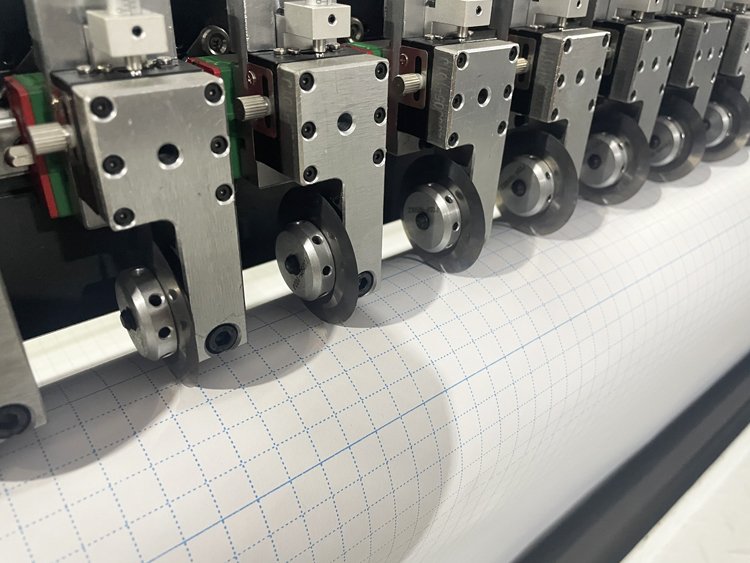
We design and manufacture rotary die-cutting systems for labels, adhesive films, kraft paper, and flexible packaging—with integrated tension control, micrometer cutting adjustment, and optional inline printing.
📩 Email: jotamachinery@gmail.com
🌐 Website: www.jotamachinery.com
Last Updated on 27/10/2025 by Jota Machinery