

🧾 Introduction: More Than Just Paper
A cash register roll is paper used by a receipt printer to print transaction details for customers or business records. Many modern POS and receipt printers use thermal paper, while some systems use bond or multi-ply paper.
The roll’s purpose depends on the printer and how the business uses the receipt. This guide covers common uses, paper types, roll sizes, and how converters turn thermal paper jumbo rolls into finished rolls.
🔍 What Is a Cash Register Roll?
A cash register roll is a continuous roll of paper used in point-of-sale (POS) systems, thermal printers, or credit card terminals to generate printed receipts. When customers complete a purchase, the register prints transaction details directly onto the paper.

Modern rolls are often made of thermal paper, a special heat-sensitive material that reacts to the printer’s heated printhead. This eliminates the need for ink, ribbons, or toner — a major advantage for businesses needing fast, low-maintenance printing.
🧠 What’s the Real Purpose of a Thermal Cash Register Roll?
1. Printing Instant Receipts
This is the most visible purpose. At checkout, the roll prints:
- Items purchased
- Quantity and price
- Discounts
- Tax
- Total paid
- Payment method (e.g. card, cash)
- Store information and logo
- Time and date of transaction
Receipts serve customers as proof of purchase, and businesses as a record of sale.
2. Creating an Audit Trail
Businesses may keep printed receipts or POS records as part of their transaction documentation. Recordkeeping requirements vary by jurisdiction and business type.These thermal prints:
- Support tax calculations (sales tax, VAT)
- Help during inventory checks and end-of-day balancing
- Provide evidence in disputes or returns
- Satisfy accounting and legal documentation standards
Without a consistent paper trail, retailers risk poor recordkeeping — a serious issue during audits or financial reviews.
3. Speeding Up POS Operations
which reduces customer wait time and keeps queues moving. No ink means no smudges or downtime. Staff can focus on service, not replacing toner or clearing jammed ribbon cartridges.
4. Branding and Customer Communication
Most POS systems allow customization of the receipt. Businesses often include:
- Store logo
- Loyalty program details
- Promotional codes or coupons
- Return and exchange policies
- Website or social media links
The humble thermal roll becomes a marketing tool, reinforcing brand presence and encouraging return visits.
5. Supporting Compliance and Taxation
Receipt and POS record requirements vary by jurisdiction. Businesses should follow the recordkeeping rules that apply to their location and accounting system.
🧱 What’s Inside a Thermal Cash Register Roll?
A thermal roll is coated with a heat-reactive layer, typically a combination of leuco dye and developer. When exposed to heat (from the printer), this coating turns black — forming legible text or graphics. The structure includes:
- Base Paper Layer: Usually around 48–80gsm
- Thermal Coating: Sensitive to precise heat patterns
- Top Coating (optional): Protects the print from fading, grease, or moisture
High-quality rolls produce crisp text, resist fading, and won’t jam printers — making the slitting process during manufacturing just as important as the paper itself.
🏭 How Are Thermal Rolls Manufactured?
Thermal cash register rolls start as jumbo rolls of thermal paper — often over a meter wide. These are converted into usable sizes using a slitting rewinding machine.
Key Steps:
- Unwinding the jumbo roll
- Slitting into narrower widths (e.g., 57mm, 80mm)
- Rewinding into smaller rolls with precise tension
- Trimming the edges for clean cuts
- Packaging — often shrink-wrapped in sets of 10 or 50
Depending on the machine configuration, thermal paper converting lines can include slitting and rewinding, core or coreless winding, and inline printing. Finished-roll specifications and machine options should be confirmed for the intended application.
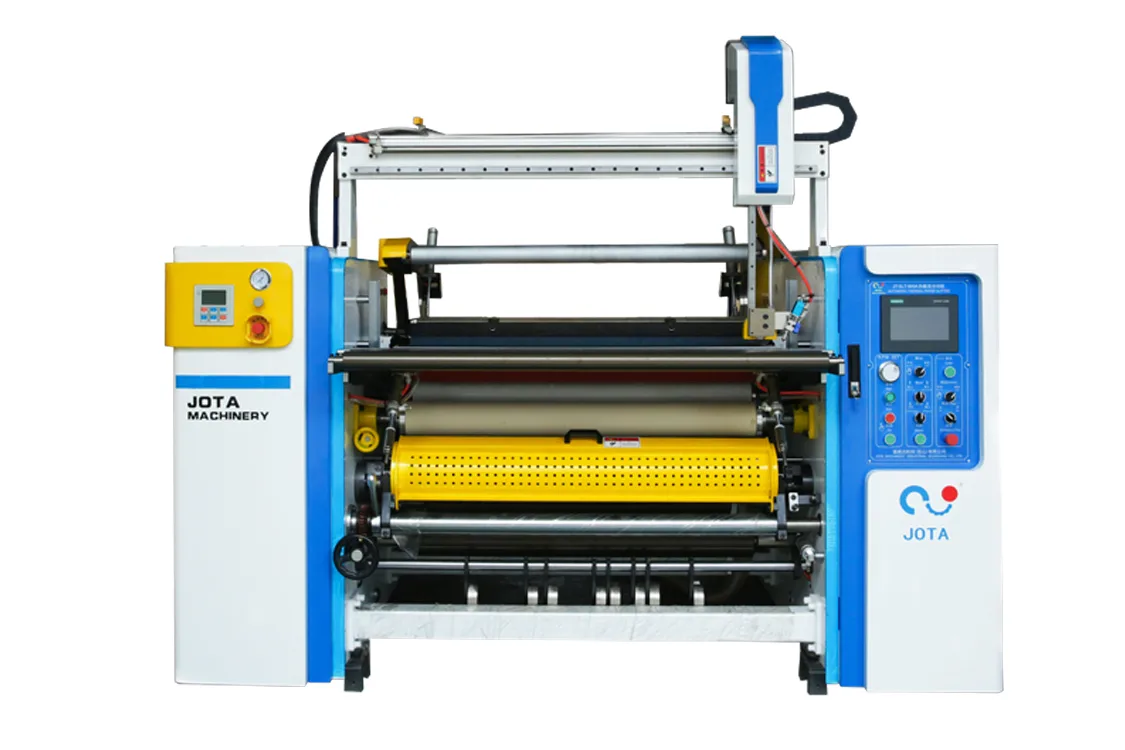
For standard POS and receipt-roll production, thermal paper jumbo rolls are slit and rewound into the required finished widths, diameters and core specifications.
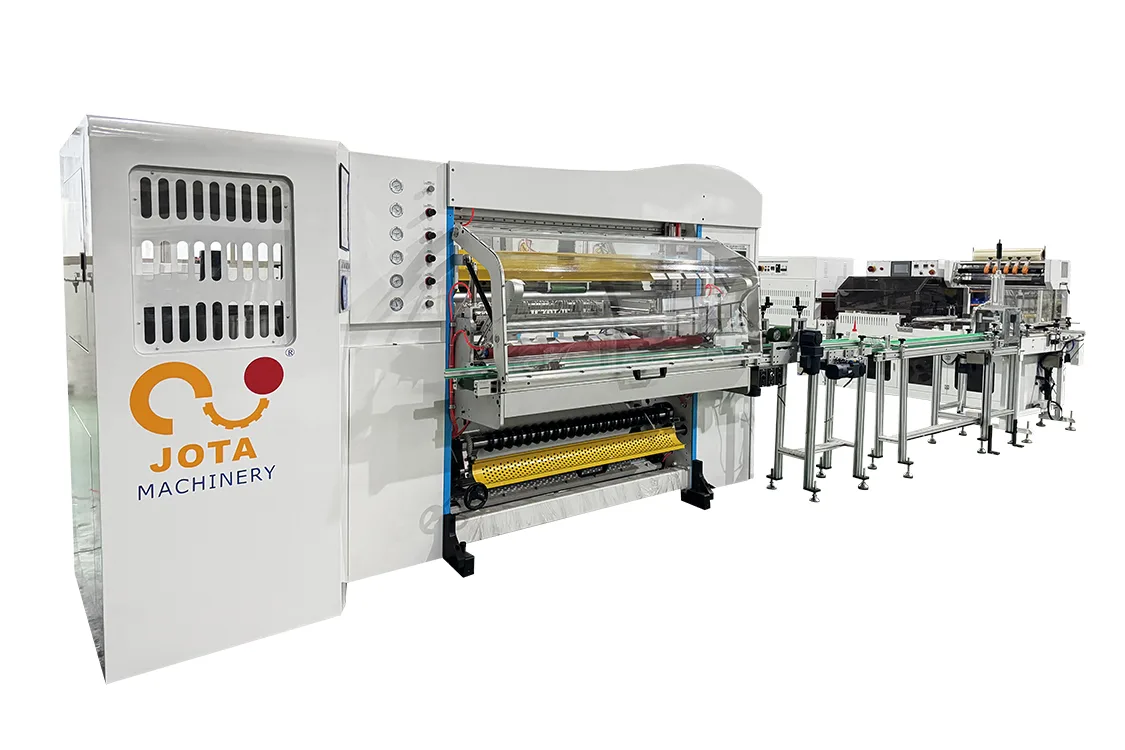
For higher production output, a fully automatic configuration can reduce manual handling and integrate additional roll finishing, packaging or palletizing processes.
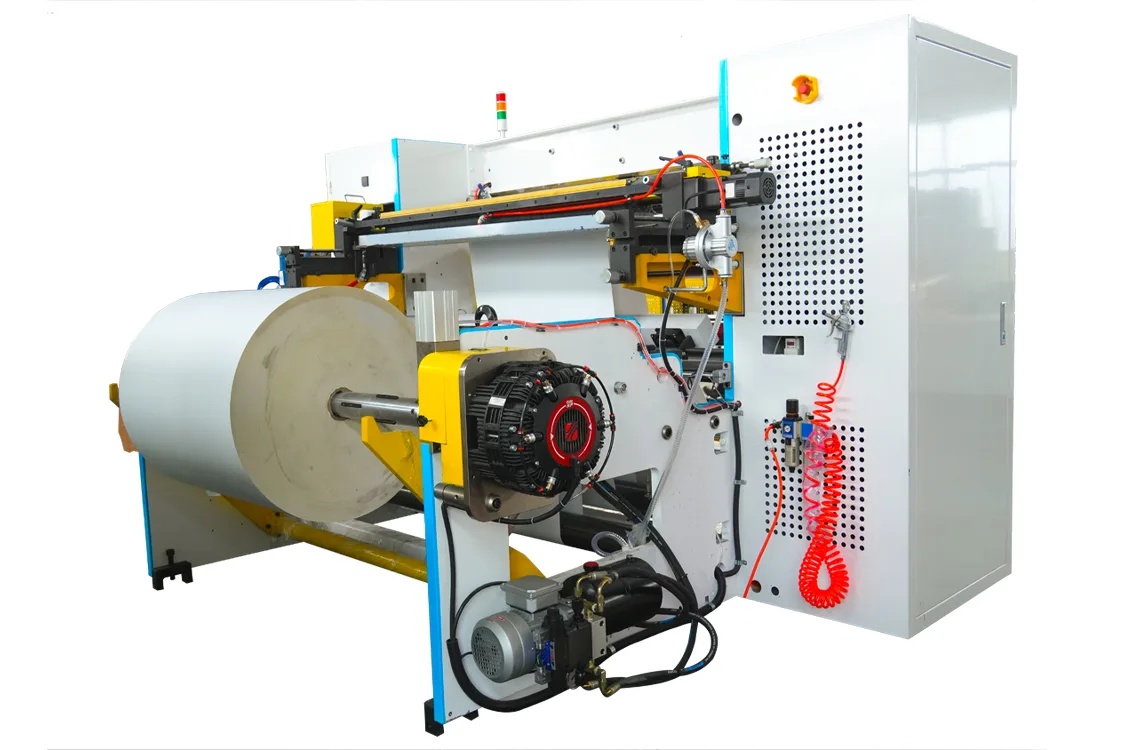
If your rolls require logos or promotional information, inline flexographic printing can be combined with slitting and rewinding in one production process.
The machine behind the roll plays a critical role in the final print quality and user experience.
📐 Common Sizes and Where They’re Used
| Size (mm) | Description | Typical Use |
|---|---|---|
| 57×40 | Small rolls for card readers | Mobile POS, taxi meters, handheld units |
| 57×50 | Slightly longer | Convenience stores, cafés |
| 80×80 | Large, long-lasting rolls | Supermarkets, chain stores, restaurants |
The larger the diameter, the longer the roll lasts — ideal for high-traffic counters.
Some thermal paper grades are marketed as BPA-free or phenol-free. Check the supplier’s product documentation for the exact grade and its chemical declaration.
🧾 Case Study: A Day in the Life of a Cash Register Roll
Imagine a busy coffee shop that handles 500 customers per day. A single 80×80mm thermal roll might last for:
- 200–250 receipts
- 1 full work shift
Staff quickly load a new roll without interrupting service. The receipts include not just the drinks ordered, but the barista’s name, a coupon for the next visit, and a QR code linking to the store’s loyalty program.
That roll isn’t just recording sales — it’s enabling better service, marketing, and financial tracking.
🚩 Warning Signs of Low-Quality Rolls
- Frequent printer jams
- Faded text within hours
- Weak or uneven black contrast
- Dust buildup in the printer
- Customer complaints over unreadable receipts
These issues often trace back to poor slitting, low-grade coating, or incorrect sizing — all avoidable by choosing reliable rolls and a good supplier.
🧠 Final Thoughts: A Roll with More Responsibility Than You Think
The purpose of a thermal cash register roll goes far beyond paper. It’s an essential part of retail operations — bridging the sale, the customer, and the backend accounting. With each receipt, a business documents its activity, communicates with its audience, and keeps its systems accountable.
So next time you tear off a receipt, remember: it came from a precision-cut roll, engineered to make business faster, clearer, and more connected.
Last Updated on 12/10/2026 by Jota Machinery