






JT-SLT-320X Advanced Composites Material Slitting Machine for 6mm
- Applicabe for thermoplastic & thermoset UD Prepreg Tape
- Differential Friction Shaft Cassette/Bobbin Rewinding
- Min slitting width:3.175mm/6.35mm/12.7mm
- Front-end technology for AFP/ATL machine
- Two sets of waste edge rewinding wheels
- Specification
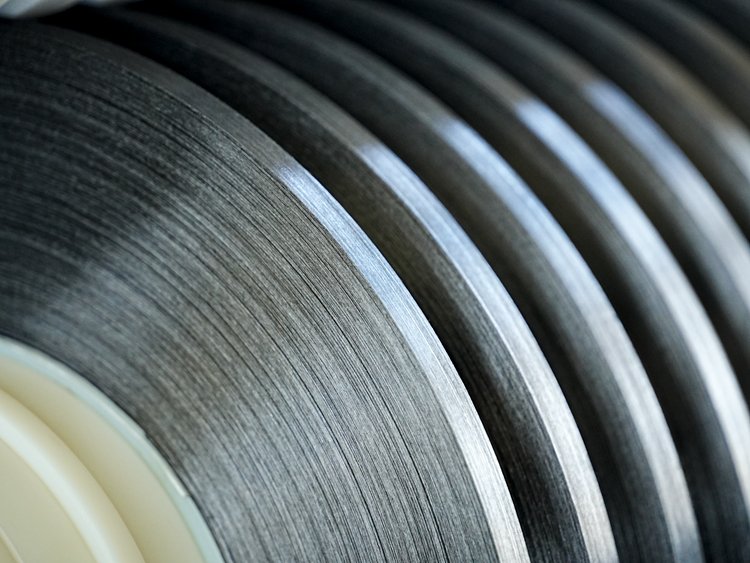
- Prepreg Cassette Rewinding
- 0.125mm Towpreg Slitting Precision
| Parameters | |
| Item |
JT-SLT-320X dvanced Composites Material Slitting Machine for 6mm |
| Max. Unwinding Width |
320mm |
| Max Unwinding Diameter |
650mm |
| Max Rewinding Diameter |
500mm |
| Min Slitting Width |
5-320mm |
| Rewinding Shaft |
2 PCS Water Cooling Differential Friction Shaft |
| Unwinding Shaft |
3″ (76mm) air expanding shaft |
| Speed |
50m/min |
| Servo Motor |
7 Sets |
| Tension Control |
PLC Control The Tension |
| Rated Power |
11Kw |
| Dimension |
3300MM*1700MM*2000MM |
| Voltage |
380V/50Hz |
| Weight |
3000 KG |
|
SPECIFICATIONS |
|
| JT-SLT-320X Ulatra Narrow Slitting Machine for 6mm is especially design for slitting continuous fiber reinforced thermoplastic (CFRT)UD tapes and thermoset prepreg. It is the front technology for AFP/ATL. | |
|
Unwinding Section |
Two sets unwinding . Upper is for jumbo roll unwinding and lower is the stripped waste collection shaft |
| Both shaft is Φ 3” (76mm), 6″ is optional | |
| 10kg/m2 electromagnetic brake from Taiwan. | |
| Photoelectric sensor web guiding. | |
|
EPC Unit |
High frequency ultrasonic EPC |
| The EPC motor is a high-speed servo motor, which is efficient and sensitive. | |
|
Slitting Section |
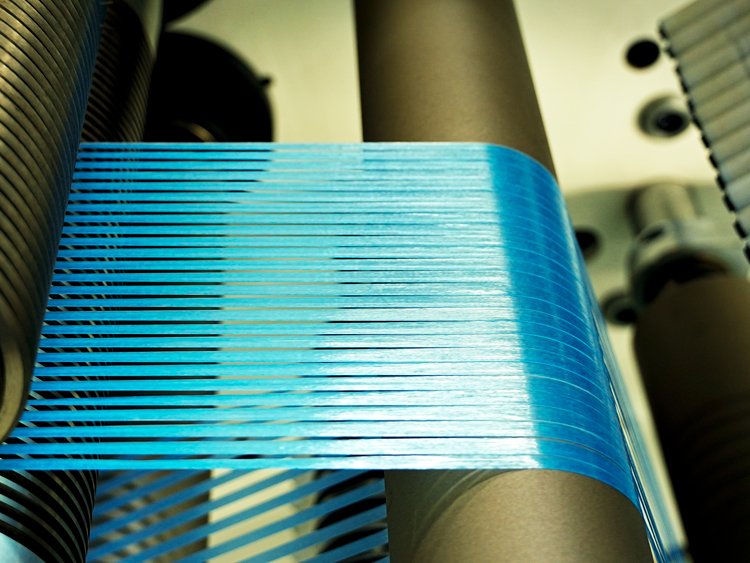
The machine equips disc blade for slitting and min slit width can reach to 5mm |
| The shaft equipped safety cover | |
|
Tranmission unit |
The transfer roller adopts a special wear-resistant and anti-adhesive Teflon roller, and the end of each roller is marked with a sign of the direction of rotation |
| The transmission roller has undergone dynamic and static balance processing, quantity: 5 | |
| Two set waste edge wheels | |
|
Rewinding Unit |
3-inch water cooling differential shaft |
| One for each of the upper and lower | |
| Two set pressure arm for rewinding | |
| Waste Removal | Two sets wheel for rewinding waste edge |
|
Saftey Cover |
Aiming at the conductivity of carbon fiber, the machine is equipped with electrostatic isolation protection |
| The whole machine adopts a closed design, covering an area of about 6*3.5 *2.2m | |
| The electrical appliances are fully enclosed design, and the sealing strip realizes the finishing and sealing of the control cabinet | |
| The ventilation fan is equipped with a sponge filter | |
| The whole machine is connected ground wire, and the dangerous parts have safety signs | |

Related Machines


In-house UD Prepreg Slitting Machine for 6mm
As we all know, slitting machines are primarily used for converting jumbo rolls into narrower rolls, a process commonly referred to as roll-to-roll processing. However, certain specialized materials, such as thermoset carbon fiber prepreg and anisotropic conductive film (ACF), require extremely precise cutting widths to meet specific application needs.
For example, prepreg materials often require a minimum width of 3.175 mm, while ACF films demand ultra-narrow widths as small as 1.2 mm even 0.6mm.

In today’s article, Jota Machinery will introduce our specially developed in-house thermplastic/thermoset UD prepreg slitting machine for 6 mm widths, as well as an advanced slitter rewinder currently under development, capable of cutting materials to an impressive 1 mm width.
You might be wondering how ultra-narrow slitting widths relate to Jota Machinery’s business.
The 3 mm and 6 mm slitting widths are achieved using our JT-SLT-1300F prepreg slitting machine, JT-SLT-320X, and JT-SLT-250S traverse spooling machines. When the domestic market recognized that our slitting machines could precisely process continuous fiber-reinforced thermoplastic UD tapes, this innovation also caught the attention of the China Aerospace Science and Technology Corporation (CASC).
CASC required prepreg spoolers capable of producing widths of 3.175 mm, 6.35 mm, and 12.7 mm to be integrated with automated fiber placement machines for manufacturing composite aircraft components.
To produce AFP towpreg spoolers, we utilize a two-step production method. The prepreg machine used by CASC has a width of 1300 mm, with an effective working width of 1270 mm—like our hot-melt thermoset UD prepreg machine.
The process begins with the JT-SLT-1300F slitter rewinder, which initially slits the prepreg jumbo roll into 30 mm tapes. These prepreg slit tapes are then processed on the JT-SLT-250S spooling machine to create traverse spools.
While it may seem that this function could be performed by standard flexible packaging slitting machines, our success lies in the precision of our slitting process. Our narrow slitting width achieves an exceptional accuracy of ±0.125 mm, ensuring unparalleled quality and reliability.
In the aerospace industry, there is another machine known as the Automated Tape Laying (ATL) machine. So, what is the difference between AFP and ATL??
The key difference lies in their application and the type of material they handle. Automated Fiber Placement machines utilize spoolers to place fibers, while Automated Tape Laying machines process thermoplastic or thermoset narrow prepreg tapes heating by the laser.
At Jota Machinery, we offer a specialized 320 mm unwinding width slitter rewinder designed to convert raw materials directly into widths as narrow as 6 mm or even 3 mm.
The JT-SLT-320X UD prepreg tape slitting machine machine is specifically engineered for CFRT (Continuous Fiber-Reinforced Thermoplastic) CF/PEEK thermoplastic prepregs or label-sized prepregs, ensuring precision and reliability for advanced composite manufacturing.
The core component of roll-to-roll processing is the slitting machine round blade, which determines the finished product’s width and accuracy. Achieving a precision of ±0.125 mm required extensive research and development, driven by our deep understanding of the high cost of prepreg raw materials.
We approached this challenge with patience and determination, fully committed to overcoming this critical technical hurdle in the advanced composites materials industry. While we initially explored imported round slitting blade units, their costs proved prohibitively high. This led us to successfully develop a cost-effective, high-quality, 6 mm round slitting blade sets under a Chinese brand, ensuring both affordability and precision.
To date, the SLT-320X slitting machine has been primarily developed for converting advanced prepreg tapes. This versatile slitter rewinder is capable of handling both bobbin rewinding and cassette rewinding applications, providing flexibility to meet diverse production needs.
In 2024, we implemented a significant upgrade to our ultra-narrow tape slitting machine. We are now developing a new slitting machine designed specifically for converting Anisotropic Conductive Film (ACF) tapes to a 1mm slitting width, enabling us to enter the 3C product industry.
Extra information about Anisotropic Conductive Film (ACF):
Anisotropic Conductive Film (ACF) is a specialized material used in electronics assembly, particularly in the bonding of flexible circuit boards and other delicate components. It is a type of adhesive film that exhibits anisotropic (direction-dependent) conductivity, meaning it conducts electricity in one direction while being insulated in others. This property makes it ideal for applications where precise electrical connections are required between components, without causing short circuits or crosstalk between other connections.
Structure and Composition:
ACF typically consists of a polymer resin that contains conductive particles (often microscopic metal spheres) that are evenly distributed throughout the adhesive film. When pressure and heat are applied during the bonding process, the conductive particles make contact at the desired bonding points, establishing a conductive path.
Applications of Anisotropic Conductive Film:
- Display Assembly:
- ACF is widely used in the assembly of LCD, OLED, and other flat-panel displays, especially in the connection of the display panel to the driver IC (integrated circuit) boards. It enables the fine-pitch interconnection needed in modern displays, such as those found in smartphones, tablets, and televisions.
- Flexible Electronics:
- ACF is used in the bonding of flexible printed circuits (FPC) and other flexible electronics, allowing connections that can bend without breaking. This is crucial for applications in wearable electronics, flexible displays, and sensors.
- Camera Modules and Sensors:
- In the assembly of camera modules and image sensors, ACF is often used to connect the sensor to the circuit board, providing reliable electrical pathways while maintaining a compact, flexible design.
- Smartphones and Consumer Electronics:
- ACF is critical in the manufacturing of smartphones, tablets, and other consumer electronics where precise and reliable connections between different components are essential. Its use ensures that small-pitch connections can be made without the risk of short circuits or interference between components.
- Automotive Electronics:
- In the automotive industry, ACF is used for connecting various sensors, displays, and electronic systems within vehicles, especially in advanced driver-assistance systems (ADAS) and infotainment systems.
- LED Lighting:
- ACF is also used in the assembly of LED modules where precise electrical connections need to be made in tight spaces, such as in high-definition LED screens or lighting applications.
Advantages of ACF:
- High Precision: ACF allows for fine-pitch bonding, making it ideal for modern electronics that require very small, highly precise connections.
- Reliability: The conductive particles ensure a stable electrical connection even under stress or movement, making ACF ideal for flexible or bendable electronics.
- Low Heat Requirements: ACF bonding typically requires lower temperatures and less time than traditional soldering, reducing thermal stress on sensitive components.
- No Need for Soldering: This eliminates the risk of soldering-related issues such as cold joints, bridging, and heat damage to sensitive components.
Overall, Anisotropic Conductive Film is a key material in the production of advanced electronic devices, providing a highly effective solution for connecting delicate, high-performance components with precision and reliability.
The slitter rewinder currently under development is a completely new machine, designed specifically for converting Anisotropic Conductive Film (ACF). It will be capable of slitting widths ranging from 0.5mm to 1.5mm. This project is still in the development stage, and we will provide further updates once it is ready for release.
If you are looking for a slitting machine capable of converting to a 6mm width, please feel free to contact us. We are committed to providing you with an optimal commercial solution tailored to your needs.