
What is prepreg and why is it used?
Prepreg (also known as pre-preg) is a specialized composite material composed of high-performance fibers such as carbon fiber, aramid, and fiberglass, combined with a resin matrix. This advanced material is manufactured through a precise process where the fibers are pre-impregnated with resin, ensuring uniform distribution and optimal performance characteristics.
Prepreg materials are gaining widespread recognition for their superior strength-to-weight ratio, which enables them to replace traditional materials in various applications. The lightweight nature and high strength of prepregs make them ideal for industries where performance, durability, and weight reduction are critical.
The application range of prepregs spans from high-grade aerospace components to high-performance sporting goods, offering versatility and reliability in a variety of demanding environments.
About Jota Machinery
Jota Machinery is a company with a 14-year history, rooted in Zhejiang Province, China. Since our establishment, we have specialized in the field of fiber-reinforced composites, beginning our journey in 2010. That year, we developed the JT-SLT-900D, a slitter rewinder designed for converting continuous fiberglass reinforced UD (unidirectional) tape for the automotive manufacturing industry.
Following two years of development, our slitter rewinder gained significant attention from the aerospace sector, where it was used for slitting thermoplastic UD tape into precise widths of 3.175mm, 6.35mm, and 12.7mm. This success led to the introduction of the JT-SLT-320X model.
Between 2014 and 2020, we expanded our product range to meet the growing demand for thermoset prepreg slitting equipment. After 1.5 years of research, we successfully launched our prepreg slitting and traverse spooling machine, primarily used in the manufacturing of AFP (Automated Fiber Placement) prepreg tapes.
In 2021 and 2022, we began developing carbon fiber and fiberglass hot-melt UD prepreg machines, using resin extrusion impregnation technology to produce continuous fiber-reinforced thermoplastic unidirectional tapes.
In addition to our product development, our long-standing partnerships have been instrumental to our success. Notably, CIMC Group placed an order with us for a 3000mm width teflon double-belt press machine.
To date, we have also developed lines for thermoset carbon fiber prepreg machines and towpreg production.
At Jota Machinery, our commitment to advancing the composites industry remains unwavering, and we continue to innovate and evolve alongside our partners and customers.

Hot Melt UD Prepreg Machine

The thermoset prepreg production line includes an epoxy resin coating machine and a one-set compounding machine. The line is designed for the production of both unidirectional (UD) prepreg and fabric-based prepreg materials.

The thermoplastic prepreg production line utilizes the widely adopted hot-melt extrusion impregnation method to produce high-performance Continuous Fiber Reinforced Thermoplastic (CFRT) unidirectional (UD) tapes.
Prepreg Slitting

The prepreg slitting machine is a slitter rewinder designed specifically for AFP (Automated Fiber Placement) systems. It is capable of producing slit towpreg in widths of 3.175mm, 6.35mm, and 12.7mm, ready for subsequent processing.
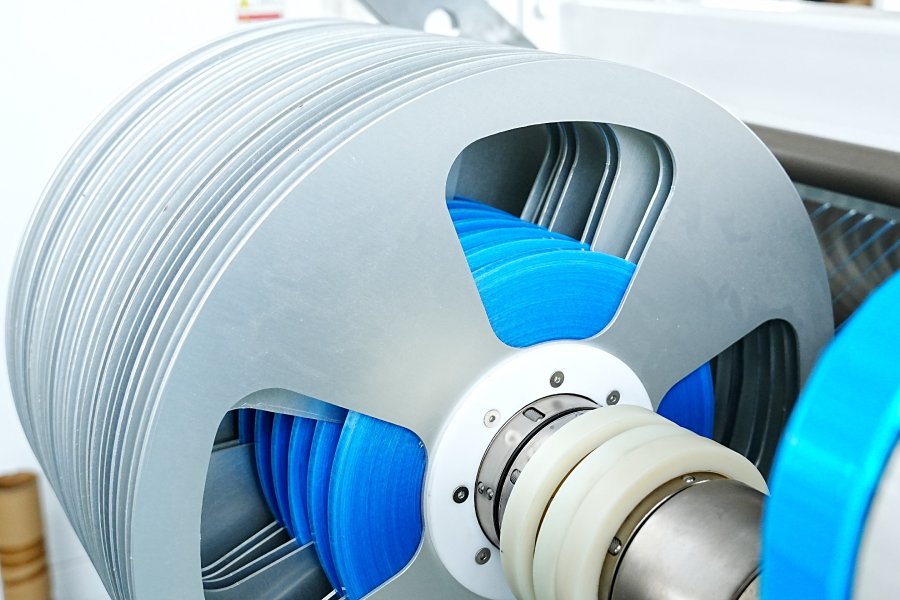
The 320mm wide prepreg slitter-rewinder is designed for slitting both thermoplastic and thermoset prepregs into narrower widths. It features cassette rewinding, making it suitable for use in Automated Tape Laying (ATL) processes as well as Automated Fiber Placement (AFP).

The fiberglass UD tape slitting machine is designed to produce unidirectional (UD) tape bobbins with a maximum diameter of 1200mm. These bobbins are specifically used in reinforced thermoplastic pipe winding machines.
Double Belt Pressing Machine

The teflon double-belt press machine is a compounding system designed for the production of CFRT laminates and sandwich composite panels, all within a single piece of equipment.

The steel belt press is an upgraded version of the Teflon double-belt press. It features continuous heating and cooling processes and is primarily used for the production of laminates.
Our clients
Frequently Asked Questions
Prepreg manufacturing can be categorized into two types: thermoplastic and thermoset.
Both thermoplastic and thermoset materials can be processed using hot-melt pressing; however, thermoplastic prepregs require the use of either a twin-screw or single-screw extruder to complete the impregnation process.
Prepreg materials are used in a wide range of industries where high strength, durability, and lightweight properties are crucial. Some common applications include:
- Aerospace: Prepregs are used in the manufacture of aircraft components, such as fuselages, wings, and tail sections. Their high strength-to-weight ratio makes them ideal for reducing weight while maintaining structural integrity.
- Automotive: In the automotive industry, prepregs are utilized in the production of lightweight parts for high-performance vehicles, electric vehicles (EVs), and racing cars. They are used in body panels, chassis, and structural components to enhance performance and fuel efficiency.
- Oil and Gas: Prepregs are employed in the construction of pipelines, offshore platforms, and subsea equipment, where corrosion resistance, strength, and weight reduction are essential in harsh environments.
- Sporting Goods: Prepreg composites are used in the production of sporting equipment like bicycles, golf clubs, tennis rackets, and skis. Their lightweight and high-performance characteristics make them ideal for these applications.
- Marine: The marine industry utilizes prepregs for boat hulls, masts, and other structural components, providing strength and durability while reducing weight for improved performance.
- Renewable Energy: In wind turbine blades and other renewable energy components, prepregs provide the necessary strength and durability to withstand harsh environmental conditions.
- Defense: Prepreg composites are used in military applications such as armored vehicles, radar equipment, and protective gear, where strength and lightweight properties are critical.
- Electronics: In electronics, prepregs are used in the production of circuit boards, enclosures, and housings, ensuring electrical conductivity, strength, and protection.
The versatility and superior properties of prepregs make them ideal for these industries and many others where performance, weight reduction, and durability are key factors.
UD in composites stands for Unidirectional. It refers to the orientation of the reinforcing fibers in a composite material, where all the fibers are aligned in a single direction. This configuration is common in composite materials, especially in prepregs, and is used to enhance specific mechanical properties in that particular direction.
Key Characteristics of UD Composites:
Lightweight: Like other composite materials, UD prepregs are lightweight while offering high performance, which is a key advantage in industries where weight reduction is critical, such as aerospace and automotive.
Fiber Orientation: In UD composites, the fibers are oriented in one direction, providing maximum strength and stiffness along that axis. This makes them ideal for applications where high strength is required along a specific direction, such as in load-bearing structures.
Strength and Stiffness: UD composites exhibit excellent tensile strength and stiffness in the fiber direction. This is why they are often used in high-performance applications like aerospace, automotive, and sporting goods where directional strength is essential.
Customization: UD composites can be combined with other layers of composites (such as woven fabrics or multidirectional layers) to optimize the material’s performance in different directions. For example, multiple UD layers can be stacked in different orientations to create a laminate with strength in multiple directions.
The term “pre-impregnated” (often shortened to “prepreg”) refers to a composite material where reinforcing fibers, such as glass, carbon , or aramid, are pre-coated with a thermoplastic or thermoset resin system. This means the fibers are already impregnated with the resin before being used in further manufacturing processes. Prepreg materials are widely used in high-performance applications, such as aerospace, automotive, and sporting goods, due to their consistent quality, ease of handling, and optimized performance.
In the context of thermoplastic prepreg, the “pre-impregnated” state is achieved through a hot-melt extrusion method. This process involves:
- Fiber-Reinforcement and Resin Combination:
- Reinforcing fibers are continuously fed into the extrusion system.
- Simultaneously, the thermoplastic resin is melted and evenly distributed over or infused into the fibers.
- Hot-Melt Extrusion Process:
- A heated die is used to uniformly spread the molten resin over the fibers or ensure complete penetration into the fiber structure.
- The die plays a critical role in achieving full impregnation, ensuring that no voids or air pockets remain and the fibers are fully wetted by the resin.
The resulting prepreg is then cooled, wound into rolls, or cut into sheets, ready for further processing like molding, lamination, or pressing.
Prepreg composites offer several significant advantages when compared to traditional materials like steel, especially in industries where weight reduction, strength, and durability are critical. Below are the key advantages of prepregs over steel:
1. Weight Reduction
- Prepreg: Prepreg materials have a much lower density than steel, which results in significant weight savings. This is particularly beneficial in industries like aerospace and automotive, where reducing weight is crucial for fuel efficiency and performance.
- Steel: Steel is much heavier, which can lead to higher operational costs, such as increased fuel consumption in vehicles and aircraft.
2. High Strength-to-Weight Ratio
- Prepreg: Despite being lighter, prepreg composites can achieve comparable or even superior strength to steel. This means that components made from prepreg can carry heavy loads without compromising structural integrity.
- Steel: Steel is strong but does not offer the same weight-to-strength advantage as prepreg. It may require more material to achieve the same strength in applications requiring lightness.
3. Corrosion Resistance
- Prepreg: Composites, especially those made with carbon fiber, are highly resistant to corrosion. This is a significant advantage in harsh environments such as marine, oil and gas, and aerospace industries.
- Steel: Steel is prone to corrosion, especially when exposed to moisture, chemicals, or saltwater, requiring additional maintenance, coatings, or corrosion inhibitors to protect against degradation.
4. Design Flexibility
- Prepreg: Prepreg composites can be molded into complex shapes with high precision. This allows for the design of highly intricate components without the need for additional assembly or welding.
- Steel: Steel is more rigid and requires processes like welding, machining, or casting for complex shapes, which can increase manufacturing time and cost.
5. Fatigue Resistance
- Prepreg: Composites generally offer better resistance to fatigue and cracking under repeated stress. This makes them ideal for applications with constant dynamic loads, such as in the aerospace and automotive industries.
- Steel: While steel is strong, it can experience fatigue over time, leading to cracks or failure under repeated stress, especially when subjected to extreme environments.
6. Thermal and Electrical Insulation
- Prepreg: Some prepreg composites, especially those made with aramid or fiberglass, offer excellent thermal and electrical insulation properties. They are often used in applications where heat or electrical conductivity needs to be minimized.
- Steel: Steel is a good conductor of both heat and electricity, which may be undesirable in certain applications requiring insulation.
7. Manufacturing Efficiency
- Prepreg: Once the composite materials are pre-impregnated, they can be easily processed into final products using techniques like autoclave curing or resin transfer molding. The process is often faster and can result in fewer defects.
- Steel: Steel fabrication often requires more intensive machining, welding, and finishing steps, which can be more time-consuming and costly.
8. Customizable Properties
Steel: While steel properties can be altered through alloying and heat treatment, it does not offer the same level of customization for specific properties like prepregs.
Prepreg: The properties of prepregs can be tailored by altering the type of fibers (e.g., carbon, aramid, fiberglass) and resin systems used. This customization allows prepregs to be optimized for specific performance requirements, such as increased impact resistance or flexibility.
A sandwich panel is a type of composite material made by bonding two outer layers (called skins) to a lightweight core material. The skins are typically made from high-strength materials like carbon fiber, fiberglass, or metal, while the core material is a lightweight substance, such as foam, honeycomb, or balsa wood. This construction creates a panel that has high strength, rigidity, and resistance to bending, yet remains lightweight due to the low-density core material.
Structure of a Sandwich Panel:
Core Material: The core serves as a lightweight filler between the skins, providing thickness, rigidity, and insulation properties. Common core materials include foam (e.g., polyurethane, PVC), honeycomb structures (e.g., aluminum or aramid), and balsa wood.
Outer Layers (Skins): These are the strong, stiff layers of the panel. They provide the majority of the strength and carry the loads that the panel experiences. Materials like fiberglass, carbon fiber, or aluminum are commonly used for the skins.
When composites are used in sandwich panels, the outer layers (skins) are typically made of high-performance composite materials, such as carbon fiber or fiberglass. These composite skins provide superior mechanical properties, including high tensile strength, stiffness, and resistance to corrosion. The core materials can be made of lightweight, high-strength materials like foam or honeycomb, further enhancing the panel’s performance.
In summary, sandwich panels are a versatile and efficient composite structure used in a variety of industries where strength, lightness, and performance are paramount. The combination of a strong outer skin and a lightweight core allows sandwich panels to offer significant benefits over traditional solid materials.
Contact Our Team!
Whether you have plans for machinery or any questions regarding impregnation, slitting, or pressing processes, we welcome your inquiries.

Company address
No 68, Shaojing Road, Economic Development Zone, Kunshan City, Suzhou, Jiangsu Province, China

Email Address
jotamachinery@gmail.com

Contact Number
+86-13868814910