

Last Update Time:28/09/2026
Starting a thermal paper roll business involves more than purchasing a slitter rewinder. Before investing in equipment, you need to know which finished rolls your customers will buy, where you will source jumbo rolls, how much each finished roll costs to produce, and how much production capacity you actually need.
The machine comes after these decisions.
This guide covers 10 practical questions to answer before setting up or expanding a thermal paper roll converting business.
Q1: Who Will Buy Your Thermal Paper Rolls?
Start with the customer, not the machine.
Before setting up production, identify the businesses or distributors you expect to supply and ask for the thermal paper roll specifications they purchase repeatedly.
Record the finished-roll width, outer diameter or length, core size, paper specification, packaging requirement and approximate order volume.

A converter supplying a small range of standard POS rolls has different production requirements from one serving customers with multiple sizes, printed rolls or customized packaging.
Your first product list should therefore be based on realistic customer requirements rather than every roll size the machine is capable of producing.
What are some of the advantages of using thermal paper?
Compared to ink printing, thermal papers are fast to print, easier, convenient, and cheaper. You get to save lots of printing costs when using thermal paper. as a business
For starters, thermal papers don’t need cartridges or ink, which enables companies to do away with the hustle and bustle of replacing the cartridges. This makes it cheaper for businesses to save the cost of buying new ink and cartridges.
On the other hand, with thermal paper, the only expense for a business is buying a new roll. And because you won’t be spending time fiddling with cartridges, thermal papers save time, thus increasing productivity in a company.
Also, thermal papers are fast and very efficient. It’s doesn’t make any noise either, which creates a conducive work environment. The silence keeps both customers and employees happy.
As if that’s not enough, thermal papers produce better, high-quality receipts. Contrary to ink printing, thermal papers don’t feature smudges and illegibility.
Thermal papers are also long-lasting due to the fact they’re weather resistant. Receipts made of thermal paper can survive stormy, rainy weather without losing legibility.
Finally, thermal paper rolls are customizable and are available in different sizes, widths, and designs depending on the business’s POS requirements. Because of this, companies often seek suppliers who can satisfy their customization needs.
Once again, that’s where we come in. At Jota Machinery, we have the best thermal paper roll slitting machine. We’ve designed our slitting machines to meet all standards and specifications, based on what you’ll be using the thermal paper rolls and receipts.
Q2: Which Finished Roll Specifications Will You Produce?
Define the finished product before selecting production equipment. The main specifications include:
- Finished-roll width
- Outer diameter or required roll length
- Core ID and core material
- Paper GSM or thickness
- Blank or printed roll
- Packaging format
Width alone is not enough. Two rolls with the same width can require different amounts of paper and different production settings if their diameter, length, core or paper thickness differs.
If you are supplying rolls for a specific printer or customer, confirm the required dimensions before production.
How’s thermal paper width measured? And how important is the width size?
When it comes to the significance of the thermal paper’s width size, there’s no doubt that you won’t be able to work without this spec. It’s the most crucial specification of thermal paper. If the width is wrong, the piece won’t fit into the printer.
The thermal paper’s width is measured across the roll’s face from side to side. Google the printer’s receipt model to know the required width for a POS business. You’ll get the exact product thermal paper you need (printer ribbons, paper rolls, cleaning supplies, etc.)
However, if you can’t find the exact thermal paper roll compatible with your printer, ask your supplier for assistance.
Apart from thermal paper width, it’s also imperative to accustom yourself to other specs like roll length, diameter, and core size as a thermal paper business.
a) Roll Length
This measures how much thermal paper was wound onto the roll. It may not be as crucial as the width, but it’s equally important because it tells you how many rolls you’ve purchased and how much it’s going to last. For 80mm by 80mm paper, the roll length may vary from 50m to 90m. It depends on how much the customer needs.
b) Roll Diameter
We’ll talk more about this later. But basically, a thermal paper roll diameter is the measure of roll from one end to the other, including the care center. The best way to determine the roll diameter is by placing the paper roll flat on its back and then taking the measurement.
c) Core Size
It’s the size of the roll’s core center, which holds the thermal paper. It’s either core I.D. (inside diameter) or core O.D. (outside diameter). The core I.D. is the more crucial measurement. That’s because it has to match with the printer’s spindle you’ll be using. If it doesn’t fit, then it’ll be a moot functionality. Most core I.D. sizes are 12.7mm (or 7/16″).
Q3: Which Thermal Paper Jumbo Roll Should You Buy?
The jumbo roll is the primary material for a thermal paper converting business.
Before ordering, confirm the jumbo-roll width and diameter, paper GSM or thickness, thermal paper grade and consistency required for your finished products.
Jumbo width should also be considered together with finished-roll width. This determines the slit layout and affects how efficiently the material can be converted.
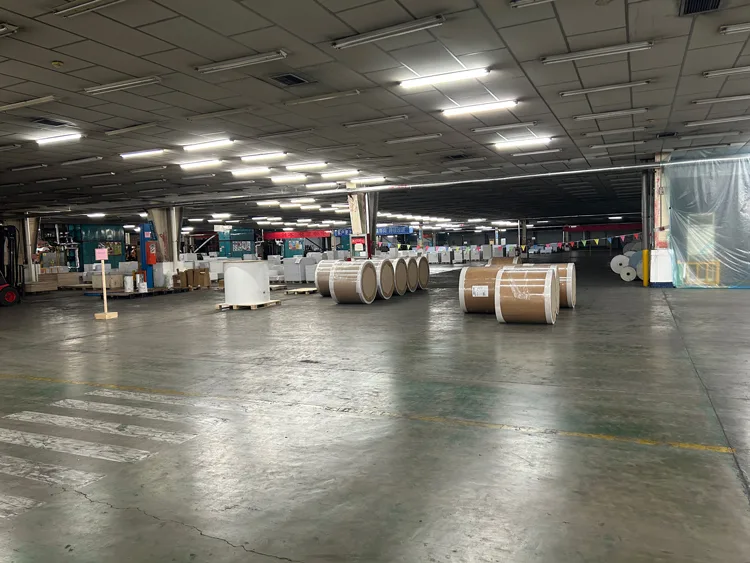
Do not select a jumbo roll only because its purchase price is lower. Material consistency, coating quality and suitability for your target finished rolls also affect production.
Q4: How Many Finished Rolls Can You Get From a Jumbo Roll?
Material yield is one of the basic calculations for a thermal paper roll business.
The number of finished rolls obtained from a jumbo roll depends on the usable jumbo width, slit layout, jumbo-roll length and the length of each finished roll.
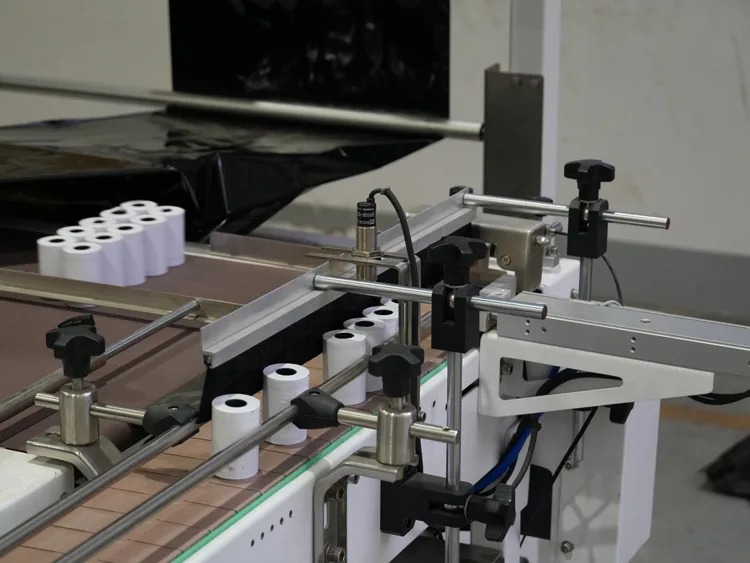
Theoretical yield and actual production output should not be treated as the same number. Edge trim, setup waste, web interruptions and other production losses can reduce actual usable output.
Calculate material yield before estimating your cost per finished roll.
Q5: What Is Your Real Cost per Finished Roll?
Do not evaluate the business only by comparing jumbo-paper prices or machine prices.
Your finished-roll cost can include:
- Thermal paper jumbo roll
- Paper or plastic core
- Printing ink, when required
- Packaging materials
- Production waste
- Labor
- Electricity and compressed air
- Machine maintenance
- Delivery and logistics
Calculate these costs against the number of saleable finished rolls produced.
For a new converter, cost per finished roll is a more useful operating number than machine purchase price alone.
Q6: How Much Production Capacity Do You Actually Need?
Do not select a slitter rewinder from maximum web speed alone.
Start with your expected orders and work backwards:
Monthly Demand → Working Days → Daily Output → Output per Shift → Machine Requirement
Actual production is also affected by finished-roll length, slit layout, rewinding cycles, jumbo-roll changes, size changeovers and finished-roll handling.
A faster machine is useful only when the rest of the production process can support the required output.
Q7: Do You Need Printing on the Finished Rolls?
Not every thermal paper roll requires printing.
Standard blank POS and receipt rolls can be produced through slitting and rewinding. If your customers require logos, branding or promotional information, inline flexographic printing can be considered.
Before choosing a printing configuration, confirm the printed content, number of colors, print position and finished-roll specifications.
If your customers only require blank rolls, adding printing equipment may not be necessary.
Q8: What Raw Materials and Consumables Do You Need?
For thermal paper roll converting, the main material is the thermal paper jumbo roll.
Depending on the finished product, you may also need:
- Paper or plastic cores
- Water-based ink for printed rolls
- Packaging materials
- Cartons or other shipping packaging
Coreless products do not require a conventional finished-roll core, while blank rolls do not require printing ink.
Define your product range first so you purchase only the materials required for the rolls you intend to sell.
Q9: How Much Automation Do You Need?
Automation should be selected according to production requirements rather than simply choosing the most automated machine available.
A standard slitting and rewinding configuration may be sufficient for a new converter producing a manageable range of POS rolls.
Higher production requirements may justify additional automation for roll handling, packaging or downstream processes.
Consider your required output, labor arrangement, product range and packaging method before deciding how much automation is appropriate.
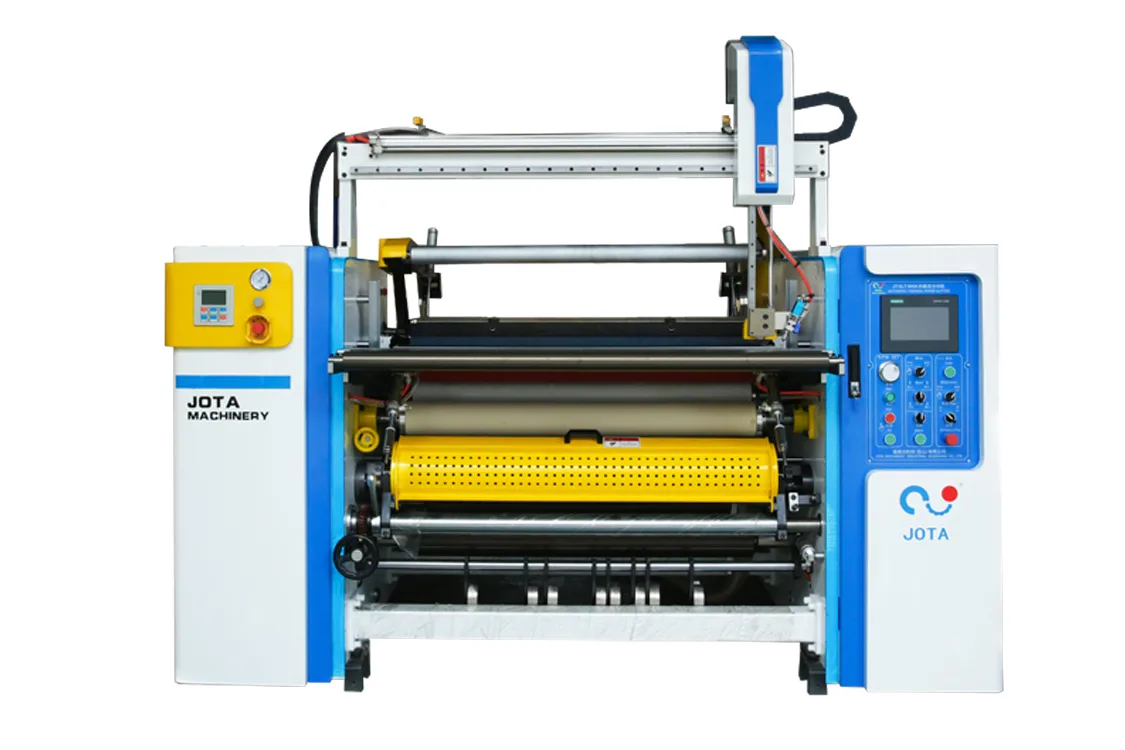
For standard POS and receipt-roll production, thermal paper jumbo rolls are slit and rewound into the required finished widths, diameters and core specifications.
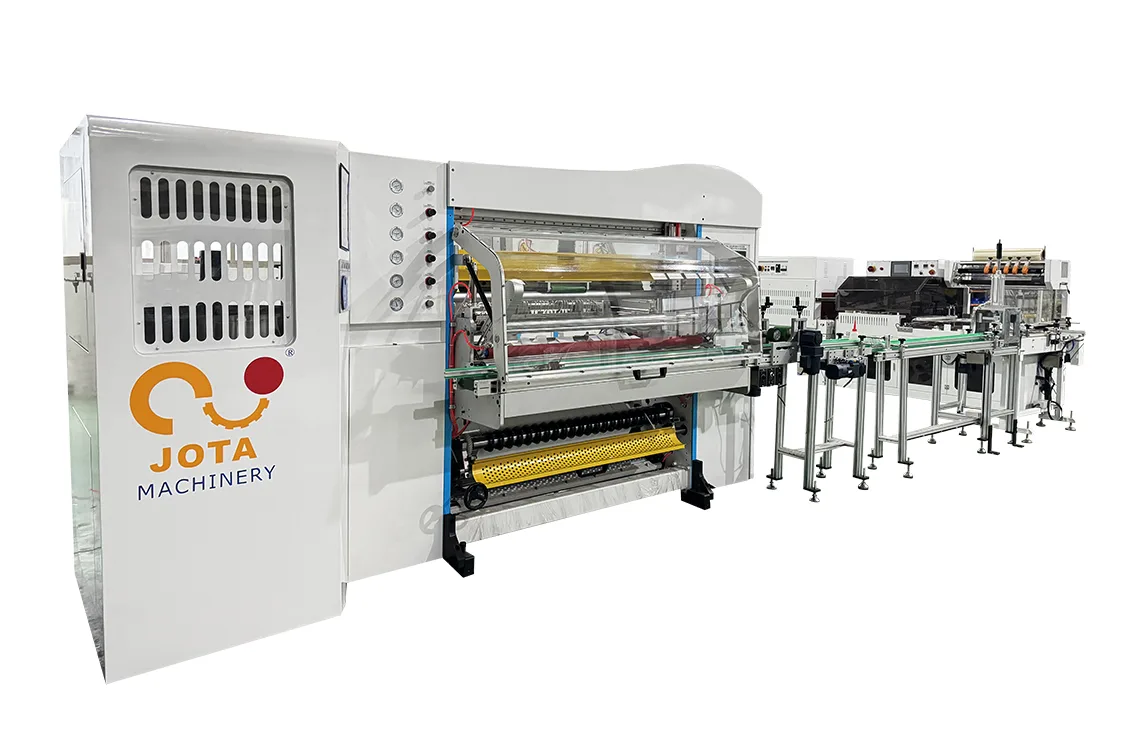
For higher production output, a fully automatic configuration can reduce manual handling and integrate additional roll finishing, packaging or palletizing processes.
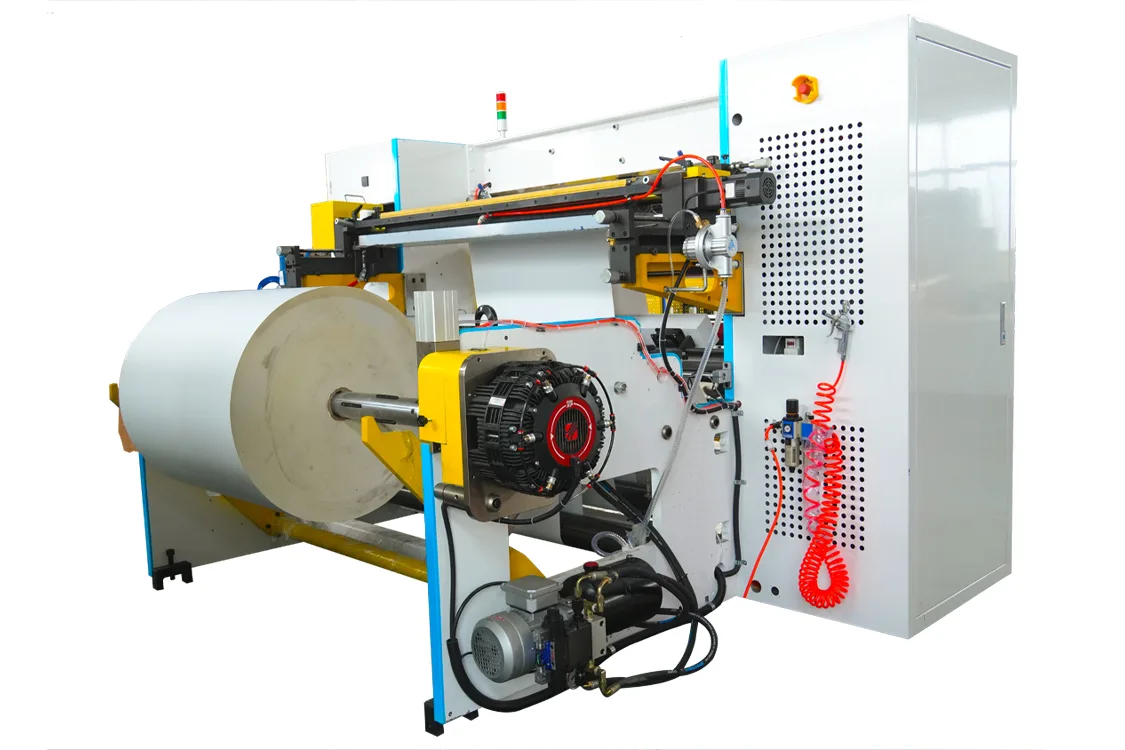
If your rolls require logos or promotional information, inline flexographic printing can be combined with slitting and rewinding in one production process.
Q10: What Should You Prepare Before Asking for a Machine Quote?
A useful machine quotation should be based on your actual production requirements.
Before contacting a supplier, prepare:
Jumbo roll: width, diameter, GSM or thickness
Finished roll: width, OD or length, core size
Product range: main roll sizes
Printing: blank, warning line, branding or other printing
Output: expected rolls per shift or day
Packaging: required finished packaging method
With these specifications, the machine configuration can be evaluated around your actual production needs instead of only comparing machine width or maximum speed.
Before You Invest
A thermal paper roll business should begin with customer demand and finished-roll specifications, not with the machine.
Once you know what rolls you will sell, you can define the jumbo paper, calculate material yield and finished-roll cost, determine the required production output, and then select the appropriate converting configuration.
This reduces the risk of buying equipment that is either insufficient for the required output or more complex than the business actually needs.
Planning a Thermal Paper Roll Business?
Send us your intended finished-roll sizes, jumbo-roll specifications, printing requirements, packaging method and expected output. JOTA can review the production requirements before recommending a machine configuration.
Last Updated on 28/09/2026 by Jota Machinery