
Roll to Roll Processing Slitting Machine
- Single/double PE coated stock paper, cigarette tipping paper jumbo roll
- Unwinding width ranges from 320mm to 3800mm
- Slitting width ranges from 3mm to 3800mm
- Max unwinding diameter is up to 1800mm
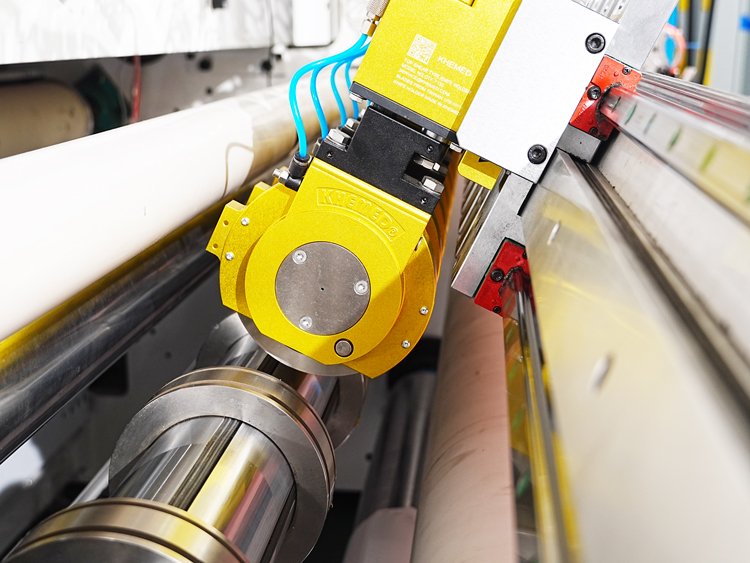
- Razor cutting and rotary shear slitting switch
- Traverse spooling technology


Jota Slitting Rewinding Machine
If you are looking for a suitable jumbo roll slitting rewinding machine whether you are in the field of printing, packaging, new energy, aerospace, or new carbon fiber technology materials.
Our professional team could meet your requirement to providing a suitable solution on slitting rewinding machine.
As a professional jumbo roll slitting rewinding machine manufacturer, we have not only 20 years of experience, but also a highly educated R&D team, advanced mechanical design team, and electrical software design team.
These can ensure that our slitting rewinding machine can meet customer needs and conform to the market requirement.
At the same time, our company is also completing its own upgrading and transformation.
From the most basic paper and film roll slitting rewinding machine to the latest new energy carbon fiber and the slitting of aerospace materials, this is also a testimony of our own strength.
Currently, we can provide slitting machines for various materials.
The width of parent mother rolls can reach from 50mm to 3500mm, and the slitting width can range from 3mm to 3500mm.
There are various winding methods such as reverse winding, disc winding, and rewinding. The maximum diameter can be up to 1800mm. There are also various slitting models for you to choose from.
Many people have a misunderstanding about the slitting rewinding machine.
You think that it is to find a simple machine to cut large rolls into small rolls or rewind them into small rolls.
In fact, different material characteristics, hardness, tension requirements, and subsequent processes are different.
The requirements vary greatly.
For each different material, the material threading flowing route on the machine, the angle between the roller and the diameter of the roller, and the selection of the slitting knife are all professional technical issues.
If you are looking for a professional jumbo roll slitting rewinding machine supplier, Jota Machinery should be your best choice.
Jota slitting rewinding machine could be applied for many different materials,
such as adhesive labels, kinds of paper, film, foil, non-woven fabric, CFRP, CFRTP, FRP prepreg, etc.
For a deep discussion about Jota slitting rewinding machine, please just send us an inquiry.


Jota Machinery: Original Slitting Rewinding Machine Manufacturer in China
Jota is capable of manufacturing 30 sets of slitting rewinding machines in 1 month.
We also accept free material converting test, you just need to send some of your material to us.
we will use our Jota slitting rewinding machine test it, then show you the testing video.


What Do We Offer?


Die Cutting Process
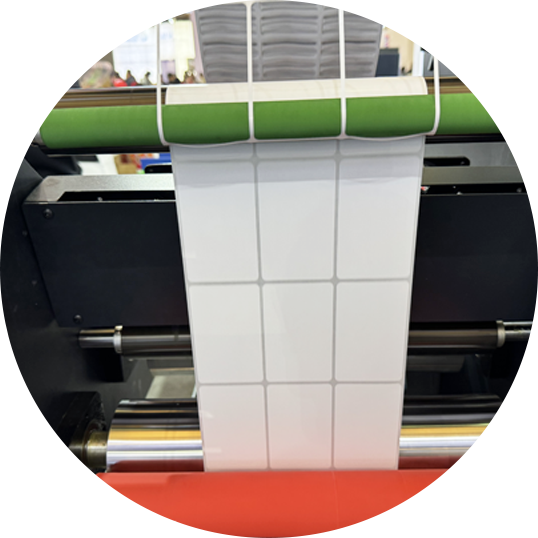
- Suit for converting the self-adhesive label sticker rolls
- Rotary die cutting and flatbed die cutting
- Popular cutting method in the flexible packaging material industry
- Assembly raw materials provided by long-term cooperation suppliers.

Installation and operation user manual, wire connection diagram, tension controller guide.
Installation and operation video tutorial.
One-on-one remote video call assistance.
On-site installation and operation guidance.
- Focus Factory
- Dear Customer
- Professional Team


The slitting machine is an efficient roll to roll processing technology designed for converting large rolls into narrower ones. The initial roll is referred to as the jumbo roll, while the subsequent rolls are the narrower versions.
The machine not only allows for precise width adjustments but also enables the production of fixed-length rolls.
Key components of the slitting machine include the unwinder stand, cutting blade, and rewinding section. The process begins by feeding the jumbo roll from the unwinder stand to the cutting blade, where the material is slit into various widths and then rewound onto cores of specified dimensions.
In the flexible packaging industry, end clients often require smaller rolls, making them essential for various applications.
For instance, in the cash register sector, merchants need thermal paper rolls in widths of 56mm and 80mm.
In the medical industry, healthcare providers require ultrasound paper rolls in widths of 84mm, 110mm, and 210mm, typically with fixed lengths. These critical products underscore the significant role of the slitting process.
The slitting process provides manufacturers with the necessary equipment to efficiently separate narrow rolls from jumbo rolls. This function is the primary purpose of the slitting machine.
The term “slitter” encompasses various types of equipment, including the slitting machine, slitting rewinding machine, and slitter rewinder machine.
At Jota Machinery, our slitting solutions are primarily utilized in the flexible packaging industry, mass production in paper mills, and for personal slitting applications in home settings.
The slitting machine is typically operated by a dedicated technician.
Prior to operation, our programmer inputs the core instructions into the PLC (Programmable Logic Controller).
Once the slitting machine receives the program, it can efficiently cut the jumbo roll into narrower rolls, following the processes of unwinding, traction, slitting, and rewinding.
Roll to Roll Processing Slitting Machine
The roll to roll processing is an essential industrial paper converting technique used in flexible packaging. Its primary function is to cut large jumbo rolls of raw material into narrower widths for further processing. For instance, a raw thermal paper jumbo roll produced in a paper mill typically has a width of 2000 mm. To meet the demands of wholesalers, these mills often slit the jumbo rolls into smaller widths, usually ranging from 795 mm to 1100 mm.
This process is not limited to thermal paper,it also applies to various materials, including kraft paper, non-woven fabrics, BOPP tapes, and PVC films. Such transactions exemplify standard buying and selling practices within the paper industry.
What are the different types of slitting?
Slitting is a vital procedure in the material conversion industry, where large rolls of flexible materials—such as paper, plastics, vinyl, foil, and non-woven fabric are transformed into narrower strips. This process is accomplished using specialized equipment known as slitting machines or slitter rewinders, which ensure precise and efficient cutting.
Industries ranging from fashion and pharmaceuticals to food and beverage and packaging rely heavily on slitting for their production needs. In this article, we will delve into the primary types of slitting methods and help you determine which one best suits your application.
Types of Slitting Methods
Slitting can be classified into three main categories, each defined by its cutting approach:
Choosing the right method largely depends on the material you are working with.
Shear Slitting
Shear slitting is one of the most widely used techniques in material conversion. This method employs a male knife that interacts with a grooved female knife to create a cutting action similar to that of scissors. The spacing of the female knives allows for various cut widths.
This technique is highly effective for thin materials, producing clean cuts with high precision.
At Jota Machinery, we offer two types of shearing slitting machines designed to meet diverse production needs.
The first is our Thermal Paper Roll Slitting Machine, which utilizes an upper round knife that engages with lower knives to efficiently separate jumbo rolls into narrower strips. The machine also features a rewinding function, converting the strips into compact rolls ideal for various applications.
The second machine is our High-Speed Slitter Rewinder, engineered for mass production with an impressive maximum speed of up to 500m/min. The machine employs an air blade system, making it suitable for a range of materials, from thin non-woven fabrics to thicker options such as 200gsm kraft paper.
With these advanced slitting solutions, Jota Machinery is committed to enhancing efficiency and precision in your production processes.
Die cutting
Everywhere we look, labels adorn online B2B parcels, bottles, and adhesive sticker products. A common feature among these labels is their distinctive shapes, which play a crucial role in branding and product identification. These labels are created through a specialized slitting process known as die-cutting.
Die-cutting employs precision tools, or die-cutting blades, that are specifically designed to cut materials into desired shapes based on customized patterns. The sharp blades effectively transform large jumbo rolls of material into precisely shaped labels that meet the unique requirements of each application.
This process not only ensures accuracy and consistency in label production but also enhances the aesthetic appeal and functionality of the final product. Whether for marketing, compliance, or informational purposes, die-cut labels provide a professional and polished look that can significantly impact consumer perception.
Razor Blade Slitting
Razor blade slitting involves a sharp, thin blade positioned in a fixed location to cut material as it moves through. This straightforward method is particularly beneficial for thin foils and films, providing a cost-effective solution. Razor slitting typically operates at lower speeds, around 2,300 feet per minute, and allows for flexible width adjustments.
Conclusion
In summary, slitting is an essential process in material conversion, with various techniques designed to meet specific material requirements and application needs. Whether you opt for shear, score, or razor blade slitting, selecting the appropriate machine is critical for achieving the best outcomes. Explore our selection of innovative slitting machines at Jennerjahn to find the ideal solution for your material converting needs.
What is the difference between roll to roll slitting and cutting?
In the realm of paper converting machinery, roll to roll processing is a key cutting technique.
In addition to slitting, there is also a roll to sheet process, which utilizes a sheeter machine to cut jumbo rolls into fixed lengths suitable for retailers. This machine is integral to producing everyday items such as advertising posters, newspapers, food wrapping paper (like hamburgers and sandwiches), and office copy paper.
In summary, paper cutting encompasses both roll-to-roll and roll-to-sheet processes.
