

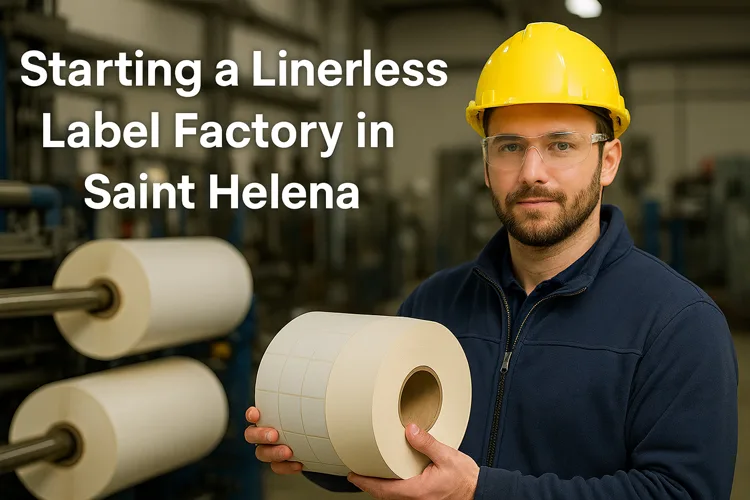
Keyphrase: Linerless Label Factory in Saint Helena 2025 Guide
Written by Jota Machinery | Bruce Zhou

Introduction: Why Linerless Labels, Why Saint Helena?
Across the packaging and logistics industry, linerless labels are gaining traction. They eliminate the silicone backing paper, cut waste by up to 40%, and align with sustainability goals in retail, e-commerce, and shipping. The UK alone is projected to see a 5–7% CAGR in linerless label demand through 2030, fueled by large buyers like Tesco and Amazon.
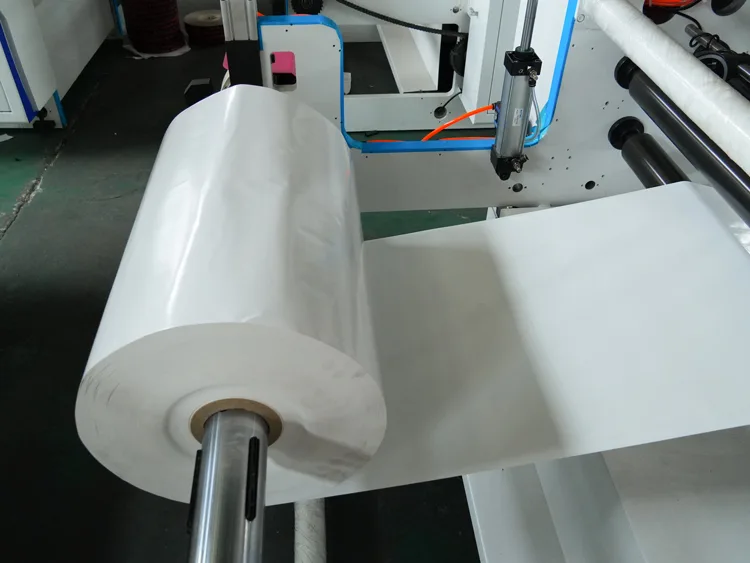
But what happens when you move the conversation to Saint Helena, one of the world’s most remote British Overseas Territories? With just 4,500 people and an economy heavily reliant on UK aid and imports, starting a factory here sounds ambitious. Yet for investors seeking a niche export story—“Made in a pristine BOT environment”—the opportunity has symbolic and strategic appeal.
This guide breaks down the feasibility, setup steps, costs, and risks of establishing a linerless label factory on the island.
Market Dynamics: Big Global Demand, Tiny Local Market
- Global pull: Linerless labels are mainstream in UK retail packaging and shipping. The UK imports over £50 million in linerless products annually.
- Local reality: Saint Helena’s domestic market is negligible. Shops, tourism outlets, and fishing cooperatives consume only tiny volumes of labeling.
- Strategic play: Success depends on exporting to the UK and South Africa. Positioning the product as a sustainable island export may attract niche buyers who want green credentials and exclusivity.
Business Setup and Legal Framework
Choosing the Right Structure
A private limited company (Ltd) is best—it shields personal assets and signals professionalism to UK/EU buyers.
Registration Process
Handled under the Companies Ordinance 2004 through the Saint Helena Government (SHG) Registry:
- Reserve a business name (£49.40).
- Submit incorporation forms (officers, shareholders, Articles).
- Pay fees (£80.50 for private companies).
- Foreign investors use Form 1A for overseas branches (£375.60).
Processing takes 1–2 weeks if documents are complete.
Licenses and Compliance
- Business License: Annual renewal required.
- Factories Ordinance: For workplace safety (ventilation, guards, exits).
- Environmental Impact Assessment: If >10 workers or adhesives used.
- Customs Registration: For both import and export.
- Taxation: Corporate tax rate 15% for exporters, 25% otherwise; no VAT.
Financial Picture: Costs and Funding
Estimated Startup Costs (Small Factory, 2,000 sq ft)
| Category | Cost (£) |
|---|---|
| Factory lease/setup | 20,000–50,000/year |
| Equipment (coater/slitter) | 80,000–250,000 |
| Raw materials (jumbo rolls, adhesives) | 10,000–30,000 |
| Utilities & labor (year 1) | 30,000–60,000 |
| Marketing/legal/shipping | 10,000–20,000 |
| Total | 150,000–410,000 |
Funding Avenues
- SHG’s Approved Investment Scheme: Duty waivers on imports for job creation.
- UK aid channels: FCDO or DFID may back projects with sustainable export potential.
- Loans: Bank of St Helena, or UK lenders like British Business Bank.
- Equity: Pitch to UK packaging groups (e.g., Ravenwood) for joint ventures.
Location and Infrastructure
- Preferred sites: Jamestown or Longwood industrial plots.
- Export access: Near the island airport (2017) for airfreight to the UK. Shipping containers also move via Cape Town.
- Facility requirements:
- Ventilation (for adhesive fumes).
- Secure flammable storage.
- Three-phase power (mainly diesel-generated).
Costs: £2–£5/sq ft annually.
Timeline: Expect 4–8 weeks extra for imported equipment and materials.
Technology and Raw Materials
Core Production Steps
- Import jumbo thermal rolls (50–80 gsm).
- Apply adhesive coating (linerless format).
- Slit and rewind into 50–150mm widths.
- Print or customize if required.
- Package for export.
Key Machinery
- Adhesive coater/slitter-rewinder (£50k–£150k).
- Printer/applicator for linerless (£10k–£30k).
- Quality testing units (adhesion, durability).
Raw Materials
- Jumbo rolls: UK, China, or South Africa suppliers.
- Adhesives: Bostik UK or equivalent.
- Lead time: 4–8 weeks per shipment.
Workforce and Compliance
- Staffing: 4–8 employees. Local workforce is affordable (£300–£500/month) but needs training.
- Skills: Operators, one quality control technician, and a manager.
- Compliance:
- Safety audits under Factories Ordinance.
- Environmental monitoring for adhesive waste.
- Insurance: Liability (£1M+), property, workers’ comp.
Sales, Branding, and Export
How to Sell Linerless Labels from Saint Helena
- Eco-premium positioning: Market as “Made in Saint Helena, UK Overseas Territory – sustainable island label”.
- Target markets: UK supermarkets, packaging converters, and logistics providers.
- Channels:
- Exhibitions (UK Packaging Expo).
- B2B directories (ThomasNet, Ravenwood partner network).
- Direct export agreements.
Pricing Strategy
£1–£3 per roll, with a 20% eco-premium over standard suppliers.
Risks and Challenges
- Logistics: Freight can add £5,000 per container. Delays of 2–4 weeks are common.
- Scale: Saint Helena’s domestic market is negligible—exports are essential.
- Labor shortages: Many skilled workers migrate abroad.
- Energy costs: Diesel dependency raises operational expenses.
- Economic fragility: Heavily reliant on UK aid; downturns pose risk.
Practical Tips for Investors
- Apply early for customs duty relief via SHG’s Economic Development team.
- Consider starting as a converter (importing pre-coated jumbo rolls, just slitting/rewinding) before scaling to full coating.
- Build buffer stock due to long lead times.
- Use “Made in BOT” branding to stand out in sustainability markets.
- If Saint Helena proves too difficult, explore UK mainland facilities while using Saint Helena as a branding/assembly hub.
Conclusion
Launching a linerless label factory in Saint Helena is a high-risk, high-story venture. It won’t suit everyone—the island’s tiny market, remote location, and high costs mean this is only feasible for those targeting UK/EU exports with sustainability as a selling point.

Contact Our Team!
Thank you for visiting our website and taking an interest in the our products. We’re looking forward to connecting with you and discussing more about how we can help.

Company address
No 68, Shaojing Road, Economic Development Zone, Kunshan City, Suzhou, Jiangsu Province, China

Email Address

Contact Number
+86-13868814910
